University of Dundee Dental School Interview Questions 2026 Entry – Complete MMI Guide

Introduction: Dundee Dentistry and why the interview matters 🎓
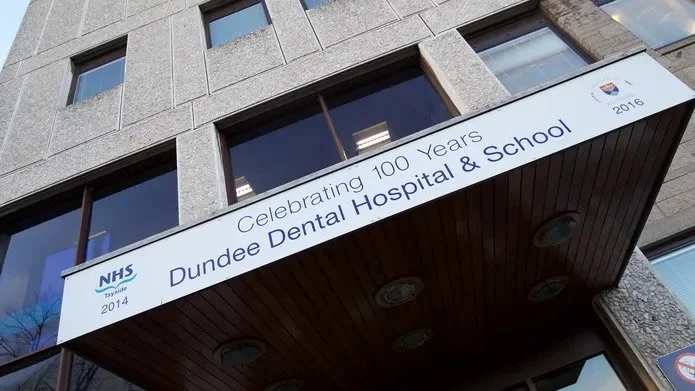
The University of Dundee’s five‑year BDS Dentistry (A200) course is taught in the School of Dentistry on the main campus and in the adjacent dental hospital, with a strong reputation in UK rankings and early clinical exposure. Dentistry is a “controlled subject” in Scotland, meaning the number of places each year is capped by the Scottish Funding Council, so competition is intense.
Dundee receives many more applications than there are places. The interview is therefore a major gate‑keeping stage: only applicants who perform well at the Multiple Mini Interview (MMI) are likely to receive an offer.
This blog focuses specifically on the University of Dundee Dental School interview for 2026 entry, using:
Dundee’s official BDS entry‑requirements, interview and admissions‑statistics pages
Freedom of Information (FOI) data from the university
Guidance from the Dental Schools Council and Studying Healthcare (their official applicant site)
Public student comments (e.g. The Student Room) and reputable interview‑prep organisations
I’ll flag clearly when information comes directly from the University of Dundee website (this is the most authoritative source and should always be your first point of reference).
How does Dundee Dental School decide who to invite for interview? 🔍
1. Academic requirements
For UK school‑leaver applicants, Dundee’s standard offer for BDS is A‑level AAA, with Biology and Chemistry required. At GCSE, English and Mathematics at least grade B / 6 are essential. Equivalent high‑level performance is expected in Scottish, IB and other qualifications.
Dundee also uses contextual admissions, offering additional consideration to applicants from certain educational or socio‑economic backgrounds, grouped into “Category 1” and “Category 2” in their statistics.
2. UCAT (University Clinical Aptitude Test)
All applicants must sit the UCAT in the year of application (unless officially exempt due to lack of a test centre). There is no fixed minimum UCAT cut‑off score published, but UCAT is a key part of selection.
Dundee publishes detailed historic data showing the average, highest and lowest UCAT scores of those invited to interview each year. For example, in the 2023/24 cycle, candidates invited to interview had an average UCAT total of about 2567, with the lowest invitee around 1940. Because the UCAT has recently changed (Abstract Reasoning has been removed, reducing the maximum total from 3600 to 2700), Dundee warns that future raw totals will not match older numbers directly.
3. How academics and UCAT are combined (from FOI)
An FOI response for 2025/6 entry explains how Dundee currently weights different components when deciding who to interview:
For school‑leavers:
60% of the pre‑interview score comes from academic performance
Within this, about 60% is based on certified GCSEs (or national equivalents) and 40% on predicted / certified A‑levels.
40% comes from your UCAT score, converted into a decile (based on how your score compares with others in your cohort).
For graduates:
60% of the pre‑interview score is based on UCAT decile.
40% comes from your degree and other academic achievements.
Selection for interview, as the Dundee website explicitly states, is based on academic achievement to date (including predicted grades) and UCAT score.
Personal statements are not usually scored at the pre‑interview stage according to external guides, though they can still be used as a discussion point during the interview itself. Always check the latest guidance in case this changes.
✅ Turn dental interview practice into performance.
Our dentist-designed mock MMI mirrors real stations—communication, ethics, critical thinking, data interpretation, manual dexterity—assessed by experienced tutors and former assessors 🥇. Gain confidence and a personalised action plan. ➡️ Click here to secure your spot — strict 10 places per circuit.
How does Dundee interview for Dentistry (2026 entry)? 🧠
According to the University of Dundee’s official “Interview” page for BDS, from 2026 entry interviews are being run as in‑person Multiple Mini Interviews (MMIs) at the Dental School in Dundee.
Key points from the official Dundee site:
Interviews take place on campus at Dundee Dental School.
UK‑based applicants are expected to attend in person; international applicants may be offered a remote interview using Blackboard Collaborate if they cannot travel.
You complete a circuit of 7 MMI stations, each scored by a staff member (sometimes with a student helping).
The entire interview session lasts about 60 minutes (including movement between stations and any briefing).
Stations involve questions, scenarios and dilemmas, plus at least one role‑play. Some are framed in a dental or clinical context, but you are not expected to have prior clinical knowledge.
The University explains that the interview is designed to explore:
How you think and reason under pressure
Your values and integrity
Your ability to communicate and work in a team
They explicitly state that these qualities are crucial to the kind of dentist you will become, and that they place significant weight on them in the selection process.
What is the Dundee Dental interview style? (Understanding MMIs) 🔄
What is an MMI?
A Multiple Mini Interview (MMI) is like a circuit of short “mini‑interviews” rather than one long panel conversation:
You move between a series of stations.
Each station has a new interviewer and a new task (e.g. role‑play, ethical scenario, data interpretation, or motivation question).
You’re scored separately at each station; your final interview score is an aggregate.
MMIs are used across many UK dental schools because research suggests they can assess non‑academic attributes more consistently and fairly than a single panel interview.
What does Dundee’s MMI feel like?
From the official information and recent applicant reports:
Structured but supportive: Dundee acknowledges that most candidates will be nervous and says interviewers will introduce themselves and try to put you at ease.
7 stations, roughly 7–8 minutes each: There is usually time to read a brief, think for a moment, then respond or interact.
One role‑play station: Students on The Student Room confirm that there is a genuine role‑play station (for example, speaking with an actor playing a patient or colleague), which Dundee also mentions on their own site.
Mix of question types: Some stations are conversational (“tell me about…”) while others require analysis of a scenario or ethical problem.
Importantly, Dundee reminds candidates not to share specific station content afterwards, to protect fairness for future applicants. That’s why responsible resources – including this guide – only offer invented practice questions, not leaked or recalled stations.
When are Dundee Dentistry interviews held? 📅
The University of Dundee’s official interview page states that for BDS:
Interviews are normally scheduled between December and January of the application cycle.
Invitations are sent in phases, by email (not via UCAS Track).
Dundee aims to give candidates at least two weeks’ notice of their interview date and time.
Student comments support this: in a recent cycle, applicants reported interview invitations arriving around mid‑November, with the first interviews in early December.
Because dates can vary year to year, treat this as a guide only and always follow the information in your own invitation email.
What topics are covered in a Dundee Dental School interview? 📚
The exact MMI stations change each year, and Dundee asks applicants not to reveal them. However, from Dundee’s official description, Dental Schools Council guidance on the values needed for dentistry, and reputable prep organisations, we can outline the common themes.
Expect stations that test:
🟢 Motivation and insight into Dentistry and Dundee
Why you want to be a dentist, and why Dundee.
What you understand about the realities of dentistry (stress, long training, emotional demands).
Reflection on your work experience or volunteering.
🔵 Communication and empathy
Explaining something clearly to a layperson.
Showing empathy to a worried patient or parent in a role‑play.
Adapting your communication style for different ages or backgrounds.
🟣 Ethics and professionalism
Confidentiality, consent and safeguarding scenarios.
Handling dishonesty (e.g. a peer cheating or falsifying records).
Managing social media professionalism and boundaries.
Applying principles similar to the GDC’s 9 Standards for the dental team, such as putting patients’ interests first and communicating effectively.
🟡 Teamwork and leadership
Working effectively with the wider dental team (therapists, nurses, hygienists, reception staff).
Resolving conflict or disagreement in a team.
Knowing when to lead and when to follow.
🟠 Resilience, reflection and time‑management
Coping with stress, setbacks and feedback.
Balancing academic workload, clinical commitments and life outside university.
🔴 Thinking on your feet / problem‑solving
Interpreting unfamiliar information under time pressure.
Estimation or creativity questions (for example, estimating how many people one dentist can treat in a day, or explaining a familiar concept in an unusual way).
Dundee emphasises that you do not need detailed clinical knowledge; they are interested in how you think and behave, not how much dental science you have memorised.
How many applicants receive an interview and how many get an offer? 📊
Dundee is unusual in publishing detailed official admissions statistics for BDS on its own website – an extremely useful resource for applicants.
Overall competition
Looking at recent entry years:
2019/20: 499 applications, 305 interviews, 143 offers
2020/1: 519 applications, 303 interviews, 138 offers
2022/3: 687 applications, 220 interviews, 147 offers
2023/24: 783 applications, 334 interviews, 116 offers
Ignoring the disrupted pandemic year (2021/2), this roughly means:
Around one‑third to three‑fifths of applicants are invited to interview.
Roughly 15–30% of applicants receive an offer overall.
Depending on the year, about one‑third to two‑thirds of interviewees are successful.
By fee status – Scottish, RUK and Overseas
The statistics also show how competitive different fee categories are. For 2023/24 entry:
Home Scottish: 204 applications, 71 offers (≈35% of applicants).
Home Rest of UK / Republic of Ireland (RUK/ROI): 483 applications, 17 offers (≈3.5% of applicants).
Overseas: 96 applications, 28 offers (≈29% of applicants).
This is consistent with student comments noting that RUK places are particularly limited, with some RUK applicants interviewed but ultimately not receiving offers.
Most recent FOI (2025/6 entry)
The FOI table for 2025/6 entry shows that, across contextual and non‑contextual groups, there were approximately 1,200 applications, just over 300 interview invitations and around 130–140 offers (exact numbers for very small groups are anonymised as “<5”).
That works out at roughly:
About 1 in 4 applicants being interviewed.
Around 1 in 9–10 applicants gaining an offer (though this varies by fee status and contextual category).
Dundee is clear that these figures are historical only and not a prediction for future cycles – both the applicant pool and the selection process can change.
Example Dundee‑style MMI stations and practice questions 💬
⚠️ Important: Dundee asks applicants not to share the specific tasks or questions used in their MMIs. The examples below are invented practice scenarios, designed to reflect the skills Dundee says it assesses (communication, ethics, teamwork, values, problem‑solving, etc.), not real past stations.
Use them to practise your approach and structure – not as a prediction of what will definitely come up.
Station 1 – Motivation for Dentistry and Dundee 🦷
Prompt: “We’d like to understand why dentistry – and why Dundee in particular – is the right choice for you.”
Possible questions:
Why have you chosen to study Dentistry rather than Medicine or another healthcare course?
What attracts you specifically to the BDS course at the University of Dundee?
Which parts of a dentist’s job do you think you will find most challenging, and how will you manage those challenges?
Tell us about one experience that confirmed to you that dentistry is the right career.
Station 2 – Understanding the Dental Profession and the NHS
Prompt: “Here is a short article about access to NHS dental care in the UK. Read it and answer the questions that follow.”
Possible questions:
What are the main issues affecting access to NHS dental services in the article?
How might these issues impact patients in a city like Dundee?
If you were a dentist working in this environment, what could you do to support patients who struggle to access care?
Station 3 – Ethics: Patient Autonomy and Best Interests ⚖️
Scenario:
A 10‑year‑old attends an appointment with their father. You diagnose significant decay and recommend a procedure that you believe is necessary to prevent pain and infection. The father is very anxious about dental treatment and says, “We’ll just leave it and see what happens – they’re only baby teeth.”
Possible questions:
What ethical principles are involved in this situation?
How would you approach the conversation with the parent and child?
At what point, if any, would you consider involving other professionals or safeguarding procedures?
Station 4 – Professionalism: A Friend Cheating
Scenario:
You discover that a fellow dental student has copied large sections of a former student’s assignment and submitted it as their own work. They tell you that “everyone does it” and beg you not to say anything.
Possible questions:
What concerns would this raise for you as a future dental professional?
How would you respond to your friend?
Would you report this? If so, how would you go about it?
Station 5 – Communication Role‑Play 🎭
Role‑play brief (you as the candidate):
You are a third‑year dental student on clinic. An actor plays a patient who is anxious about having a filling and says they “hate the dentist” because of a bad experience as a child.
You might be asked to:
Introduce yourself and build rapport.
Explain the procedure in simple, reassuring language.
Explore their concerns and negotiate a plan (e.g. taking breaks, using coping strategies).
An assessor will observe your empathy, clarity, body language, and ability to adapt your explanation.
Station 6 – Teamwork and Conflict Resolution 🤝
Scenario:
You are part of a group project at university. Two team members disagree strongly about how to divide the workload; one feels they are doing much more than the others.
Potential questions:
How would you handle this situation if you were part of the group?
Describe a time you have worked in a team and what you learned from it.
What qualities make someone an effective team member in a dental setting?
Station 7 – Resilience and Reflection 🧘♀️
Prompt: “Dentistry is demanding. Tell us about a time when something went wrong and how you dealt with it.”
Possible questions:
What was the situation, and what did you do at the time?
Looking back, what would you do differently now?
How do you look after your own wellbeing when under pressure?
Station 8 – Manual Dexterity and Hobbies ✂️
Prompt: “Dentistry requires excellent hand–eye coordination and attention to detail.”
Possible questions:
Tell us about a hobby or activity you do that involves fine motor skills (e.g. playing an instrument, sewing, drawing, model‑making).
How has this activity helped you develop skills that might be useful in dentistry?
Describe a time you had to practise something repeatedly to improve.
Station 9 – Thinking on Your Feet / Creativity 💡
Sample prompts:
“Explain how to brush teeth properly to a six‑year‑old who has never seen a toothbrush before.”
“Estimate how many toothbrushes are sold in Scotland each year. Talk us through your reasoning.”
“You have one minute to convince us that you would be a supportive and reliable dental student. Begin when you’re ready.”
Station 10 – Values and the GDC Standards
Prompt: “Dentists in the UK are regulated by the General Dental Council (GDC), which sets out nine key principles for dental professionals.”
Questions could include:
Why do you think it is important for dentists to have a clear set of professional standards?
Choose one principle (e.g. putting patients’ interests first, maintaining patient confidentiality). How might this influence your behaviour as a student dentist?
Can you think of a situation from your own life where you had to uphold a similar principle?
When are Dundee Dental School offers released? ✉️
Dundee’s official guidance is that, after interviews:
They aim to communicate decisions by the end of March,
And in any case no later than the UCAS decision deadline.
Decisions are sent via UCAS and by email.
Student posts indicate that, in a recent cycle, some Scottish applicants received offers from around 1 March, while some RUK and overseas applicants heard later, with at least one offer arriving in mid‑April.
Timings can vary depending on the number of interviews, staff workload and external factors (e.g. industrial action), so it’s wise to expect a range rather than a single “offer day”.
Top tips for the Dundee Dental School interview (2026 entry) ⭐
Here are practical, evidence‑based tips drawn from Dundee’s own advice, Dental Schools Council guidance and specialist interview resources.
1. Know how Dundee selects – and play to that
Understand that academics + UCAT get you to interview, but the MMI decides offers.
Review Dundee’s historic admissions statistics and contextual policy so you have a realistic sense of competitiveness.
Accept the numbers, then focus your energy on what you can control: your preparation and performance.
2. Re‑read your application and experiences
Even if your personal statement isn’t scored pre‑interview, it may be used as a starting point for questions.
Re‑read your personal statement and work‑experience reflections.
For every activity you mention (shadowing, volunteering, part‑time work, hobbies), be ready to answer:
What did you observe or learn?
Which skills did you develop?
How does this relate to being a good dentist?
3. Practise MMI‑style, not just generic questions
Use timed practice: 6–8 minutes per station, with 1–2 minutes to think.
Rotate between motivation, ethics, teamwork, communication, resilience and NHS dentistry topics, just like a real MMI.
Practise out loud with a friend or family member acting as an interviewer; this helps your answers sound more natural.
4. Structure your answers
Simple frameworks can keep you calm and coherent:
STAR (Situation, Task, Action, Result) for experience questions.
SPIES or similar for ethical scenarios (Stakeholders, Problems, Information, Ethical principles, Solution).
Always signpost your reasoning: “Firstly… Secondly… Finally…”
5. Build basic knowledge of NHS dentistry and ethics
You don’t need detailed policy knowledge, but you should have a broad feel for:
The role of NHS dentistry and current challenges in access to care.
Key ideas from the GDC’s ‘Standards for the Dental Team’ – especially putting patients first, communication, consent and confidentiality.
The difference between autonomy, beneficence, non‑maleficence and justice in healthcare decisions.
6. Prepare for role‑play
Students report a dedicated role‑play station at Dundee, which the university also mentions.
To prepare:
Practise introducing yourself clearly, checking how the other person is feeling, and summarising what you’ve heard.
Focus on body language: open posture, eye contact, calm tone of voice.
Remember you are assessed on warmth, empathy and clarity, not on giving a perfect clinical explanation.
7. Manage nerves and logistics
Treat the MMI day like an exam: plan your travel, arrive early, and bring required ID (Dundee checks this before starting).
Practise breathing techniques and positive self‑talk; nerves are normal and interviewers expect them.
Aim for business‑style dress (smart, comfortable, and professional), as recommended by specialist guides.
8. Respect confidentiality and professionalism
Do not attempt to obtain or share real Dundee station content – this goes against the spirit of the process and the university’s explicit request.
Instead, practise with generic scenarios (like the examples above) and focus on the underlying skills and values.
9. Reflect after each practice session
After mock stations, jot down:
What went well?
What felt awkward?
Which ethical or NHS topics do you need to read about?
Build a small revision booklet of key examples and points to review in the week before your interview.
What do students say about the Dundee Dentistry interview? 🗣️
Because of the no‑question‑sharing rule, student comments online focus mainly on format and atmosphere rather than specific content. From recent The Student Room threads:
Applicants describe Dundee’s interviewers as friendly and reassuring, even though the process is structured and formal.
Students confirm there is an actual role‑play station, not just hypothetical discussion, which matches Dundee’s own description.
Several note that interview invitations have historically been sent out in mid‑November, with interviews starting in early December.
Offers for Scottish applicants have sometimes appeared in early March, while some RUK applicants have reported hearing later, with a few offers arriving in April – and some ultimately being rejected close to the UCAS deadline.
Some posters highlight how competitive RUK places are compared with Scottish and overseas categories, echoing the official statistics.
Remember: anonymous forum posts are anecdotal and may not represent everyone’s experience, but they do broadly align with Dundee’s published data and format.
Final thoughts
The University of Dundee Dental School interview for 2026 entry is a 7‑station in‑person MMI designed to assess the kind of dentist you could become – not just your exam scores. Strong academics and UCAT get you into the interview room, but it is your communication, ethics, teamwork and resilience that will determine whether you receive an offer.
If you:
Understand how Dundee selects applicants,
Practise MMI‑style answers and role‑plays,
Learn the basics of NHS dentistry and GDC standards, and
Reflect honestly on your own experiences and values,
you’ll put yourself in a strong position to shine on the day.
You’ve already done something impressive by even considering an application to dentistry. With thoughtful preparation, you can walk into the Dundee interview feeling steady, prepared and authentically yourself. 🦷✨
References
(You don’t need to memorise these, but they’re excellent sources to double‑check details.)
University of Dundee – Dentistry BDS (A200) official pages
Course overview and structure. University of Dundee
Entry requirements and UCAT policy (including statement that interview selection is based on academic achievement and UCAT). University of Dundee
Interview format and timescales (7‑station in‑person MMI, role‑play, December–January dates, end‑of‑March decisions). University of Dundee
BDS Dentistry admissions statistics by year of entry. University of Dundee
Dental Schools Council & Studying Healthcare
Dental school entry‑requirements booklet and guidance on values/attributes needed for dentistry.Dental Schools Council
General Dental Council (GDC)
“Standards for the Dental Team” and the nine core principles governing UK dental professionals.standards.gdc-uk.org
Always double‑check any details close to your application on the official University of Dundee website, as policies and formats can change from year to year.