

Introduction to the UCAT exam 2026
If you want to study medicine or dentistry in the UK, there’s a very good chance you’ll need to sit the UCAT exam. The UCAT (University Clinical Aptitude Test) is a two-hour computer-based admissions test used by most UK medical and dental schools, as well as by some universities in Australia and New Zealand. Each year, tens of thousands of applicants take the UCAT to demonstrate the reasoning, decision-making and professional judgement skills needed for a demanding clinical career.
Start here: UCAT prep guides (2026)
New to the UCAT? Use this hub to understand the exam format, learn each UCAT section (VR, DM, QR, SJT), plan your revision, and register/book your test on time.
1) UCAT overview (start here if you're new)
-
UCAT exam guide for aspiring medical and dental students (format, timing, scoring)
The essentials: UCAT format, timing, scoring, and how medical and dental schools use your results.
-
Ultimate guide to UCAT sections (VR, DM, QR & SJT explained)
A clear breakdown of what each UCAT section tests and what the questions look like.
2) UCAT sections (guides + strategies)
-
UCAT Verbal Reasoning (VR) strategies: timing, reading techniques & accuracy
Timing tactics and reading strategies for fast, accurate VR under pressure.
-
UCAT Decision Making (DM) guide: logic, syllogisms, probability & arguments
How to approach logic, syllogisms, probability, and argument questions efficiently.
-
UCAT Quantitative Reasoning (QR): question formats, mental maths, calculator tips & pacing
Build QR speed from day one: question formats, calculator efficiency, and pacing fundamentals.
-
UCAT Situational Judgement Test (SJT): what it tests, scoring & ethics
Understand UCAT SJT scoring and how to answer based on professionalism and ethics.
3) UCAT booking & registration (step-by-step + key dates)
-
UCAT registration 2026 + key UCAT test dates (UK guide)
A quick, UK-focused timeline for UCAT 2026: when registration opens, booking deadlines, and the key dates to plan around.
-
UCAT registration & booking: key requirements + step-by-step process for applicants
A practical walkthrough: setting up your UCAT account, booking your test centre, rescheduling, and avoiding common mistakes.
4) UCAT 2026 in one place + study plan
-
UCAT 2026 section guide: VR, DM, QR & SJT strategies in one place (hub)
A single hub linking strategies across all UCAT sections for quick, structured revision.
-
How many hours a day should I study for UCAT? Honest answer + sample schedules
Realistic revision hours and sample UCAT study schedules you can actually stick to.
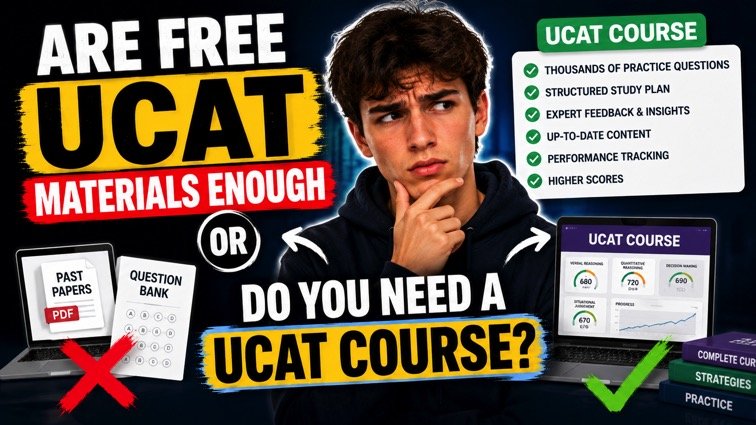
Are Free UCAT Materials Enough or Do You Need a UCAT Course
Free UCAT materials are a strong starting point, and some students do score highly using only the official resources. The UCAT Consortium says it is not necessary to purchase extra materials to score well, and one 2025 candidate reported scoring 2520 using only the official UCAT preparation resources. But the UCAT is also a fast, four-subtest admissions test used by universities in different ways, with some medical schools applying threshold scores and some using the Situational Judgement Test in selection. For many students, that means free materials should be the foundation of preparation, not the whole plan

Why Most Students Fail the UCAT
If you are worried about “failing” the UCAT, the first thing to know is this: the exam does not work like a standard school test with a universal pass mark. The UCAT Consortium says universities use scores in different ways, not all universities have a minimum score requirement, and there is no single score that guarantees selection. In real life, students usually say they “failed” when they scored below the level needed for their target medical or dental schools, or when they performed well below their own practice standard.
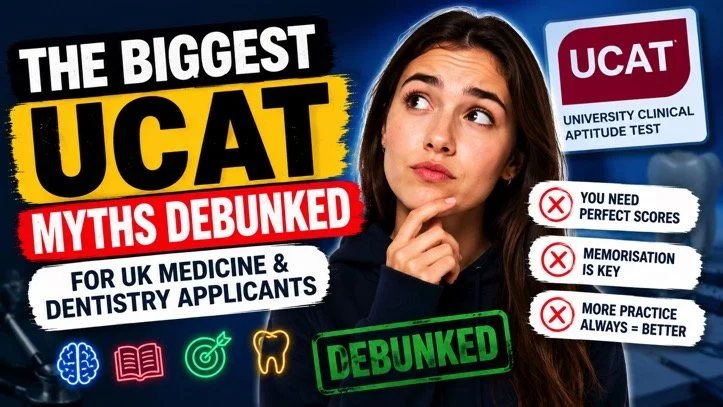
The Biggest UCAT Myths Debunked for UK Medicine and Dentistry Applicants
Search for UCAT advice online and you quickly see the same claims repeated: it is “basically an IQ test”, you need an expensive prep course to stand a chance, the SJT does not matter, and one score either makes or breaks your whole application. The problem is that much of that advice is either half-true or flat-out outdated.
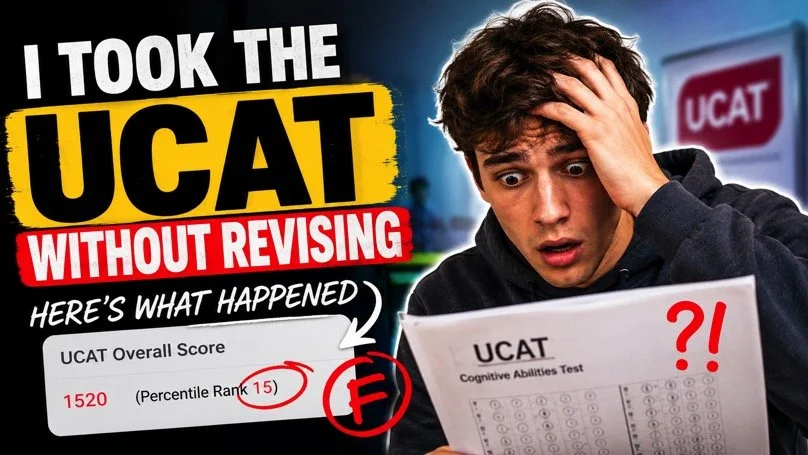
I Took the UCAT Without Revising – Here’s What Happened
I’ll be honest: I thought the UCAT would be the one part of the medicine application I could just “turn up” for. I was used to exams. I did well in class. I told myself it was an aptitude test, so surely revision mattered less.

How Hard is the UCAT? (Honest Breakdown)
Let's be real with you — the UCAT has a reputation, and if you've been researching it, you've probably already stumbled across some pretty alarming score threads online. So, is it actually as hard as people say? Or is it one of those things that sounds terrifying but turns out to be manageable with the right approach?

The Ultimate Guide: Which UK Medical Schools Require the UCAT in 2026? 🩺
If you’re a sixth-form student with your sights set on medical school for 2026, you’ve probably already heard of the UCAT. But with the recent retirement of the BMAT, the admissions landscape has shifted. Almost every university now uses the UCAT, but which specific schools require it, and how do they use your score?
This guide is your definitive roadmap. We’ll walk you through the full list of UK medical schools requiring the UCAT for 2026 entry, explain the differences in how they score you, and help you build a smart university shortlist.

UCAT SJT 2026 Ranking Questions: 15 Advanced Scenarios With Band 1 Answers (UK)
This article is a UCAT Situational Judgement Test (SJT) training resource designed to help you consistently produce Band 1–style judgement under UK (NHS) assumptions. It converts 15 advanced scenarios into full 1–5 ranked action lists (most → least appropriate), then explains why each option sits where it does using core UCAT SJT principles: patient safety, escalation, honesty, confidentiality, consent, professionalism, and working within scope.
Key format realities for 2026 are baked in: UCAT SJT remains 69 questions in 26 minutes (plus an instruction screen), scored into Bands 1–4, with partial marks for “near miss” responses.

UCAT Situational Judgement: Free Thirty-two Challenging Practice Questions for UK Medicine and Dentistry
Prepare for the UCAT Situational Judgement Test with thirty-two challenging, UK‑style practice questions. Includes realistic scenarios, model answers, and simple explanations grounded in official professional standards—ideal for sixth form students applying to Medicine or Dentistry.
How to Manage Time in the UCAT Exam: Fast, Calm Timing Strategies for UK Applicants
Your UCAT timer isn’t just counting down minutes. It’s testing whether you can stay calm, make quick decisions, and keep moving even when a question feels “nearly there”. ⏱️
The good news: UCAT timing is a skill you can train. Once you understand the pace of each subtest and you build a simple “move on” system, you stop running out of time and start collecting easy marks more reliably.
This guide is written for UK sixth-form students and focuses on what you actually need: the official UCAT timings, a pacing system you can use in every subtest, and practical strategies to stay on schedule (without panicking).

How Accurate Are UCAT Score Calculators?
You finish a mock, type your marks into a “UCAT score calculator”, and it tells you a shiny total score and even a percentile. 🎯
The obvious question: is that number actually believable?
Here’s the honest answer: UCAT score calculators can be useful, but they are rarely exact. That’s not because you’re using them “wrong” — it’s because UCAT scoring involves scaled scores and statistical processes that aren’t fully replicable from your raw marks at home. The UCAT itself even describes its scoring as complicated and based on complex statistical analysis by Pearson VUE.
This guide breaks down what calculators can (and can’t) tell you, why different tools give different results, and how to use them in a way that genuinely helps your prep and your UCAS strategy 💡.

How UCAT Scores Are Calculated in the UK
You’ve probably seen people talk about “getting 2600+” or “Band 1”, but the bit that often gets missed is how those numbers are actually produced. The UK UCAT scoring system looks simple on the surface (three subtest scores added together)… but underneath, it uses statistical scaling to keep things fair when different candidates sit slightly different versions of the test.
UCAT Score Calculator vs Official Results: Why Your Final Score May Differ
Confused why a UCAT score calculator doesn’t match your official UCAT results? Learn how scaled scoring, equating, partial marks and SJT banding affect your final score.

Is it Better to Book UCAT Early?
In short: Yes ✅ – it’s generally better to book your UCAT exam early. Early booking gives you more choice of dates & centres, more time to prepare, and less stress overall. Read on to find out all the reasons why booking your UCAT early in 2026 could give you an edge in your med school application!

What Happens After You Book the UCAT?
Just booked your UCAT 2026 exam? 🤗 Find out what happens next! This comprehensive guide explains everything from the moment you hit “confirm” on your UCAT booking to the day of the test (and beyond). We cover confirmation emails, preparation checklists, test-day tips, and how your UCAT results get to UK universities – so you’ll be fully prepared every step of the way.

How UCAT Booking Location Can Affect Your Test-Day Performance
Does it matter where you sit your UCAT exam? It might matter more than you think! From travel fatigue to unfamiliar surroundings, your choice of UCAT test centre (or opting for an online exam) can influence your focus and confidence on test day. Find out how booking the right location – and planning ahead for UCAT 2026 – can help you stay calm and perform your best

UCAT Timings in 2026: How Much Time Do You Get per UCAT Section?
How much time do you actually get per UCAT section? ⏱️ In this guide, we break down the official UCAT timings for Verbal Reasoning, Decision Making, Quantitative Reasoning and SJT — including time per question and practical pacing strategies to help you stay ahead of the clock.

The UCAT isn’t an intelligence test — here’s what it really is
The UCAT can feel like an intelligence test because it’s fast, unfamiliar, and high-pressure — but that’s not what it’s designed to be. In reality, the UCAT is a standardised aptitude test used by UK medical and dental schools to compare applicants fairly and consistently. This guide explains what it really measures, how universities actually use UCAT scores, and how you can prepare in a calm, strategic way.

UCAT 650 vs UCAT 750: What High Scorers Do Differently (UK Medicine & Dentistry)
A UCAT 650 scorer often works hard. A UCAT 750 scorer works hard and works differently: they practise with purpose, manage time ruthlessly, and review mistakes like a scientist. This guide breaks down the habits, strategies, and section-by-section approaches that typically separate “good” from “exceptional” UCAT performance for UK medical and dental school admissions.

Why Doing More UCAT Questions Isn’t Always Better
Many students think the secret to a high UCAT score is simply “more questions”. In reality, doing huge volumes—without the right strategy—can waste time, reinforce mistakes, and even reduce performance. This guide explains what works instead, using official UCAT and UK university guidance.

The UCAT Exam: Guide for Aspiring Medical and Dental Students
The UCAT (University Clinical Aptitude Test, formerly UKCAT) is a crucial admissions test for most UK medical and dental schools. In this comprehensive guide, we explain what the UCAT is, how it differs from other exams, what it covers, why you need it, how to prepare, and all the practical details (dates, booking, costs, etc.) to help you succeed in your journey to medical or dental school. Read on for a friendly, step-by-step breakdown of the UCAT exam and key tips for Year 12 and Year 13 students.