King's College London Dental School Interview Questions for 2027 Entry
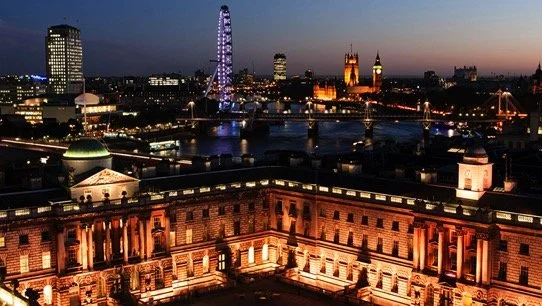
Start with the three numbers King's actually publishes: just under 1,000 applications, nearly 350 interviews, around 175 offers. 🦷
Read those in order and something unusual jumps out. Getting an interview at King's is hard — roughly 1 in 3 applicants manage it. But once you are in the room, the odds swing dramatically in your favour. King's makes about 160 Home-fee offers and 15 Overseas-fee offers from those 350 interviews. That is close to one offer for every two people interviewed.
There is a second surprise. Most dental schools in the United Kingdom now run Multiple Mini Interviews (MMIs) — a circuit of short stations with a buzzer. King's used to. It doesn't any more. For current applicants, King's states plainly that interviews are conducted remotely, with a panel of two interviewers.
So if you have spent the summer drilling MMI stations, you are preparing for the wrong format. This guide covers what King's actually does: how you get shortlisted, why your GCSEs matter more here than at almost any other dental school, how the University Clinical Aptitude Test (UCAT) is used, when everything happens — and 70 practice questions written for the panel you will actually meet.
🦷 An introduction to King's College London Dental School
King's teaches dentistry through the Faculty of Dentistry, Oral & Craniofacial Sciences (FoDOCS) — the faculty that most people still call the King's Dental Institute. It is not a small operation. King's describes itself as "the largest dental school in the UK graduating around 150 dentists a year."
The Bachelor of Dental Surgery (BDS) is a five-year programme, Universities and Colleges Admissions Service (UCAS) code A205, taught across King's Guy's, St Thomas', Denmark Hill and Waterloo campuses. Your clinical training happens in partnership with Guy's Hospital, St Thomas' Hospital and King's College Hospital — three of the world's best-known teaching hospitals, in one of the most clinically diverse cities on the planet.
The teaching philosophy is genuinely integrated. In King's own words, "basic science teaching will relate to clinical practice and clinical teaching will be underpinned by scientific understanding." The curriculum is built around whole patient care — you are expected to think about a patient's total dental and medical needs rather than the tooth in front of you. The programme strongly emphasises early clinical experience, and you train alongside Dental Therapy and Dental Hygiene students, which reflects how the dental team works in practice.
The **General Dental Council (GDC)**reviews, inspects, and accredits the programme, and you can also intercalate a Bachelor of Science (BSc) degree along the way.
What makes King's Dental School stand out?
Five things genuinely separate King's from the rest of the field:
🥇 It is ranked first in the United Kingdom for dentistry. King's states on its own course page: "Dentistry at King's is ranked 1st in the UK and 5th in the world - QS World University Rankings by Subject 2026." No other UK dental school can say that.
🏥 Three world-famous teaching hospitals. Guy's, St Thomas' and King's College Hospital. The clinical case mix in South London is extraordinarily broad — you will see presentations that students in smaller cities read about but rarely meet.
📏 Scale. Around 150 graduates a year makes King's the biggest dental school in the country. That means more peers, more societies, more specialist departments and more research going on around you. It also means a large cohort — more on what students say about that below.
🥽 Serious simulation kit. King's advertises "state-of-the-art clinical, simulation (both low fidelity phantom head simulation and high fidelity augmented reality haptic simulation) and technical facilities." Haptic simulation lets you feel resistance as you drill, before you go anywhere near a patient.
🚪 A genuine widening participation route. The Enhanced Support Dentistry Programme (ESDP), UCAS code A206, is a five-year BDS with lower grade requirements for students who have attended only non-selective state schools in a London borough since the age of 11. Very few dental schools offer anything comparable.
🔬 Research depth. FoDOCS runs three research centres — Craniofacial & Regenerative Biology, Host-Microbiome Interactions, and Oral, Clinical & Translational Sciences — and describes itself as one of the leading centres for oral, craniofacial and dental research anywhere.
📊 Rankings and student experience ratings
Dentistry subject rankings
- 1st in the United Kingdom and 5th in the world — QS World University Rankings by Subject 2026, Dentistry
- 8th in the United Kingdom — Complete University Guide, Dentistry subject league table 2027
In the Complete University Guide's 2027 dentistry table, King's scores 91 for research quality, 95 for graduate prospects, 70 for entry standards and 60 for student satisfaction.
That research quality figure of 91 is the highest in the top eight. King's is, measurably, the strongest research environment in UK dentistry. 🔬
King's College London worldwide
- 37th in the world and 6th in the United Kingdom — QS World University Rankings 2027
- 6th in the United Kingdom — Times Higher Education (THE) World University Rankings 2026
- 6th in the United Kingdom for graduate employability — Times Higher Education Global Employability University Ranking 2026
- 16th in the United Kingdom — Complete University Guide 2027
- 44th in the world for academic reputation and 62nd for employer reputation — QS 2027
- 17th in the world for sustainability — QS 2027, up from 44th in 2024
- 3rd for impact among multi-faculty universities — Research Excellence Framework (REF) 2021
- Founded in 1829 by King George IV and the Duke of Wellington, with 14 Nobel laureates among its alumni
Student experience — the honest picture 🤔
Most guides skip this bit. We won't, because you are choosing where to spend five years of your life.
King's is a superb academic and clinical environment: first in the UK for dentistry, 95 for graduate prospects, and a graduate employability ranking in the national top six. But in the Complete University Guide 2027 dentistry table, its student satisfaction score is 60 — the lowest in the top eight, and noticeably below schools such as Queen's University Belfast (94) and Bristol (91).
What does that actually mean? Large London cohorts, split-site teaching across several hospitals, and the pace of a very big dental school. None of that makes King's a bad choice — plenty of students thrive precisely because of the scale and the clinical exposure. But go in with your eyes open, and be ready for the interview question hiding inside this: "What would you contribute to King's?" is a question about how you would make a large community work for you and for others. 💙
🎯 How King's Dental School decides who to call for an interview
King's shortlisting is short, brutal and published in two sentences. Here they are, in King's own words:
"Applications are ranked based on GCSE/IGCSE performance, UCAT score and contextual information. We then review the rest of the application, including achieved/predicted grades, personal statement and reference."
Stage 1: the ranking
Three things go into the ranking, and only three:
- GCSE/IGCSE performance 📚
- University Clinical Aptitude Test (UCAT) score 🧪
- Contextual information 🗺️
Stage 2: the review
Applications that survive the ranking are then read properly — achieved and predicted grades, personal statement and reference.
Why this design should change how you apply
🔑 Notice what is not in Stage 1. Your personal statement is not in the ranking. Your reference is not in the ranking. Your work experience is not in the ranking. They matter at Stage 2 — but only if your numbers get you there.
🔑 And notice what is in Stage 1 that most applicants ignore: your GCSEs. King's minimum GCSE requirement is modest — grade 6/B in English Language and Mathematics. But the minimum requirement and the ranking are two completely different things. A strong GCSE profile is doing real, quantifiable work in your King's application, and unlike the UCAT, you cannot resit it in the summer before you apply.
If you are reading this in Year 11 or Year 12, that is the single most actionable sentence in this article. 💡
Contextual information
King's does not make reduced contextual offers on the standard BDS — every applicant must meet the standard entry requirements. But contextual data is used within the ranking to assess your application in the round. If your circumstances are relevant, make sure you complete the contextual questions in your UCAS application properly.
The exception is the Enhanced Support Dentistry Programme, which is a separate course with genuinely lower grade requirements. More on that below.
🧪 How the University Clinical Aptitude Test (UCAT) is used at King's
The rules, in King's own words
"All applicants are required to sit the UCAT (previously known as UKCAT), prior to applying to this programme, and the UCAT must be taken the same year you apply in order to be valid."
"King's does not have a threshold UCAT score in any particular year, as it is dependent upon the range of scores received in each cohort. The overall UCAT score averaged across the four subtests is given more consideration than the individual subtest scores, and the Situational Judgement Test (SJT) is also taken into account when shortlisting."
Three things follow from that:
- ✅ There is no published cut-off, and there never will be — the effective line moves every year with the strength of the applicant pool.
- ✅ Your overall score matters more than any individual subtest. A weak section will not sink you if the total is strong.
- ✅ The Situational Judgement Test is taken into account. King's does not say it requires a particular band, but it is explicitly part of shortlisting. Do not treat it as the section you cannot revise for.
"No threshold" does not mean "no pressure"
Because King's ranks rather than filters, your UCAT score is not a hurdle you clear — it is a position in a queue. Higher is straightforwardly better, all the way up. There is no point at which you can stop and say "that's enough for King's". 📈
🚨 The scale change you must understand before comparing any old numbers
Abstract Reasoning was removed from the UCAT from 2025 onwards. The test now has three cognitive subtests instead of four, and the maximum total cognitive score is 2700, not 3600.
Every UCAT cut-off, average or "you need this for King's" figure you find in a forum post, tutoring guide or article written before 2025 is on a completely different scale and cannot be compared to your score. On the old scale, 2600 was around 72%. On the new scale, it would be nearly perfect. Check the scale before you panic. ⚠️
(One consequence of the change: King's published wording still refers to "the four subtests", which reflects the older test format. The principle — total score over individual sections — is unchanged.)
What the national numbers actually look like
The UCAT Consortium publishes statistics each autumn. For the 2025 cycle, across 41,354 tests, the means were:
- Verbal Reasoning: 602
- Decision Making: 628
- Quantitative Reasoning: 661
- Total cognitive mean: 1891
Because King's ranks, the deciles are more useful to you than the mean. In the 2025 cycle, the total cognitive score boundaries were roughly:
- 7th decile: 2010
- 8th decile: 2100
- 9th decile: 2220
The Situational Judgement Test band distribution nationally was Band 1: 21%, Band 2: 39%, Band 3: 29%, Band 4: 10%.
Treat the eighth or ninth decile as the territory where a King's application becomes genuinely competitive, and remember that this is a ranking, not a rule. 🎯
📚 Academic entry requirements for 2027 entry
Dentistry BDS (UCAS code A205)
- A-levels: A*AA, including grade A in Biology or Chemistry, plus grade A in one of Biology, Chemistry, Physics, Mathematics or Psychology. Further Mathematics cannot be your third A-level if Mathematics is being used to meet the subject requirement. Science practical endorsements must be passed.
- International Baccalaureate (IB): 38 points overall, including Theory of Knowledge and the Extended Essay, or an aggregate of 19 from three Higher Levels — with grade 6 at Higher Level in Chemistry or Biology, plus grade 6 at Higher Level in one of Biology, Chemistry, Mathematics, Physics or Psychology.
- GCSEs: grade 6/B in both English Language and Mathematics as the minimum — but remember that GCSE performance is part of the ranking, not just a threshold.
- English language (international applicants): King's Band B.
Enhanced Support Dentistry Programme BDS (UCAS code A206) 🚪
A separate five-year BDS for students from under-represented backgrounds, with materially lower grade requirements:
- A-levels: AAB, including grade A in Biology or Chemistry, plus grade B in Biology, Chemistry, Physics, Mathematics or Psychology
- International Baccalaureate: 35 points, with 17 from three Higher Levels including grade 6 in Chemistry or Biology
- GCSEs: English Language and Mathematics at grade 6/B
Eligibility is strict. In King's own words: "To be eligible to be considered for the Enhanced Support Dentistry Programme, you must have attended only non-selective state education within a London borough as determined by the UK government's Department for Education (DfE), since the age of 11." Grammar schools and other selective schools do not count. You cannot have started or completed a degree. Overseas-fee applicants are not eligible. Students on the K+ widening participation programme have the London borough requirement waived.
The numbers on this route are worth knowing: in the most recent published cycle, King's received around 200 applications, interviewed 40 and made 18 offers. If you are eligible, this is one of the best-value routes into dentistry anywhere in the country. ✅
The rules that catch people out
📌 Resits are considered — with conditions. A first resit within three years is considered. A second resit within four years normally requires mitigating circumstances and a faculty referral.
📌 You must be 18 by 1 January of your first year. This catches a small number of applicants every cycle.
📌 A maximum of four UCAS choices may be for dentistry. Your fifth can be any other programme.
📌 Transfers from other dental schools are not accepted.
📌 Deferred entry is restricted. Home-fee applicants may request deferral with extenuating circumstances; Overseas-fee applicants cannot defer except for military or national service. This is stricter than many dental schools — if a gap year is central to your plan, check the current wording before you apply. ⚠️
📌 Occupational health clearance, vaccination compliance and an enhanced Disclosure and Barring Service (DBS) check are required before you start.
🔬 What work experience does King's expect?
King's does not publish a required number of days, and it is refreshingly realistic about access:
"We would normally expect that you will have undertaken some work experience in a caring environment and/or observation in a clinical setting. If this is not possible, we look for evidence that you have worked in a setting where you can interact with the general public, e.g. in a pharmacy, check-out or restaurant."
Read that carefully. A Saturday job at a supermarket checkout counts if dental shadowing is genuinely unavailable to you. What King's wants is evidence that you have dealt with real members of the public — including difficult ones — and understood something from it.
What the personal statement needs to show is stated just as clearly:
"We are looking particularly for evidence of appropriate commitment to, and realistic appreciation of, the academic, physical and emotional demands of a dentistry degree programme and career."
Realistic appreciation. Not enthusiasm. Not a story about a childhood filling. Evidence that you know what the job costs — physically, academically and emotionally — and that you want it anyway. 🎯
🗣️ How King's Dental School interviews: format, structure and timings
The headline: a remote panel of two, not an MMI
This is the single most important thing in this article, so here it is in King's own words:
"Interviews are conducted remotely with a panel of two interviewers. In previous years, interviews have taken the form of Multi Mini Interviews (MMIs) in person, with six interviewers."
So for the current process:
- 💻 Delivery: remote. Online, from wherever you are. No travel to London, no waiting room, no circuit.
- 👥 Panel: two interviewers.
- ⏱️ Length: not published. King's does not state a duration. Plan for a focused conversation rather than a marathon, and rehearse answers of 90 seconds to two minutes, which is the right length for almost any panel question.
- 📋 Structure: a conversation with defined assessment areas, rather than timed stations.
What the panel is assessing
King's publishes its assessment framework, and it is unusually explicit. Interviewers are:
"assessing communication skills, exploring general social and ethical issues, normally health related, and assessing the interviewee's general suitability for the programme and as a health professional, as well as how the interviewee will contribute to the university as a whole."
Pull that apart and you have four named assessment areas:
- 💬 Communication skills
- ⚖️ General social and ethical issues, normally health-related
- 🩺 General suitability for the programme and as a health professional
- 🏛️ Contribution to the university as a whole
That fourth one is rarer than you might think, and most applicants prepare nothing for it. King's is telling you it wants to know what you will add — to the faculty, to the student body, to the wider university. Have an answer. ⭐
The MMI caveat you should not ignore
King's describes the MMI as what happened "in previous years", and the Dental Schools Council's 2027 entry document lists King's interview method as "yet to be confirmed".
Translation: the remote panel is what King's currently publishes, and it is what you should prepare for — but the format is not carved in stone for 2027 entry. Check your invitation email carefully, and do not throw away your MMI practice. The good news is that the underlying skills are identical. A well-prepared panel candidate handles an MMI station perfectly well; the only real difference is pacing. 🔄
Getting the remote set-up right
A remote interview is a real assessment condition, and communication skills are literally the first thing on the mark scheme. Treat your set-up as part of your preparation:
- 📷 Camera at eye level, not looking up your nostrils from a laptop on your knees
- 💡 Light in front of you, not behind — never sit with a window at your back
- 🎧 Wired headphones if you have them, and a tested microphone
- 🚪 A quiet room, a closed door, and a housemate briefed not to walk in
- 🌐 A backup device with mobile data, and the invitation email to hand so you know who to contact if the connection dies
- 👀 Look at the camera when you make your key point, not at your own face on the screen
📅 When are King's dentistry interviews held?
The timeline for 2027 entry:
- 15 October 2026 — UCAS deadline for dentistry (a maximum of four of your five choices may be dentistry)
- Autumn 2026 — ranking on GCSE performance, UCAT score and contextual information, then full application review
- December 2026 to March 2027 — the interview period. King's states: "The interview period generally runs from December to March, and we aim to send out invites via King's Apply with at least two weeks notice of an interview date."
- Throughout the cycle — a small number of offers released
- By the UCAS decision deadline in May 2027 — all decisions released
Two practical points. First, invitations come through King's Apply, not by post and not only by email — check the portal regularly from late November. Second, at least two weeks' notice means your preparation needs to be underway before the invitation arrives, not started when it does. 📬
🧠 What topics are covered in the King's dentistry interview?
Mapping everything King's publishes onto the four assessment areas, prepare for:
- Motivation for dentistry — and why dentistry rather than medicine
- Realistic appreciation of the academic, physical and emotional demands of the course and career
- Reflection on work experience — in a clinical setting, a caring environment, or a public-facing job
- Communication — explaining, listening, adapting to your audience, breaking bad news
- Social and ethical issues, normally health related — consent, capacity, confidentiality, resource allocation, public health
- NHS dentistry — access, contract reform, prevention, oral health inequalities
- Knowledge of the profession — the dental team, the General Dental Council, the route to Dental Foundation Training
- Teamwork, resilience and manual dexterity
- Professionalism and the GDC's Standards for the Dental Team
- Contribution to King's — what you would add to the faculty and the wider university
- Why King's specifically — the course, the hospitals, the city
🔢 How many are interviewed, and how many get offers?
Here is what King's publishes for the most recent cycle with complete data:
"In the most recent admissions cycle for which we have complete data, we interviewed nearly 350 applications and made around 160 Home-fee-paying offers and 15 Overseas-fee-paying offers on the programme. We received just under 1000 applications."
Laid out:
- 📥 Just under 1,000 applications
- 🎤 Nearly 350 interviewed — roughly 35% of applicants
- 📬 Around 175 offers — 160 Home-fee and 15 Overseas-fee
- 🎓 Around 150 dentists graduating each year
And on the Enhanced Support Dentistry Programme: around 200 applications, 40 interviews, 18 offers.
What the numbers really say
Roughly one in three applicants gets an interview at King's. Of those interviewed, roughly one in two receives an offer. 💪
That is a strikingly favourable interview-to-offer ratio by dental school standards, and it tells you exactly where King's applies its pressure: at shortlisting, not at interview. GCSEs, UCAT, and contextual data are the real gate. The interview is where King's confirms that the person behind the numbers can communicate, reason ethically and function as a future health professional.
Which means: fight hard for the invitation, then walk into the interview knowing the odds are genuinely in your favour. 🌟
✅ What is the interview scoring method?
King's does not publish a numerical marking scheme, a station-by-station breakdown or a pass mark. What it publishes is the framework, which is nearly as useful — and considerably more useful than a number, because you can prepare against it directly.
The panel of two assesses:
- 💬 Communication skills
- ⚖️ General social and ethical issues, normally health related
- 🩺 General suitability for the programme and as a health professional
- 🏛️ Contribution to the university as a whole
Two interviewers scoring against a shared framework is a deliberately consistent design: every candidate is assessed on the same things, and two independent views reduce the effect of one interviewer's bad morning.
Because your interview performance sits alongside a Stage 1 ranking and a Stage 2 review, think of your final position as cumulative rather than as a single interview mark. Map your preparation onto those four areas, and you have covered the scheme. 🎯
📮 When are offers released?
King's is unusually candid about this, and it will save you weeks of anxiety:
"We generally release a small number of offers throughout the admissions cycle, however, the majority of applicants who are invited to interview will be placed on hold until we have conducted all interviews."
"All decisions will be released by the UCAS decision deadline in May."
So:
- 📆 A small number of offers go out during the cycle, from around January
- ⏸️ Most interviewed applicants are held until every interview is finished — typically into March or April
- 📮 All decisions are released by the UCAS decision deadline in May 2027
If you interview in December and hear nothing until spring, that is the normal process working exactly as designed. It is not a rejection in slow motion, and it is not a sign that your interview went badly. King's is comparing you against a field it has not finished meeting yet. 🤞
❓ 70 example King's dentistry interview questions, sorted by assessed area
These are written for King's format — a remote panel of two, working through defined assessment areas in conversation — and grouped by the four things King's says it assesses, plus the underlying topics those areas draw on.
Practise them out loud, to a webcam, for 90 seconds to two minutes each. A panel interview rewards answers that are structured, finish cleanly and leave room for a follow-up. Rambling is the most common way strong candidates lose marks. ⏱️
💬 Communication skills
- Explain to us, as though we were a nervous eight-year-old, what a filling is and why you need one.
- Teach us something you know well in two minutes. It does not have to be scientific.
- How would you explain a treatment plan to a patient whose first language is not English?
- A patient has read online that root canal treatment causes cancer. How do you respond?
- What makes someone a good listener? Give us an example of a time you listened well.
- Tell us about a time your communication went wrong. What did you change afterwards?
- How would you tell a patient that their own habits are causing their pain, without them becoming defensive?
- How does the way you speak change between a frightened child, an older patient with hearing loss, and a friend your own age?
- A patient is crying in the chair before you have touched them. What do you say first?
- How would you break bad news to a patient — that a tooth they hoped to save has to be extracted?
- What would you do if a patient told you something and asked you not to write it in their notes?
- How do you check that a patient has actually understood what you have told them?
⚖️ Social and ethical issues, normally health related
- A 15-year-old asks for tooth whitening and does not want their parents told. Talk us through your thinking.
- What does informed consent actually require, and when is it hard to obtain?
- There is one emergency appointment left today and three patients who want it. How would you decide?
- Should patients who repeatedly miss appointments lose their place on an NHS list?
- A patient who smokes heavily wants dental implants. What do you consider?
- Should sugary drinks be taxed more heavily? Make the case both ways.
- Is water fluoridation ethically justifiable when it is applied to a whole population without individual consent?
- A patient asks you to whiten a healthy set of teeth that already look fine to you. What do you consider?
- You see a fellow student post a recognisable photograph of a patient's mouth on social media. What do you do?
- Should NHS dental treatment be free at the point of use for everyone?
- What would you do if you made a clinical error that the patient never noticed?
- A colleague arrives late and smelling of alcohol for the third time. What do you do?
- An adult patient with a learning disability refuses treatment their carer is asking you to provide. How do you approach it?
- Is it ever acceptable to treat a patient who has not fully understood what you are proposing?
- Private dentistry can offer treatments the NHS will not fund. Is that fair?
- A parent refuses fluoride varnish for their child. What do you do?
🩺 Suitability for the programme and as a health professional
Motivation for dentistry
- Why dentistry? And why not medicine?
- When did you first seriously consider dentistry, and what has kept you interested since?
- What would you say to someone who described dentistry as a well-paid trade?
- Which part of dentistry appeals to you least, and how do you know you could live with it?
- This is five years of study followed by Dental Foundation Training. How do you feel about committing to that now?
- If you spent forty years in general practice in one town, would that still appeal to you?
- If you do not get a dentistry place this year, what will you do?
Realistic appreciation of the demands
- King's looks for a realistic appreciation of the academic, physical and emotional demands of dentistry. What do you think those demands actually are?
- Dentistry involves intricate manual work in a small space, for hours, under time pressure. What makes you think you can do that?
- What is physically demanding about being a dentist that most people never think about?
- Rates of stress and burnout in dentistry are high. What do you understand about why?
- What do you do to look after your own wellbeing, and would it survive a five-year clinical course?
- Tell us about feedback that was hard to hear. What did you actually do with it?
- Describe a genuine failure, and what changed as a result of it.
- How do you organise yourself when several deadlines land in the same week?
Reflecting on work experience
- Tell us about your work experience or observation. What surprised you most?
- Describe something you saw a dental professional do well. What specifically made it effective?
- Describe something you saw that you would do differently, and explain your reasoning.
- What did your experience teach you about the parts of the job that are not clinical?
- If you could not get dental work experience, what did you do instead, and what did you take from it?
- Tell us about a time in a public-facing or caring role when you dealt with someone difficult.
- What is the least glamorous thing you have seen in a dental setting, and how did you react?
Knowledge of the profession and NHS dentistry
- Walk us through a typical day for a general dental practitioner working in the National Health Service (NHS).
- Who is in the dental team, and what does each member contribute?
- What is the General Dental Council, and what does it do?
- What do you understand by the term "dental deserts"?
- What do you think are the three biggest challenges facing NHS dentistry right now?
- What do you know about the reforms to the NHS dental contract introduced from 2026?
- The national supervised toothbrushing programme targets three- to five-year-olds in the most deprived areas. Is that the right place to spend the money?
- Why does oral health in the United Kingdom differ so sharply between the richest and poorest areas?
- What is evidence-based dentistry, and why does it matter in practice?
- What role should artificial intelligence play in diagnosing dental disease, and where should it stop?
- Tooth decay is the most common reason for hospital admission in young children in England. What would you do about it?
🏛️ Contribution to the university as a whole
King's explicitly assesses "how the interviewee will contribute to the university as a whole". Almost nobody prepares for this. Do.
- What would you contribute to King's beyond your clinical work?
- Tell us about something you have organised, founded or led. What did it take?
- What do you do outside academic work, and what does it give you?
- How would you support a fellow student who was struggling in first year?
- King's has around 20,000 undergraduates across several campuses. How would you make a community that size work for you?
- What role do you usually take in a team, and what role do you find hardest?
- What would your friends say you add to a group?
- Is there anything about student life at a large London university that worries you?
- Five years from now, what would you like to have been part of at King's that has nothing to do with teeth?
🏛️ Questions specific to King's College London
These are the ones you cannot bluff, and the ones that separate a serious application from a scattergun one. Prepare specific, concrete answers using the course's real features — the hospitals, the size, the teaching model, the widening participation ethos.
- Why King's, rather than the other three dental schools on your UCAS form?
- What do you know about how our Bachelor of Dental Surgery is structured?
- King's is the largest dental school in the United Kingdom, graduating around 150 dentists a year. Is that an advantage or a disadvantage for a student?
- You would train across Guy's, St Thomas' and King's College Hospital. What do you think you would gain from a split-site clinical training?
- Our teaching is built around whole patient care rather than treating teeth in isolation. What do you think that means in practice?
- Our students train alongside Dental Therapy and Dental Hygiene students. Why do you think we do that, and what would you take from it?
- We use both phantom head simulation and high fidelity augmented reality haptic simulation before you treat patients. How do you feel about learning that way?
- Dentistry at King's is ranked first in the United Kingdom and fifth in the world. Does a ranking like that actually matter to you, and why?
- Would you be interested in intercalating a Bachelor of Science degree, and what would you want to study?
- King's runs the Enhanced Support Dentistry Programme for students from non-selective state schools in London. Why do you think widening participation matters in dentistry specifically?
- South London gives you an unusually diverse patient population. What challenges and opportunities does that create for a dental student?
- King's was founded in 1829 and has 14 Nobel laureates among its alumni. What appeals to you about studying somewhere with that history?
- Have you been to an open day, spoken to a King's student, or attended one of our outreach events? What did you take from it?
- Could you live and study in London for five years? Be honest about the challenges.
- Our research strengths include craniofacial and regenerative biology and host-microbiome interactions. Does dental research interest you at all?
💬 What students say about the King's dentistry interview
⚠️ The themes below are drawn from recurring feedback shared by applicants and current students over several cycles, paraphrased rather than quoted from named individuals. Treat them as a steer, not as gospel.
"It was a conversation, not an interrogation." The most common theme. Two interviewers on a video call sounds clinical, but candidates repeatedly describe a professional, warm and curious tone. Nobody is trying to catch you out.
"They asked what I would bring to King's — and I had nothing." The single most repeated regret. Applicants who had rehearsed motivation, ethics and work experience were caught off guard by questions about contribution to the university. It is on the published assessment framework, and it still surprises people every year.
"The ethical question was not extreme." Candidates describe realistic, everyday scenarios — consent, a difficult patient, an awkward colleague, allocating a scarce appointment — rather than headline-grabbing dilemmas. They reward a structured, balanced answer, not a clever one.
"They followed up on everything I said." With two interviewers and a conversational format, expect "why?" and "tell us more". Rehearsed-sounding answers reportedly attracted the most follow-ups, and shallow claims came apart quickly.
"Online was easier than I expected." No travel, no waiting room full of nervous competitors, interview from your own bedroom. Several applicants said it removed a layer of stress. Those who struggled were the ones whose internet or setup let them down.
"The wait was the hardest part." Applicants interviewed in December and January describe hearing nothing for months. This matches exactly what King's publishes about holding the majority of candidates until all interviews are complete — but it does not stop it from feeling awful. If it happens to you, it is the process, not a verdict.
"They wanted to know why King's." Repeatedly flagged. Applicants who could name the hospitals, the teaching model or the scale of the school felt on solid ground. Those who offered generic praise for London felt the answer land flat.
🌟 Top tips for the King's dentistry interview
1. Prepare for a panel, not an MMI. 🎤 King's currently runs a remote panel of two. Practise sustained two-minute answers with follow-ups, not six-minute stations with a buzzer. But read your invitation carefully — the Dental Schools Council still lists the 2027 method as unconfirmed.
2. Learn the four assessment areas by heart. Communication skills. Social and ethical issues, normally health related. General suitability for the programme and as a health professional. Contribution to the university as a whole. That is your mark scheme, published by King's.
3. Build a real answer to "what would you contribute to King's?" ⭐ It is the area almost nobody prepares and the one King's names explicitly. Have two concrete examples ready — something you have led, built, organised or sustained.
4. Fight hardest for the invitation. 📊 One in three applicants is interviewed; roughly one in two interviewees receives an offer. The bottleneck is the Stage 1 ranking on GCSEs, UCAT and contextual data — not the interview.
5. Do not aim at a UCAT number. There is no King's threshold. It is a ranking, so higher is better all the way up. Aim for the eighth or ninth decile and keep going.
6. Take the Situational Judgement Test seriously. King's states it is taken into account at shortlisting. It is the section applicants most often assume they cannot revise for — and they are wrong.
7. Show "realistic appreciation", not enthusiasm. 🩺 King's uses that exact phrase. Talk about the physical toll, the emotional weight of anxious patients, the isolation of practice, the perfectionism. Then explain why you want it anyway. That is a far stronger answer than a story about loving your orthodontist.
8. Have five stories, not fifty facts. A public-facing job. A team that went wrong. A failure. A time you explained something difficult. A time you led. Five well-reflected experiences can answer forty different questions — and a panel that follows up will find the depth.
9. Get the technology right. 💻 Camera at eye level, light in front of you, quiet room, tested microphone, backup device on mobile data. Communication skills are the first thing on the mark scheme, and a frozen screen is assessed badly.
10. Learn the GDC's Standards for the Dental Team. Put patients' interests first, communicate effectively, obtain valid consent, maintain and protect patients' information, raise concerns. Five minutes of reading gives you the professional vocabulary for half the ethics questions.
11. Know what has changed in NHS dentistry. 📰 Contract reform from 2026, the new unscheduled care requirement, supervised toothbrushing for three- to five-year-olds in deprived areas, and access inequality. Have an opinion, and be able to argue the other side.
12. Practise on camera, not in your head. Record yourself. Watch it back once, however painful. Most people discover they speak too fast, look at the wrong part of the screen and never finish a sentence cleanly.
13. Re-read your personal statement before you log on. It came into play at Stage 2, and the panel may well have it.
14. Expect silence afterwards. ⏸️ Most interviewees are held until all interviews are complete, with all decisions released by the UCAS deadline in May. Plan your spring around that so it does not eat you alive.
15. Ask one real question at the end. Something you actually want to know about the course, the hospitals or the first clinical year. It signals genuine interest far better than "what do you enjoy about working here?"
⚡ Key facts at a glance
🏛️ Dental school: Faculty of Dentistry, Oral & Craniofacial Sciences (FoDOCS), King's College London — teaching across Guy's, St Thomas', Denmark Hill and Waterloo campuses, in partnership with Guy's, St Thomas' and King's College Hospitals
🎓 Degree: Bachelor of Dental Surgery (BDS), 5 years, UCAS code A205. Enhanced Support Dentistry Programme BDS, 5 years, UCAS code A206
📏 Size: the largest dental school in the United Kingdom, graduating around 150 dentists a year
🥇 Dentistry rankings: 1st in the UK and 5th in the world (QS World University Rankings by Subject 2026); 8th in the UK (Complete University Guide 2027)
🌍 University rankings: 37th in the world, 6th in the UK (QS 2027); 6th in the UK (THE World University Rankings 2026); 16th in the UK (Complete University Guide 2027); 3rd for impact among multi-faculty universities (REF 2021)
⭐ Student experience: Complete University Guide 2027 dentistry scores — research quality 91, graduate prospects 95, entry standards 70, student satisfaction 60
📅 Application deadline: 15 October 2026 (maximum four dentistry choices)
📝 Entry requirements (A205): A-levels A*AA including grade A in Biology or Chemistry plus grade A in a second permitted science, Mathematics or Psychology · IB 38 points with 6,6 at Higher Level · GCSE English Language and Mathematics at grade 6/B
🚪 Enhanced Support Dentistry Programme (A206): A-levels AAB · IB 35 · non-selective London state education since age 11 · Home-fee applicants only · approximately 200 applications, 40 interviews, 18 offers
🧪 Admissions test: University Clinical Aptitude Test (UCAT), same year as application only
⚠️ UCAT use: no threshold score; overall total weighted more than individual subtests; Situational Judgement Test also considered at shortlisting
📉 2025 UCAT national figures: VR 602, DM 628, QR 661, total mean 1891 across 41,354 tests; 8th decile 2100, 9th decile 2220 (new 2700 scale — pre-2025 figures on the old 3600 scale are not comparable)
📊 Shortlisting: ranked on GCSE/IGCSE performance, UCAT score and contextual information, then full review of grades, personal statement and reference
🦷 Work experience: no fixed hours; caring environment or clinical observation preferred, public-facing work (pharmacy, retail, hospitality) accepted where shadowing is not possible
🗣️ Interview format: remote panel with two interviewers (previously in-person Multiple Mini Interviews with six interviewers); duration not published
✅ Assessed: communication skills · social and ethical issues, normally health related · general suitability for the programme and as a health professional · contribution to the university as a whole
📆 Interview period: December 2026 to March 2027, invitations via King's Apply with at least two weeks' notice
👥 Numbers: just under 1,000 applications · nearly 350 interviewed · around 175 offers (160 Home-fee, 15 Overseas-fee)
📮 Offers: a small number released during the cycle; most interviewees held until all interviews are complete; all decisions released by the UCAS decision deadline in May 2027
🚫 Restrictions: no contextual offers on A205 · must be 18 by 1 January of first year · transfers not accepted · deferred entry restricted
🩺 Also required: occupational health clearance, vaccination compliance and an enhanced Disclosure and Barring Service (DBS) check
🔗 Useful links
- King's College London — Dentistry BDS
- King's College London — Dentistry BDS entry requirements and selection process
- King's College London — Enhanced Support Dentistry Programme BDS
- King's College London — Enhanced Support Dentistry Programme entry requirements
- King's College London — Faculty of Dentistry, Oral & Craniofacial Sciences
- King's College London — Why King's
- King's College London — first in the UK and fifth in the world for dentistry
- Dental Schools Council — Entry requirements for 2027 entry (PDF)
- Dental Schools Council
- UCAT Consortium — official test information
- UCAT Consortium — 2025 test statistics
- UCAT Consortium — How universities use the UCAT
- General Dental Council — Standards for the Dental Team
- NHS England — Preparing for NHS dental quality and payment contract reforms
- NHS Constitution for England
- UCAS — 2027 entry deadline for medicine, dentistry and veterinary courses
- Complete University Guide — Dentistry league table 2027
- QS World University Rankings by Subject — Dentistry