University of Liverpool Dental School Interview Questions for 2027 Entry
Most dental schools weigh everything up. Liverpool starts by throwing things out.
Before anyone at the School of Dentistry looks at your grades, your work experience or a single sentence you have written, one number can end your application on its own: your Situational Judgement Test (SJT) band. Liverpool states plainly that "a score of Band 4 in Situational Judgement would however not be deemed a competitive enough score for the applicant to be considered for the BDS programme." The Dental Schools Council goes further still, recording Liverpool's position for 2027 entry as: "we do not consider applicants who achieve Band 3 or 4." 😬
In 2025, 39% of everyone who sat the University Clinical Aptitude Test (UCAT) scored Band 3 or Band 4. Read that alongside the rule above and you can see why the SJT deserves far more of your revision time than most applicants give it.
Clear that hurdle and the picture changes completely. Liverpool told a Freedom of Information requester exactly how the rest works: shortlisting scores are 40% UCAT and SJT, 60% a non-academic questionnaire, and then "we would then interview the top scoring students from this group and an offer would then solely be dependent on the applicant's interview score." 🔑
So the interview is not one factor among several at Liverpool. It is the decision.
This guide covers how Liverpool shortlists, what the multiple mini interviews (MMIs) actually assess, the real application, interview and offer numbers, the UCAT scores that have historically got people through the door — and 70 practice questions written as Liverpool station prompts.
🦷 An introduction to the University of Liverpool School of Dentistry
Liverpool has been teaching dentistry for 162 years, which makes it one of the oldest dental schools in the country — and one of the largest. The University describes itself as home to the largest community of dentistry students and staff in the United Kingdom, and the School is unusual in teaching dental surgery, dental therapy, foundation-year routes and specialist postgraduate training all under one roof.
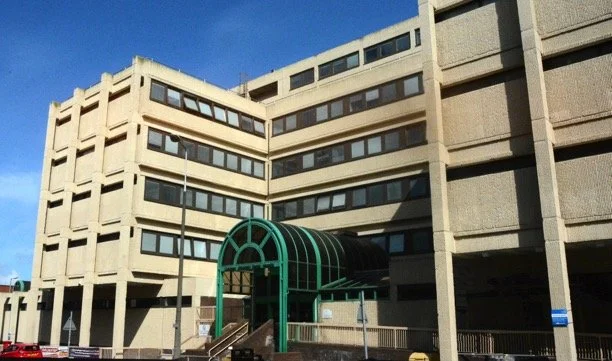
That roof matters more than it sounds. The Liverpool University Dental Hospital is in the same building as the School of Dentistry. There is no bus, no shuttle, no separate campus: you walk from a seminar room to a National Health Service (NHS) dental hospital with roughly 150 dental units, including six teaching clinics of up to 20 units each, plus a consultant-led sedation unit, oral medicine, oral surgery, orthodontics, paediatric dentistry and restorative specialties. 🏥
The degree is the Bachelor of Dental Surgery (BDS), five years, University and Colleges Admissions Service (UCAS) code A200, with approximately 72 places — up to four of which are available to international students. On graduation the degree is registrable with the General Dental Council (GDC).
Roughly how the five years run:
- Year 1 — transition to higher education, clinical sciences taught through enquiry-based learning, anatomy at the University's Human Anatomy Resource Centre (HARC), communication skills, infection control, preventive care and medical emergencies. Clinical skills are built in simulation and then, crucially, you go to clinic and treat patients in your first year
- Year 2 — restorative work expands, extraction of primary teeth, and rotations through paediatric, oral diseases and radiology clinics
- Year 3 — dental trauma, pain management, applying basic science to real clinical problems, and your first placement in the general dental services
- Year 4 — extraction of permanent teeth, pulpal management, crowns and bridges, placements in the community dental services and oral and maxillofacial surgery at Aintree University Hospital
- Year 5 — a further general dental services placement, paediatric dentistry at Alder Hey Children's Hospital, clinical governance and implant dentistry
What makes Liverpool Dental School stand out?
Four things genuinely separate Liverpool from the other dental schools in the UK.
🤝 A three-year Collaborative Learning Core. This is the headline. Liverpool's BDS shares a three-year Collaborative Learning Core (CLC) with dental therapy students — longer than any comparable arrangement in the country. Most schools that co-teach do it for a year or two. At Liverpool you spend three-fifths of your degree learning beside the people you will spend your career referring to, delegating to and depending on. The School's stated reasoning is that "learning and collaborating in teams builds mutual respect and understanding of the varied roles of the dental team." Have an opinion about this ready — it is the most likely "why Liverpool" follow-up in the building. 🗣️
🦷 Patients in Year 1, not Year 3. Liverpool's "personalised and supportive approach enables our students to have early access to patients, in their first year, so that developing skills can be authentically consolidated and integrated in the real-world situation." You observe and assist senior students, then treat under supervision. For a five-year course, starting the clinical clock in month six changes the whole shape of the degree.
🏨 Hospital placements most applicants have never heard of. Oral and maxillofacial surgery at Aintree University Hospital. Paediatric dentistry at Alder Hey Children's Hospital — one of Europe's busiest children's hospitals. Community dental services, general dental practice, and the School's own primary-care outreach facilities. Name these at interview and you will sound like someone who has actually read the course. 🎯
🔬 Facilities with real money behind them. State-of-the-art simulation suites "include the latest advanced haptic technology", backed by a recent £6 million investment, alongside a world-leading online assessment and e-portfolio system that gives you personalised progress data throughout the degree. The University holds a Teaching Excellence Framework (TEF) Gold rating. 💷
📊 Rankings and student experience ratings
Dentistry subject rankings
- 4th in the United Kingdom — Complete University Guide, Dentistry subject league table 2027
- 5th in the United Kingdom — Guardian University Guide 2026, Dentistry
- 2nd in the United Kingdom — Complete University Guide 2025, when the School climbed 12 places and became the highest-ranked Russell Group dental school in the country
In the Complete University Guide's 2027 dentistry table, Liverpool scores an overall 98%, built from 100 for graduate prospects, 90 for student satisfaction, 84 for research quality and 70 for entry standards.
Two of those numbers are extraordinary. Graduate prospects of 100 is the maximum available and answers the only question that really matters at the end of five years. Student satisfaction of 90 is among the highest in the dentistry table — and student satisfaction is the metric that tells you what the course is actually like to live through, as opposed to what it looks like in a prospectus. 🎓
The entry standards score of 70 is the lower one, and it is routinely misread. It reflects the average tariff of entrants, not the difficulty of getting in. With around 400 people interviewed for roughly 72 places, Liverpool is not a soft option.
The University of Liverpool worldwide
- 139th in the world out of 1,500 institutions — Quacquarelli Symonds (QS) World University Rankings 2027, a rise of eight places
- 22nd in the UK and 20th in the Russell Group — QS 2027
- 143rd in the world and 17th in the UK — Times Higher Education (THE) World University Rankings 2026, the University's highest position since those rankings began in 2011
- A founding member of the Russell Group, and one of the original "red brick" civic universities
- TEF Gold for educational excellence
The University has been open about its ambition to reach the world's top 100 by 2031. For applicants, the practical point is simpler: Liverpool is a research-intensive Russell Group institution that has moved upwards in both major global rankings for two years running. 📈
Student experience ratings
The National Student Survey (NSS) 2026 was Liverpool's strongest on record, with over 4,200 final-year students responding:
- 🏆 Highest-ever overall positivity score — above 85%
- 📚 Learning resources: 92%, four percentage points above the sector average
- 🗂️ Organisation and management: 86%, five points above the sector average
- 💚 Mental wellbeing support: 85%, an all-time high
- 🗳️ Freedom to express ideas: 90%, up three points year on year
- 📖 27 subject areas scored 90% or above for teaching
- Improvement in six of the seven survey themes
And the detail that matters most here: when the University published its NSS 2026 results, Dentistry was singled out as one of the subjects achieving particularly high overall scores. That is the School's own students, in an anonymous national survey, saying the course works. 🌟
Liverpool's Graduate Outcomes data adds the other half of the picture: 98% of dentistry students find their main activity after graduation meaningful.
🎯 How Liverpool Dental School decides who to call for interview
This is the section to read twice. Liverpool has explained its process in more detail than almost any other dental school — partly on its admissions page, partly in Freedom of Information responses — and the sequence is not what most applicants assume.
Stage 1: the academic threshold (pass or fail, not a ranking)
Your UCAS form is checked against the minimum entry criteria. Liverpool is specific that this stage is a gate, not a league table: the School confirmed under Freedom of Information that it "does not rank applicants on grades or use a points-based system."
What is checked:
- Predicted or achieved A-level grades (or equivalent) — only applicants predicted to achieve the entry criteria go forward
- The minimum GCSE requirement — and Liverpool states directly, "we use GCSE grades, or equivalent, when shortlisting for interview"
- Your reference, which should be clearly supportive
- Completeness of the form — Liverpool warns that failure to complete the UCAS form fully, including listing every qualification taken and failed, will result in rejection
⚠️ Note the consequence of this design. Straight A*s do not buy you an advantage at stage one. Meeting the threshold is worth exactly the same as smashing it. What your grades cannot do is get you back in if you miss it.
Stage 2: the scoring stage — 40% UCAT, 60% questionnaire
Everyone who clears the threshold is then scored, and this is where the ranking actually happens. Liverpool's Freedom of Information response is unambiguous about the weighting:
"UCAT/SJT 40%, non-academic information questionnaire (NAQ) 60%."
The School also explained how the questionnaire is marked — "each separate area is given a score and they are added together" — and how the UCAT half is built: applicants receive "a score for the SJT section and a separate score given for the overall section of the UCAT", added together. The actual mark scheme was withheld under Section 43(2) of the Freedom of Information Act on commercial grounds. 🔒
The questionnaire you must not miss 📧
For 2026 entry, Liverpool sent a Non-Academic Information Questionnaire (NAQ) to every applicant meeting the minimum academic criteria, between 1 October and 15 November, with two weeks to return it. The School's warning could not be blunter: "Applicants who fail to submit their questionnaire by the given deadline will NOT progress, as the application will be deemed incomplete and will be rejected." It even advises checking your junk folder.
Think about what that means. A questionnaire that many applicants treat as admin was worth 60% of the score that decided whether they were interviewed — and missing the email entirely ended the application.
🚨 An important 2027 caveat. Liverpool's published admissions page for 2027 entry does not mention the NAQ. It says instead: "We do not use the Personal Statement when shortlisting for interview", and "the total UCAT and SJT score will be used in the process to shortlist candidates for interview." Liverpool may have simplified the process, or the page may simply be shorter than the FOI-disclosed 2026 document. Either way, watch your inbox and your junk folder from 1 October 2026 onwards, and treat any questionnaire that arrives as the most important thing you will write all cycle. Check the A200 admissions page before you apply.
Stage 3: the interview
The top-scoring applicants from stage two are invited to MMIs. Liverpool states the position without softening it: "No candidate will be made an offer without interview."
Stage 4: the offer
And here is the sentence that should reshape your preparation:
🔑 "We would then interview the top scoring students from this group and an offer would then solely be dependent on the applicant's interview score."
Your UCAT, your questionnaire and your grades are how you get invited. Once you are in the circuit, the interview score is the offer decision.
Liverpool adds one more line worth memorising: "The threshold for progressing through each stage of the process varies annually depending upon the quality and quantity of applications." There is no fixed bar to aim at. You are competing against whoever else applied that year. 💥
🧪 How the University Clinical Aptitude Test (UCAT) is used at Liverpool
The rules
- Every A200 applicant must sit the UCAT in the year of application, before the UCAS deadline of 15 October
- There is no published cut-off score. Liverpool states it does "not have a set UCAT cut-off score as this figure will change every year"
- The total UCAT score and the SJT score are added together and form 40% of the shortlisting score
- Liverpool will not advise on individual scores or your likelihood of interview
- Extenuating circumstances relating to the UCAT cannot be considered — if you need adjustments, apply through the UCAT Access Arrangements policy before you test
- Contextually eligible applicants may be considered with "reduced UCAT or interview performance"
- Liverpool says flatly: "No further information on how we use the UCAT will be released." 🤐
⚠️ The SJT band rule — the hardest gate in UK dentistry admissions
This is the single most important line on the page, and it is easy to skim past.
Liverpool's own admissions page: "A score of Band 4 in Situational Judgement would however not be deemed a competitive enough score for the applicant to be considered for the BDS programme."
The Dental Schools Council's entry requirements document for 2027 entry, recording Liverpool's position: "Please note that we do not consider applicants who achieve Band 3 or 4 in the Situational Judgement Test (SJT) element of the UCAT."
Those two statements are not identical, and you should plan for the stricter one. In the 2025 UCAT cycle the bands fell out like this: Band 1 — 21%, Band 2 — 39%, Band 3 — 29%, Band 4 — 10%. If Band 3 really is excluded, 39% of the national cohort is out before scoring begins. 📉
The practical instruction is straightforward. Most applicants treat the SJT as the unrevisable bit at the end of a long test. At Liverpool it is a gate. Work through the official UCAT practice materials, read the GDC's Standards for the Dental Team, and get properly familiar with how professional judgement questions are marked — the same reasoning is what the MMI is built to assess a few months later. ✅
🚨 The scale change you must understand before comparing any UCAT number
Abstract Reasoning was removed from the UCAT from 2025 onwards. The test now has three cognitive subtests instead of four, and the maximum total cognitive score is 2700, not 3600.
Every UCAT threshold, average or "score needed" you find in an article, forum post or tutoring guide written before 2025 sits on a different scale and cannot be compared to your score. Check which scale a number is on before you panic — or celebrate.
For the 2025 cycle, across 41,354 tests, the UCAT Consortium published these national means:
- Verbal Reasoning: 602
- Decision Making: 628
- Quantitative Reasoning: 661
- Total cognitive mean: 1891
What UCAT scores have actually got people interviewed at Liverpool
Liverpool released this data under the Freedom of Information Act for home applicants who were not contextually flagged. Note carefully that these are old-scale scores out of 3600:
- 2024 entry — lowest UCAT interviewed 2,160, average UCAT interviewed 2,641
- 2023 entry — lowest 2,090, average 2,590
- 2022 entry — lowest 2,200, average 2,618
Two things to take from this. 📊
First, the average interviewee sat comfortably above the national mean but well short of perfection. An average of 2,641 out of 3,600 is roughly 73%. Liverpool interviews strong UCAT candidates, not only exceptional ones.
Second, the gap between the lowest and the average is enormous — around 450 marks. Somebody was invited with 2,160 in a year when the average was 2,641. That is the 60% questionnaire doing its work. A middling UCAT is survivable at Liverpool if the rest of your application scores well.
🔢 If you want a rough sense of these on the current scale, scaling three subtests instead of four puts an old 2,641 at roughly 1,980 and an old 2,160 at roughly 1,620. That is arithmetic, not an official conversion — Liverpool has published nothing on the new scale, and thresholds move every year. Treat it as a sense of direction, not a target.
📚 Academic entry requirements for 2027 entry
- A-levels: AAA including Biology and Chemistry, taken together at one sitting after two years of study. The third subject may be from the arts or sciences. General Studies, Critical Thinking and vocational or applied A-levels are not accepted. A pass in the science practical endorsement is required
- GCSEs: a minimum of eight GCSEs including at least five at grade 7/A and three at grade 6/B, with a minimum of grade 6/B in English Language, Maths and Science (Biology GCSE required if Dual Science was not taken). Vocational or applied GCSEs are not accepted, and GCSE Maths Numeracy is not accepted
- International Baccalaureate (IB): 36 points including 6 in Higher Level Chemistry and Biology
- Scottish qualifications: AAAAB at Higher and AA at Advanced Higher including Chemistry and Biology, with National 5s also taken into account — a minimum of five at grade A and three at grade B including Maths, English Language and Science
- Irish Leaving Certificate: H1, H1, H2, H2, H2, H2 including H1 in Chemistry and Biology, with Junior Cycle results also considered — a minimum of eight subjects at Higher Merit
- Welsh Baccalaureate Advanced: accepted in place of one A-level, in addition to Biology and Chemistry A-levels
- Graduate applicants: a 2:1 or above in any subject (first degree only), plus ABB at A-level including Chemistry and Biology, plus at least seven GCSEs at grade 6/B including Maths, English Language and Science
- Access to Higher Education Diploma: courses with at least 12 units of Biology and 12 units of Chemistry at Level 3, distinction in 45 Level 3 credits, and the equivalent of 80% overall, completed in one year. Access routes are intended for adult learners normally out of education for at least five years
- Contextual offer: contextually eligible applicants receive up to a two-grade reduction, to ABB, and additional consideration when being considered for interview
- English language: IELTS 7.0 with no component below 7.0
The rules that catch people out
📌 No A-level resits. None. Liverpool does not accept A-level resits, and does not consider applicants who have retaken Year 12 or Year 13. Module resits within the normal two-year period are fine. This is one of the strictest positions in UK dentistry and it ends more applications than any other single rule.
📌 BTEC and T-levels are not accepted at all. Neither are distance learning qualifications or vocational GCSEs.
📌 GCSEs must already be achieved. Pending GCSE grades cannot be considered.
📌 One unsuccessful interview and that is it. "Re-applications from candidates who have been unsuccessful following an interview for the A200 BDS course will not be considered." Not next year. Not ever. This is unusual and severe — and it is a powerful argument for not applying to Liverpool in a year when you are underprepared for an MMI. 🚫
📌 Liverpool BSc Dental Therapy graduates cannot progress to the A200 BDS. There are also no transfers onto the BDS from other degrees.
📌 You must be 18 by 1 October in the year of entry.
📌 The 15 October 2026 deadline is absolute. Late applications will not be considered.
📌 A plagiarised personal statement means automatic rejection. UCAS notifies the University, and the Dental School rejects such applications outright.
📌 Extenuating circumstances need their own form. Anything affecting your study or exams must go on Liverpool's online extenuating circumstances form, submitted by 15 October 2026, with evidence — information buried in the UCAS reference alone will not be taken into account. And if you are resitting A-levels on extenuating grounds, Liverpool would not consider an applicant who achieved less than BBB at the first sitting.
📌 AS levels are not considered at any point.
📌 Offers are conditional on more than grades. All entrants need an enhanced Disclosure and Barring Service (DBS) check and clearance from Occupational Health, including blood-borne virus screening and hepatitis B immunisation.
🔬 Work experience: what Liverpool actually asks for
Liverpool sits in an interesting middle position. The Dental Schools Council records that clinical experience is not a formal requirement, and the personal statement is not used when shortlisting for interview. But the course page lists work experience under "evidence required", and the admissions page is clear about what it wants to see:
"It is desirable on all dental programmes that candidates have completed a period of work experience/shadowing in a local dental practice or hospital and preferably in more than one establishment."
Liverpool also states exactly what it is looking for in that experience: knowledge of and insight into the profession, evidence of a caring attitude, awareness of the values embedded within the NHS Constitution, motivation and commitment to a career in dentistry, and a range of skills.
And here is the part applicants miss: "The Personal Statement will be reviewed during interviews." It may not shortlist you, but it will be in the room. Do not write anything you cannot defend out loud. 👀
So aim for insight rather than hours:
- Observation in general dental practice — and if you can, more than one setting, which Liverpool explicitly prefers
- Any caring, customer-facing or team environment: a care home, a shop, a sports club, a helpline
- Conversations with dental professionals, including therapists and hygienists, about what the job is really like
- Reading and listening — the British Dental Journal, the GDC's Standards for the Dental Team, dental podcasts
- Virtual work experience programmes, free online courses and dental school taster days
Whatever you do, be able to say what you learned and what it changed your mind about. 🧠
🗣️ How Liverpool Dental School interviews: format, structure and timings
It is an MMI
Liverpool's admissions page states it directly: "Multiple Mini Interviews (MMIs) are held from mid-January through to the end of February." The Dental Schools Council lists Liverpool's 2027 entry format as "multiple mini interview".
An MMI replaces one long conversation with a circuit of short, independently assessed stations. At each one you are given a task, a scenario or a few short questions, and you are scored on that station alone.
Why independent scoring should change how you behave
The defining mechanic of an MMI is that a station that goes badly does not follow you. Nobody at station six knows what happened at station two. 🔄
That makes the walk between stations part of your preparation. Applicants who spend it replaying a fumbled answer arrive at the next station distracted and lose two stations instead of one. Those who use it to breathe out and read the next prompt properly get a genuine fresh start, several times over.
What the stations assess
Liverpool does not publish a station-by-station breakdown, but it does publish exactly what it is looking for in applicants — and those criteria are the sensible basis for preparation:
- 🎭 Knowledge of and insight into the dental profession
- ❤️ Evidence of a caring attitude
- 🏥 Awareness of the values embedded within the NHS Constitution
- 🔥 Motivation and commitment to a career in dentistry
- 🧩 A range of skills, including communication, teamworking and leadership — the three the course itself is built around
- 📄 Your personal statement, which is reviewed during the interview
That reference to the NHS Constitution is the most useful thing on the page. Learn the six values — working together for patients; respect and dignity; commitment to quality of care; compassion; improving lives; everyone counts. They are the vocabulary the assessors are marking in.
Note too that the BDS programme is explicitly designed around "real-world clinical, team working, and leadership skills, along with essential personal growth", and shares a three-year core with dental therapy students. A school that builds its curriculum on interprofessional teamwork will ask you about teamwork. 🤝
How many stations, and how long?
⚠️ Liverpool does not publish its station count, station length or total duration. Anyone who tells you otherwise is guessing, and station numbers change between cycles at most schools.
What you can prepare for with confidence is the shape: a circuit of short stations, each independently scored, each opening with a prompt you read and then respond to under time pressure. Practise speaking coherently for five to seven minutes after a short read, and practise finishing — the commonest MMI failure is not a bad answer but a good answer that arrives after the bell. ⏱️
Delivery: online or on campus?
Liverpool does not state on its 2027 entry page whether the MMIs are delivered online or in person — but there is a strong clue in the same paragraph:
"Applicants are required to produce the original certificates for all completed qualifications listed on their UCAS form. Failure to produce the required documentation at interview will be considered in our selection processes. Please note that letters from schools and exam boards will NOT be accepted."
That requirement points firmly towards an in-person interview. It is also worth noting that the Dental Schools Council lists several other schools' 2027 formats as explicitly "online MMIs" — and describes Liverpool's simply as "multiple mini interview", without that qualifier.
✅ What to do: prepare for both, and check the A200 admissions page before you make travel plans. The questions do not change. What changes is whether you are managing a webcam and a quiet room, or a train, a corridor and a bell. Either way, find your original certificates now — not the week before. Hunting for a lost GCSE certificate in February is an entirely avoidable disaster. 📜
📅 When are Liverpool dentistry interviews held?
The timeline for 2027 entry:
- 15 October 2026 — UCAS deadline. Late applications will not be considered. A maximum of four of your five choices may be dentistry
- From 1 October 2026 — watch your email, including junk, for any non-academic questionnaire. In the 2026 cycle these went out between 1 October and 15 November with a two-week turnaround, and missing it meant rejection
- October 2026 to January 2027 — academic screening, scoring and ranking, and interview invitations
- Mid-January to the end of February 2027 — multiple mini interviews
- By the end of March 2027 — all applicants notified of the decision
- Before the end of May 2027 — deadline for requesting feedback, in writing, to the dental enquiries address
🚩 Liverpool's interview window is one of the earliest and longest in UK dentistry — six weeks, starting in mid-January. That is significant if you are also holding interviews at schools that cluster in February, and it means your MMI preparation needs to be finished over the Christmas holidays, not started then. 📆
🧠 What topics are covered in the Liverpool dentistry interview?
Drawing together everything Liverpool publishes about what it seeks in applicants, prepare for stations covering:
- Motivation for dentistry — why this career, and why not medicine
- Insight into the profession — the dental team, the GDC, NHS dentistry and its pressures
- Reflection on your work experience and what you took from more than one setting
- Your personal statement, which is reviewed during the interview
- Communication — explaining, listening, adapting to the person in front of you
- A caring attitude and empathy, very often assessed through a role-play
- NHS Constitution values, named explicitly by Liverpool
- Teamwork and the wider dental team — central to a course with a three-year shared core
- Leadership, named as a core aim of the programme
- Ethical reasoning — consent, confidentiality, capacity, resource allocation, professional boundaries
- Problem solving and prioritisation under time pressure
- Professionalism, resilience and self-reflection
- Commitment to Liverpool specifically — the course, the hospital, the city
🔢 How many are interviewed, and how many get offers?
Liverpool released these figures under the Freedom of Information Act for home applicants who were not contextually flagged:
2024 entry
- 1,377 applications
- 402 interviewed
- 89 offers
- 70 places
2023 entry
- 1,018 applications
- 403 interviewed
- 92 offers
- 70 places
2022 entry
- 849 applications
- 439 interviewed
- 84 offers
- 70 places
Liverpool refused to release the 2025 entry figures under Section 43(2) of the Act, citing commercial interest. 🔒
What the numbers really say
Three things stand out. 📊
First, roughly three in ten applicants are interviewed. In 2024 entry, 402 interviews from 1,377 applications is about 29%. Shortlisting is genuinely competitive, and the SJT band rule is doing some of that filtering before anything else is scored.
Second, applications rose by 62% in two years — from 849 to 1,377 — while the interview list stayed almost flat at around 400. Liverpool has decided how many people it wants to see and sees roughly that many, whoever turns up. So the shortlisting threshold has been climbing.
Third, and most importantly: interview to offer is roughly one in four and a half. Around 400 interviewed, around 85 to 92 offers. That is a conversion rate of about 22%.
The practical consequence for your preparation
Compare that with Liverpool's own historic figures. Under Freedom of Information for the 2017 and 2018 cycles, the School interviewed 337 and 333 applicants and made 168 and 155 offers — roughly a 50% conversion. Today it is less than half that.
The interview has become dramatically harder in under a decade. And since Liverpool has confirmed that the offer "would then solely be dependent on the applicant's interview score", this is where the entire competition now lives. 💪
If you are applying to Liverpool, the sensible split is to do whatever the UCAT and your A-levels require to clear the shortlist — then treat MMI practice as the main event, not the thing you get round to in January.
✅ What is the interview scoring method?
Liverpool does not publish a numerical marking scheme, a pass mark or a station-by-station breakdown, and it withheld its mark scheme under Freedom of Information on commercial grounds. What it does publish is the architecture, and that is nearly as useful:
1. Each station is scored independently. That is the defining feature of an MMI. A bad station is contained; you must reset between stations.
2. Structured, component-based marking is Liverpool's stated approach. When explaining how it scores the non-academic questionnaire, the School said "each separate area is given a score and they are added together." Expect the same philosophy at interview: defined criteria, scored separately, summed.
3. The scores are against Liverpool's published applicant criteria — insight into the profession, caring attitude, NHS Constitution values, motivation and commitment, and a range of skills.
4. The interview score alone decides the offer. No academic weighting is carried forward. No UCAT weighting. No questionnaire score.
5. Contextual applicants may be considered with reduced interview performance. Liverpool states that each application is reviewed "to determine if it is appropriate to accept reduced UCAT or interview performance."
How to use this: build your preparation around Liverpool's stated criteria rather than a list of topics. For every practice question, ask yourself which criterion is this station marking? — then make sure you demonstrate it out loud rather than assuming it is obvious. 🎯
📮 When are offers released?
All applicants are notified of Liverpool's decision by the end of March 2027. Given that interviews run from mid-January, decisions filter through UCAS Hub from late winter into March.
If you are unsuccessful, requests for feedback must be made in writing before the end of May 2027 to the dental enquiries address. Liverpool will not respond to requests after that date. ✍️
And a hard truth worth planning around: an unsuccessful interview at Liverpool cannot be followed by a re-application in a later cycle. Liverpool is not a school to use as a practice interview. 🚫
❓ 70 example Liverpool dentistry MMI questions, sorted by assessed topic
These are grouped by the criteria Liverpool publishes, plus the professionalism, problem-solving and teamwork material that MMI circuits invariably include. They are written as station prompts and short questions — the format an MMI uses.
⏱️ How to practise them. Set a timer. Read the prompt, plan for ninety seconds, then talk for five to seven minutes without rambling. Structure every answer so your best point arrives early, not in the last ten seconds.
🎯 Motivation and insight into the dental profession
- Why dentistry, and why not medicine?
- When did you first seriously consider dentistry, and what has kept you interested since?
- What do you think you will find hardest about being a dentist, and why do you believe you can manage it?
- Describe what you understand a general dental practitioner's typical working day to involve.
- Who is in the dental team, and what does each member contribute?
- What is the difference between a dentist, a dental therapist and a dental hygienist?
- What is the General Dental Council, and what does it do?
- Name the three biggest challenges facing NHS dentistry at the moment.
- What do you understand by the term "dental deserts"?
- What is a Unit of Dental Activity, and why do dentists talk about them so much?
- Tell us about something you have read, watched or attended about dentistry that changed your thinking.
- What appeals to you about a career that combines healthcare with working with your hands?
- Dentistry is five years followed by Dental Foundation Training. How do you feel about committing to that now?
- The Government's 10 Year Health Plan proposes that newly qualified dentists work in the NHS for a minimum period. What do you make of that?
- What role should prevention play in modern dentistry, and does the current system reward it?
- If you do not receive a dentistry offer this year, what will you do?
🔬 Work experience and reflection
- Tell us about your work experience. What surprised you most?
- You saw dentistry in more than one setting. What was different between them?
- Describe something you observed that you would have handled differently.
- What did you learn from watching a dental nurse or therapist work?
- Station task: Your personal statement is in front of the interviewer. Talk us through the claim in it that you are proudest of, and give us the evidence.
- What did work experience teach you about the unglamorous parts of dentistry?
- Tell us about a patient interaction you observed that stayed with you, and why.
- What have you done to find out about dentistry when work experience was not available to you?
💬 Communication skills
- Station task: Explain to the person opposite you, who is playing a nervous ten-year-old, what a filling is and why they need one.
- Station task: You have two minutes. Teach the interviewer something you know well. It does not have to be scientific.
- Station task: Describe the diagram in front of you to someone who cannot see it, so that they can reproduce it accurately.
- How would you explain a treatment plan to a patient whose English is limited?
- A patient has read something alarming online about root canal treatment. How do you respond?
- Station task: A patient has been told they need a tooth extracted and is refusing to accept it. Speak to them.
- How does the way you speak change between an older patient, a young child and a friend your own age?
- What makes someone a good listener? Give an example of when you listened well.
- Tell us about a time your communication went wrong. What did you change afterwards?
- How would you tell a patient that their own habits are causing their pain, without them becoming defensive?
- Station task: Break some unwelcome news to the person in front of you — their appointment has been cancelled and the next one is in four months.
- How would you communicate with a patient who is deaf, or who has a learning disability?
❤️ A caring attitude and empathy
- Role-play station: A friend has just been told they did not get into their first-choice university. Speak to them.
- Role-play station: A patient in the waiting room is in visible distress and has been waiting ninety minutes. Approach them.
- Role-play station: A classmate you work with has become withdrawn and has missed three deadlines. Talk to them.
- What is the difference between empathy and sympathy, and why does the distinction matter clinically?
- Tell us about a time you recognised someone was struggling before they said so. What did you do?
- How would you support a patient with a severe phobia of dental treatment?
- A parent brings in a child with extensive decay and is clearly ashamed. How do you handle the conversation?
- Role-play station: An elderly patient tells you they have stopped coming to appointments because they cannot afford the bus fare. Respond.
- How do you show empathy to someone whose choices you strongly disagree with?
- What have you learned about compassion from a caring, voluntary or customer-facing role?
🏥 NHS Constitution values and NHS dentistry today
- The NHS Constitution lists values including compassion, respect and dignity, and working together for patients. Which do you find easiest, and which hardest?
- What does "everyone counts" mean in a dental practice with a two-year waiting list?
- Why is oral health so much worse in the poorest parts of the country than in the richest?
- Should NHS dentistry be free at the point of use for everyone? Argue both sides before you conclude.
- What would you say to someone who claims NHS dentistry no longer exists?
- Station task: You are given four proposals for spending a public health budget on children's oral health. Rank them and defend your ranking.
- Should fluoride be added to all UK water supplies? Give the argument on both sides before you conclude.
⚖️ Ethical reasoning
- A patient who smokes heavily wants implants. Talk us through your thinking.
- A patient asks you to whiten a healthy set of teeth that already look fine. What do you consider?
- Should patients who repeatedly miss NHS appointments lose their place on a practice list?
- A sixteen-year-old asks you not to tell their parents about a treatment. What are the issues?
- What does informed consent actually require, and when is it hardest to obtain?
- A patient cannot afford the treatment you believe is best. Talk us through your options.
- You suspect a colleague is working while impaired. What do you do, and in what order?
- A patient refuses a treatment you believe they need. Where does their autonomy end?
- Is it ever acceptable to begin treatment a patient has not fully understood?
🎭 Professionalism and resilience
- Tell us about a time you received criticism you did not agree with. What did you do?
- Describe a genuine failure of yours, and what changed as a result.
- You see a fellow student post a photograph of a patient's mouth on social media. What do you do?
- What would you do if you made a clinical mistake that nobody, including the patient, noticed?
- Dentistry involves repeating intricate manual tasks under time pressure for hours. What makes you think you can do that?
- Rates of stress and burnout in dentistry are high. Why do you think that is, and what would you do about your own?
🤝 Teamwork and leadership
- Tell us about a team you were part of that was not working. What did you do about it?
- What does good leadership look like to you? Have you ever led anything — and how did you know it worked?
🏫 Questions specific to the University of Liverpool
These are the ones you cannot answer with a generic script, and they are where prepared candidates pull away. Liverpool gives you an unusual amount of distinctive material — use it.
- Why Liverpool, rather than the other three dental schools on your UCAS form?
- What do you know about how our BDS programme is structured?
- Our BDS shares a three-year Collaborative Learning Core with dental therapy students. What is the argument for that, and what would you personally gain from it?
- What are the risks of training dentists and dental therapists together for three years, and how would you manage them?
- You would treat patients in your first year at Liverpool. How do you feel about that, and what would worry you?
- The School of Dentistry is in the same building as Liverpool University Dental Hospital. Why do you think that matters to a student?
- In Year 4 you go to Aintree University Hospital for oral and maxillofacial surgery. What do you expect to learn there that you could not learn in the dental hospital?
- In Year 5 you go to Alder Hey Children's Hospital for paediatric dentistry. What is different about treating children, and what would you find hardest?
- Our programme includes quality improvement projects so that students understand clinical governance. What would you want to improve, and how would you measure it?
- Liverpool uses advanced haptic simulation before you touch a patient. What are its benefits, and where are its limits?
- You will build an e-portfolio with detailed personalised feedback throughout the degree. How do you respond to feedback, and can you give an example?
- Our students spend time in general dental services and community dental services placements. What do you expect to be different about treating patients in those settings?
- Liverpool has one of the largest communities of dentistry students and staff in the UK. Is a big school an advantage or a disadvantage, and why?
- What do you know about oral health in Liverpool and the North West, and how would it shape your training?
- Have you been to an open day, or spoken to a Liverpool dental student? What did you take from it?
- What have you seen of Liverpool as a city, and could you live here for five years?
- What would you contribute to the School of Dentistry beyond your clinical work?
💡 How to build these answers. Every one of them can be answered with a specific noun. The three-year Collaborative Learning Core. Patients in Year 1. Aintree for maxillofacial surgery. Alder Hey for paediatrics. Quality improvement projects. Haptic simulation suites. The dental hospital in the same building. Specifics beat enthusiasm every time — and at Liverpool, where the interview score alone decides the offer, they beat it by a wider margin than usual.
💬 What students say about the Liverpool dentistry interview
⚠️ The themes below are drawn from recurring feedback shared by applicants and current students over several cycles, paraphrased rather than quoted from named individuals. Treat them as a steer, not as gospel.
"The questionnaire mattered far more than I realised." The single most common regret. Applicants describe treating the non-academic questionnaire as a form to fill in quickly, then discovering afterwards how heavily it was weighted. Those who wrote it as carefully as a personal statement — and who checked their junk folder daily in October — felt it made the difference.
"It moves fast." Applicants describe reading a prompt, planning, and then finding the station over before they had reached their best point. Those who had rehearsed against a clock said it was the most valuable single thing they did.
"Every station felt like a fresh start." Candidates repeatedly mention arriving at a station convinced they had ruined the previous one, and then finding the assessor entirely neutral — because independent scoring means they genuinely did not know. Several said realising this mid-circuit rescued their day.
"They asked me about my personal statement." A recurring surprise, given that Liverpool does not use the statement to shortlist. Applicants who could not expand on a claim they had made in October found it uncomfortable in January.
"The role-play caught me out." The stations with an actor are the ones applicants say they under-prepared for. The recurring regret is treating a role-play like a question to answer rather than a person to talk to. Those who asked a question and then genuinely listened felt it go well.
"Knowing about the shared core helped." People who had actually read the course description described the atmosphere changing when they talked specifically about learning alongside dental therapy students, or about treating patients in first year, rather than praising the university in general.
"January comes round very quickly." With interviews starting in mid-January, applicants consistently warn that MMI practice has to happen over the Christmas break — not in the new year.
"Bring the certificates." A small, avoidable panic that comes up every cycle. Original certificates are required, letters from schools are not accepted, and people do lose them.
🌟 Top tips for the Liverpool dentistry interview
1. Protect your SJT band above all else. 🚨 Band 4 is stated by Liverpool as not competitive, and the Dental Schools Council records Band 3 or 4 as not considered at all. No other single number in your application can end it this early. Practise situational judgement properly, and read the GDC's Standards for the Dental Team before you test.
2. Treat any questionnaire as a graded exam. 📧 For 2026 entry the non-academic questionnaire was 60% of the shortlisting score, with a two-week deadline and automatic rejection for late submission. Watch your inbox and junk folder from 1 October, and give it days, not an evening.
3. Understand what the interview actually decides. Liverpool has confirmed the offer is solely dependent on your interview score. Your UCAT and grades are spent the moment the invitation arrives. Allocate your preparation accordingly.
4. Build your answers around Liverpool's published criteria. Insight into the profession. A caring attitude. NHS Constitution values. Motivation and commitment. A range of skills. Score yourself honestly on each and spend your time on the weakest.
5. Learn the six NHS Constitution values properly. Working together for patients; respect and dignity; commitment to quality of care; compassion; improving lives; everyone counts. Liverpool names the Constitution explicitly — these are the words the assessors are listening for.
6. Practise to a clock, and practise finishing. ⏱️ Get your best point out in the first ninety seconds. Rambling to the bell is the most common way strong candidates lose marks.
7. Reset between every station. Independent scoring is your safety net. Use the walk, or the ten seconds between video rooms, to breathe out and read the next prompt with fresh eyes.
8. Rehearse role-play with an actual human. 🎭 Get someone to play tearful, angry, defensive or silent. Then practise asking one question and shutting up.
9. Re-read your own personal statement before you go. 📄 Liverpool reviews it during the interview even though it did not shortlist you. Be able to expand on every claim in it with a specific example.
10. Prepare "why Liverpool" with nouns, not adjectives. 🦷 Three-year Collaborative Learning Core with dental therapy students. Patients in Year 1. Aintree. Alder Hey. Quality improvement projects. Haptic simulation. The dental hospital in the same building.
11. Have five stories, not fifty facts. ⭐ A job, a team that failed, a piece of hard feedback, a caring role, a moment you led something. Five well-reflected experiences will answer forty different stations.
12. Be ready from mid-January. 📆 Liverpool's window opens earlier than most. Your preparation timetable should peak over the Christmas holidays.
13. Find your original certificates now. 📜 Liverpool requires originals at interview and will not accept letters from schools or exam boards. Replacements take weeks.
14. Apply to Liverpool when you are ready, not as a trial run. 🚫 An unsuccessful interview here cannot be followed by a re-application in a later cycle. This is the single most under-appreciated fact in Liverpool's admissions policy.
15. Behave impeccably to everyone, all day. How you treat the receptionist, the student ambassador and the other candidates is part of the picture.
⚡ Key facts at a glance
🏛️ Dental school: School of Dentistry, University of Liverpool — 162 years of dental education, one of the UK's largest dental schools, housed in the same building as Liverpool University Dental Hospital (approximately 150 dental units and six teaching clinics)
🎓 Degree: Bachelor of Dental Surgery (BDS), 5 years, UCAS code A200, approximately 72 places (up to 4 for international students), registrable with the General Dental Council
🥇 Rankings: 4th in the UK for dentistry (Complete University Guide 2027 — overall 98%, graduate prospects 100, student satisfaction 90, research quality 84, entry standards 70) · 5th (Guardian University Guide 2026) · 2nd and top Russell Group school in the Complete University Guide 2025 · University 139th in the world, 22nd in the UK (QS 2027) · 143rd (THE 2026) · Russell Group · TEF Gold
⭐ Student experience: NSS 2026 — highest-ever overall positivity, above 85%, from 4,200+ final-year students · learning resources 92% · organisation and management 86% · mental wellbeing support 85% · freedom to express ideas 90% · Dentistry named among the subjects scoring particularly highly · 98% of dentistry graduates find their main activity meaningful
📅 Application deadline: 15 October 2026 — late applications will not be considered
📝 Entry requirements: A-levels AAA including Biology and Chemistry at one sitting after two years, science practical pass required · eight GCSEs — five at 7/A and three at 6/B, including 6/B in English Language, Maths and Science, already achieved · IB 36 points with 6 in Higher Level Chemistry and Biology · Scottish AAAAB Higher plus AA Advanced Higher · Irish H1 H1 H2 H2 H2 H2 with H1 in Chemistry and Biology · BTEC and T-levels not accepted · IELTS 7.0 with no component below 7.0
🚫 Resits: A-level resits are not accepted, and applicants who have retaken Year 12 or Year 13 are not considered · no transfers onto the BDS · re-applications after an unsuccessful A200 interview are not considered · Liverpool BSc Dental Therapy graduates are not eligible for A200
🎯 Contextual offers: up to a two-grade reduction to ABB, additional consideration at interview selection, and possible acceptance of reduced UCAT or interview performance
🧪 Admissions test: University Clinical Aptitude Test (UCAT), taken in the year of application before 15 October
⚠️ UCAT use: no published cut-off · total UCAT plus SJT score is 40% of the shortlisting score · Liverpool states Band 4 in the SJT is not competitive; the Dental Schools Council records Liverpool as not considering Band 3 or 4 · UCAT extenuating circumstances cannot be considered
📊 UCAT scores of interviewed applicants (old 3600 scale, home non-contextual): 2024 entry — lowest 2,160, average 2,641 · 2023 entry — lowest 2,090, average 2,590 · 2022 entry — lowest 2,200, average 2,618. Abstract Reasoning was removed from 2025, so the maximum is now 2700 and these figures are not directly comparable
📉 2025 UCAT national means: Verbal Reasoning 602, Decision Making 628, Quantitative Reasoning 661, total 1891 · SJT bands: Band 1 21%, Band 2 39%, Band 3 29%, Band 4 10%
📋 Shortlisting (as disclosed for 2026 entry): academic threshold first — Liverpool does not rank on grades or use a points system — then UCAT/SJT 40% + non-academic information questionnaire 60%, with the top scorers interviewed. Questionnaires were issued between 1 October and 15 November with a two-week deadline; failure to return meant rejection. The 2027 page does not mention the questionnaire — check the A200 admissions page and watch your inbox
📄 Personal statement: not used when shortlisting for interview, but reviewed during the interview · a plagiarised statement means automatic rejection
🦷 Work experience: shadowing in a dental practice or hospital is desirable, and preferably in more than one establishment
🗣️ Interview format: Multiple mini interviews (MMIs) — a circuit of short, independently scored stations. Station count, length and total duration are not published
📍 Delivery: not stated for 2027 entry, but original certificates must be produced at interview, which points to an in-person format. Letters from schools and exam boards are not accepted. Check before booking travel
📆 Interview dates: mid-January to the end of February 2027 — one of the earliest windows in UK dentistry
🏆 The decisive rule: "We would then interview the top scoring students from this group and an offer would then solely be dependent on the applicant's interview score"
👥 Numbers (home, non-contextual): 2024 entry — 1,377 applications, 402 interviewed, 89 offers, 70 places · 2023 — 1,018 / 403 / 92 / 70 · 2022 — 849 / 439 / 84 / 70. Interview-to-offer conversion is about 22%, down from roughly 50% in 2017 and 2018
📮 Decisions: all applicants notified by the end of March 2027 · feedback requests in writing before the end of May 2027
🔬 Distinctive: three-year Collaborative Learning Core shared with dental therapy students · patient contact from Year 1 · placements at Aintree University Hospital and Alder Hey Children's Hospital · quality improvement projects embedded in the curriculum · £6 million recent facilities investment and advanced haptic simulation
🩺 Also required: enhanced DBS check, Occupational Health clearance including blood-borne virus screening and hepatitis B immunisation, and you must be 18 by 1 October in the year of entry
🔗 Useful links
- University of Liverpool — A200 Bachelor of Dental Surgery 2027 entry admissions information
- University of Liverpool — Dental Surgery BDS course page
- University of Liverpool — School of Dentistry
- University of Liverpool — School of Dentistry, About us
- University of Liverpool — Undergraduate study at the School of Dentistry
- University of Liverpool — Dentistry subject page
- University of Liverpool — Contextual admissions
- University of Liverpool — Undergraduate open days
- Liverpool University Dental Hospital — NHS University Hospitals of Liverpool Group
- Dental Schools Council — Entry requirements for 2027 entry (PDF)
- Dental Schools Council
- UCAT Consortium — official test information
- UCAT Consortium — Test statistics
- UCAT Consortium — How universities use the UCAT
- General Dental Council — Standards for the Dental Team
- NHS Constitution for England
- UCAS — Applying to university
- Complete University Guide — Dentistry league table
- University of Liverpool A200 admissions statistics (Freedom of Information response)
- University of Liverpool dentistry shortlisting weightings (Freedom of Information response)