If you've got an interview invite from Newcastle sitting in your UCAS Hub, take a breath — you've already done the hard part. Newcastle's dental course is one of the most UCAT-driven in the country, which means getting to interview stage is a genuine achievement in its own right. What happens next is a 20-minute conversation with two people who have never seen your grades or your UCAT score, and who are going to base their entire decision on how you perform in that room (or, more accurately, on that Zoom call).
This guide walks through exactly how Newcastle's dentistry admissions process works for 2027 entry: how you get shortlisted, how the interview is run, what it actually covers, and more than 50 example questions organised the way Newcastle itself organises its scoring. We've built it entirely from Newcastle's own published admissions policy and the Dental Schools Council's official guidance, so you can trust what's here — and we'll tell you clearly where information hasn't yet been confirmed for the 2027 cycle specifically.
🦷 Introducing Newcastle University Dental School
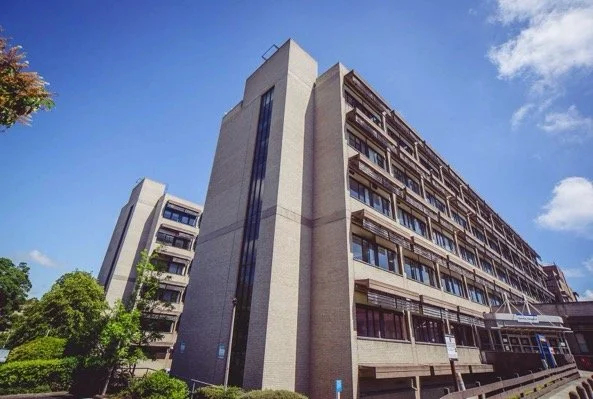
Newcastle's dental school has been training dentists since 1895, which makes it one of the older dental schools in the UK — 130 years of history by 2025. It sits within Newcastle Dental Hospital, part of one of the largest integrated teaching and hospital complexes in the country, and shares its home with the Faculty of Medical Sciences alongside Medicine, Biomedical Sciences, Psychology and Pharmacy. That matters more than it might sound: dental students train a short walk from medical, nursing and pharmacy students, on a site with roughly 500 dental students, teachers and researchers working alongside NHS clinicians treating thousands of patients a day.
The course itself is the standard five-year BDS Dental Surgery (UCAS code A206), professionally accredited by the General Dental Council (GDC), entitling graduates to practise across the UK and in many countries abroad. Newcastle promotes early clinical exposure — you'll be shadowing senior students and observing real patients before the end of Stage 1, long before most dental students anywhere get near a clinic. By Stage 3 you're managing your own patients under supervision, and by the end of Stage 4 roughly half your week is spent on direct patient care.
Newcastle also runs a three-year BSc Dental Therapy (A207), training students to become registered dental therapists — a related but separate route with its own, more personal-statement-led selection process. This guide focuses on the BDS interview, since that's what most sixth formers researching "Newcastle dentistry interview" are preparing for, though much of the six-domain scoring framework applies to both.
📊 How Does Newcastle Dental School Stand Out?
World and UK rankings
Newcastle's dentistry programme punches well above the university's overall standing. In the QS World University Rankings by Subject 2026, Newcastle's own press office confirmed dentistry was ranked 44th in the world, up from a 51-120 band the previous year — one of the biggest jumps of any subject at the university and its best-performing course alongside Geography. The wider subject group of Medical and Health, which covers both Medicine and Dentistry, sat 83rd in the world in the Times Higher Education World Subject Rankings.
Closer to home, the Complete University Guide's Dentistry table for 2027 entry — first published June 2026 — places Newcastle 12th out of 16 ranked UK dental schools, with an overall score of 95%, a student satisfaction score of 86%, a research quality score of 88% and a graduate prospects score of 94%. Those last two figures are the ones worth paying attention to: Newcastle's research quality score sits above several dental schools ranked higher overall, reflecting the strength of its oral biology, dental materials science and clinical research groups.
Newcastle as a whole university consistently sits inside the UK's top 35 across the major domestic league tables (Times/Sunday Times Good University Guide and Complete University Guide), and it's a member of the research-intensive Russell Group.
What actually makes the student experience different
Numbers aside, three things genuinely set Newcastle's dental training apart:
Scale and facilities. Newcastle describes itself as one of the largest and best-equipped dental schools in the UK, and it isn't shy about backing that up — a £5.5 million investment built purpose-built Dental Clinical Simulation Facilities, alongside a dedicated children's clinic, conservation clinic, cell and molecular biosciences laboratory and clinical skills unit, all inside the Dental Hospital itself.
Research with a genuinely local mission. Newcastle dental researchers have led "Deep End" network approaches to tackle oral health inequalities in deprived communities, and were involved in a report on the children's oral health crisis in England — directly relevant work given the North East's oral health outcomes. The School also helped develop the world's first digital medical device for self-managing temporomandibular disorder (TMD, or jaw pain), showing a genuine appetite for translating research into patient-facing tools.
A genuinely light academic bar, with everything riding on the UCAT. Newcastle's GCSE requirement is unusually relaxed for a dental school — a simple pass in Maths and English is all that's formally required, where several competitor schools score GCSEs heavily. Once you clear the A-level threshold, extra grades don't help you further. That makes Newcastle unusually UCAT-driven by UK dental school standards, which is worth knowing before you build your four choices.
🎯 How Newcastle Decides Who to Interview
Newcastle's shortlisting process for BDS runs in two clear steps, and it's worth understanding both before you assume where you stand.
Step one: the academic screen
Your predicted or achieved grades are checked against the entry requirement — for 2027 entry that's AAA at A-level including Biology and Chemistry (or the equivalent under Scottish Highers, the International Baccalaureate, or an accepted Access to HE Diploma). GCSEs simply need a pass grade in Maths and English; there's no points system and no minimum number of top grades required, which is genuinely unusual among UK dental schools. Graduate applicants need a 2:1 or higher degree that includes Biology and Chemistry as a significant proportion of the content.
Here's the detail that trips people up: once you clear this threshold, academic achievement stops mattering. Extra A-levels, an A* instead of an A, a wall of GCSE grade 9s — none of it gives you an advantage from this point onward. Newcastle says this explicitly in its admissions policy.
Step two: the UCAT does the ranking
For BDS specifically, once you've cleared the academic screen, your UCAT score is what determines whether you're invited to interview. Newcastle ranks all academically-qualified applicants by UCAT score and works down the list until its interview capacity is reached. There's no fixed, publicly available cut-off — the threshold moves every cycle depending on how many people apply and how they score that year, and Newcastle is explicit that it cannot predict or disclose the current cycle's threshold in advance.
Unlike the BSc Dental Therapy route, where personal statements are actively scored for shortlisting, Newcastle doesn't formally score the BDS personal statement to decide who gets an interview. It's still read — largely to check your referee's statement doesn't flag anything of concern — but the UCAT is genuinely doing the heavy lifting at this stage. All applicants are expected to show a minimum of ten days of relevant work experience, and Newcastle is understanding about the fact that securing in-person dental shadowing has become harder in recent years; demonstrating that you've found other ways to understand the profession (virtual work experience, conversations with dental professionals, paid roles involving public contact) is explicitly acknowledged as valid.
💻 How the Newcastle Dentistry Interview Works
Format and style
Newcastle uses a semi-structured panel interview — not a Multiple Mini Interview (MMI). If you've been reading up on MMI circuits at other dental schools, put that preparation style to one side for Newcastle specifically: instead of rotating through several short timed stations, you'll have one continuous conversation lasting approximately 20 minutes with two selectors from the School of Dental Sciences.
"Semi-structured" means the selectors are working from a consistent set of areas they need to cover, but the conversation can flow naturally and include follow-up questions based on what you say — closer to a real conversation than a scripted quiz. Selectors are deliberately drawn from a mix of dental and non-dental, clinical and non-clinical backgrounds, and all have undergone equal opportunities training.
Who interviews you, and what they don't know
You'll be interviewed by two admissions selectors, and each one grades your performance independently against the same six predetermined domains (covered in full below). Crucially, your selectors do not have access to your predicted or achieved grades, or your UCAT score, at the time of your interview. Your interview is scored purely on how you come across in those 20 minutes — nothing else factors in at this stage.
You'll need official photographic ID ready to show at the start (a passport, driving licence, or similar), and selectors won't tell you your score during the interview or at any point afterwards — Newcastle doesn't offer individualised feedback.
Delivery: online, via Zoom
Newcastle's dentistry interviews are conducted online via Zoom, not in person. Booking works on a first-come, first-served basis once slots are released — the School advises booking early to secure a convenient time, since popular slots fill up. Practically, that means treating this like any professional video call: a plain, tidy background, good lighting on your face rather than behind you, a stable internet connection tested in advance, and a quiet room where you won't be interrupted. Sit close enough to the camera that your selectors can read your expressions, but not so close it feels intense.
One important point buried in the policy: Newcastle will not retrospectively consider extenuating circumstances that affected your interview performance — illness, bereavement, technical problems on the day. If something is going to affect you, you must tell the admissions team before the interview, so an alternative slot can potentially be arranged. Simply turning up and completing the interview is treated as confirmation that you were fit to be interviewed.
⏰ When Are Newcastle Dentistry Interviews Held?
Based on Newcastle's confirmed process, interviews are usually conducted between February and March. Applicants who are not successful at the shortlisting stage (i.e. don't receive an interview invite at all) are normally informed by March, roughly when the interview period itself is wrapping up.
Newcastle's 2027-specific interview dates hadn't been published at the time of writing — as always with a moving admissions cycle, check your UCAS Hub and any communication directly from Newcastle for the exact window once shortlisting for 2027 entry has taken place.
🧭 What Topics Are Covered in the Newcastle Dentistry Interview?
Because this is a semi-structured panel interview rather than an MMI, there's no fixed list of stations or set questions Newcastle works through in the same order every time. Instead, your selectors are working to cover six scoring domains across the conversation, weaving in questions drawn from your application, your reflections on any experience you mention, and general questions about your understanding of dentistry as a career. The six domains, exactly as Newcastle defines them, are:
- Preparation and motivation for dental school — why dentistry, and what you've actually done to find out
- Effective learning skills — how you learn, adapt and respond to feedback
- Team working — how you function as part of a group
- Personal qualities and resilience — how you cope with pressure and setbacks
- Interpersonal and communication skills — how clearly and appropriately you communicate
- Empathy, sensitivity, integrity and professionalism — the values that underpin safe, trustworthy patient care
Expect your selectors to ask open, reflective questions and then follow up on your answers — "tell me more about that," "what would you do differently," "how did that make you feel" — rather than moving briskly through a checklist. That means rehearsed, word-perfect answers tend to fall apart quickly here; genuine reflection travels much further than a polished script.
📈 How Many Are Interviewed, and How Many Get Offers?
Newcastle publishes very little of this proactively, but the figures below come from a Freedom of Information response the University issued in 2025, covering non-contextual, non-graduate Home applicants for the standard BDS entry route. The most recent complete cycle at the time of writing is 2024 entry:
- Applications received: 811 (2024 entry) — for context, 803 in 2023, 843 in 2022, 837 in 2021, and 748 in 2020
- Interviews given: 343 to home applicants (including 115 contextual applicants) plus 10 to international applicants — roughly 353 candidates interviewed in total
- Offers made: 106 to home applicants (including 59 contextual) plus 9 to international applicants — roughly 115 offers in total
- Places available: capped at 71 for the BDS course
- Students enrolled: 71 — the course fills its full quota
Put simply: roughly 1 in 2.3 applicants who cleared the academic and UCAT screen were invited to interview in 2024 entry, and roughly 1 in 3 interviewed candidates went on to receive an offer. Because Newcastle's UCAT threshold for interview moves every year depending on that cycle's applicant pool, these numbers will shift for 2027 entry — but they give you a genuinely realistic sense of scale.
🧮 How Newcastle Uses the UCAT
All standard-route BDS applicants must sit the UCAT in the year of application (BSc Dental Therapy applicants do not). As explained above, it's the primary tool Newcastle uses to rank academically-qualified applicants and decide who gets an interview — there's no fixed minimum score published in advance, and Newcastle is explicit that it cannot predict this cycle's threshold, because it depends entirely on how many people apply and how they score.
⚠️ A crucial warning about historic thresholds
The same 2025 FOI response disclosed Newcastle's actual interview thresholds for recent cycles:
- 2020 entry: 2,560
- 2021 entry: 2,740
- 2022 entry: 2,690
- 2023 entry: 2,790
- 2024 entry: 2,680 (contextual applicants: 2,600)
Every one of these figures sits on the old 3,600-point UCAT scale, which included Abstract Reasoning as a fourth cognitive subtest. That subtest was removed from the UCAT from the 2025 sitting onwards, which means the maximum total cognitive score is now 2,700, not 3,600. A 2027-entry applicant sitting the current three-subtest UCAT cannot meaningfully compare their score to any of the numbers above — treating 2,680 as a target on the new scale would be a serious misread, since it's close to the old ceiling and nowhere near achievable relative to a 2,700 maximum. Contextual applicants have historically had a threshold roughly 90–190 points lower than the standard route, though again, that gap needs recalculating on the new scale rather than assumed to carry over directly.
The UCAT Consortium publishes preliminary mean scores and deciles in mid-September each year, with final deciles following shortly after testing closes. Check the current year's figures on the UCAT Consortium's own site before drawing any conclusions about where your score sits relative to Newcastle's likely threshold.
Newcastle's published policy doesn't set out a specific Situational Judgement Test (SJT) band cut-off in the way some other dental schools do (several reject Band 3 or Band 4 outright) — total cognitive score appears to be what ranks BDS applicants for interview. Still, take the SJT seriously: it remains part of your overall UCAT report, and a poor band is not something to be complacent about anywhere in dental admissions.
✅ How Is the Interview Scored?
Each of your two selectors independently marks your performance against the six domains listed above, using Newcastle's predetermined criteria. Because neither selector has access to your grades or UCAT score, your interview score is generated entirely from your performance on the day — there's no way for a strong academic profile to compensate for a flat interview, or vice versa.
Once interviewing is complete, your interview score becomes the sole basis on which the offer decision is made. To keep things fair across the whole cohort, Newcastle deliberately waits until every applicant has been interviewed before any offers go out — so a strong early interview doesn't guarantee an early offer, and a shaky one doesn't rule you out before everyone else has had their turn.
📬 When Are Offers Released?
Newcastle aims to have contacted all applicants — whether with an offer or an unsuccessful outcome — by the end of April, once every interview has been completed and scored. If you're holding an offer, all your qualification results need to be confirmed with the School by the date results are published by the Joint Council for Qualifications (A-level results day), unless you're going through an appeal process, in which case you should contact the University as early as possible.
💬 50+ Example Newcastle Dentistry Interview Questions by Domain
A quick note before you dive in: because Newcastle runs a flowing panel conversation rather than an MMI, treat these as starting points for reflection, not a script to rehearse word-for-word. Prepare two or three genuine examples for each domain from your own experience, think honestly about what you learned from them, and practise talking about them out loud — your selectors are listening for authentic reflection and natural follow-up conversation, not a memorised monologue.
1️⃣ Preparation and Motivation for Dental School
- Why dentistry, rather than medicine or another healthcare career?
- What have you done to find out what a career in dentistry genuinely involves, day to day?
- Tell us about a piece of work experience or shadowing that changed how you thought about dentistry.
- What do you think is the least glamorous part of a dentist's working week — and are you still keen?
- Newly qualified dentists face years of further training and ongoing professional development after graduating. What tells us you understand that commitment?
- The government has said it intends new dental graduates from 2027/28 onward to work in the NHS for a minimum period after qualifying. What are your thoughts on that?
- What do you understand about the differences between the roles of a dentist, a dental therapist and a dental hygienist?
- If you didn't get an offer for dentistry this year, what would you do instead, and why?
- What first sparked your interest in dentistry, and has that reason changed as you've learned more?
2️⃣ Effective Learning Skills
- Dentistry is taught partly through self-directed and problem-based learning. How do you organise your own study, and what would you change?
- Tell us about a time you had to learn a new practical or manual skill. How did you approach it?
- How do you plan to balance a demanding timetable of lectures, labs and clinics with the rest of your life?
- Describe a time you received critical feedback on something you'd done. How did you respond?
- What study habits do you already have that you think will transfer well to a five-year, largely practical course?
- Tell us about a subject or topic you found genuinely difficult and how you worked to understand it.
- How do you keep yourself updated with developments in a subject that interests you, dentistry or otherwise?
3️⃣ Team Working
- Describe a time you worked as part of a team to achieve something. What was your specific role?
- Dentists lead a wider dental team including nurses, hygienists, therapists and reception staff. Why does teamwork matter so much in a dental practice?
- Tell us about a time a team you were part of disagreed about how to do something. What happened?
- How would you handle a colleague who wasn't pulling their weight on a shared project?
- What have you learned about your own strengths and weaknesses when working with others?
- Give an example of a time you had to lead a group of people.
- Tell us about a time you had to compromise within a team to get something done.
4️⃣ Personal Qualities and Resilience
- Dentistry can involve setbacks — a treatment that doesn't go to plan, a difficult exam, a demanding patient. Tell us about a time something didn't go the way you expected, and how you coped.
- How do you cope with pressure? Can you give us a specific example?
- What would you do if you failed an exam or clinical assessment during the course?
- Tell us about a time you had to manage a genuinely heavy workload. What did you prioritise, and why?
- What do you do to look after your own wellbeing when things get busy?
- Describe a time you made a mistake. What did you do about it afterwards?
- Where would you turn for support if you found parts of the course difficult?
5️⃣ Interpersonal and Communication Skills
- Tell us about a time you had to explain something complicated to someone without your background knowledge.
- How would you communicate with a young child who was frightened about visiting the dentist?
- Give an example of when you had to change your communication style to suit the person you were speaking to.
- How would you go about telling a patient something unwelcome — for example, that a tooth needs to be removed?
- Tell us about a time you had to listen carefully to properly understand someone else's point of view.
- What do you think is the most important non-verbal element of communication in a clinical setting?
- Describe a time you had to persuade someone to change their mind.
6️⃣ Empathy, Sensitivity, Integrity and Professionalism
- Tell us about a time you noticed someone was struggling, and what you did about it.
- A patient tells you they can't afford the treatment you're recommending. What do you do?
- What would you do if you saw a fellow student behaving unprofessionally while on placement?
- Confidentiality matters throughout a dental career. Why, and can you tell us about a time you had to keep something private?
- How would you support a patient who has significant dental anxiety or a phobia of the dentist?
- What does the word "integrity" mean to you in the context of dentistry?
- A patient asks you to keep something from a colleague who is also treating them. How do you respond?
- Tell us about a time your honesty was genuinely tested.
That's 43 questions across the six official domains — well past the point where you'll have run out of easy answers and started genuinely reflecting, which is exactly the point.
🏥 Questions Specific to Newcastle Dental School
Selectors will expect you to have done your homework on Newcastle itself, not just on dentistry in general. Have honest, specific answers ready for these:
- Why Newcastle specifically, and not simply "any" of your other three choices?
- Newcastle trains its dental students inside Newcastle Dental Hospital, one of the largest integrated teaching and hospital complexes in the country. What do you think the benefits are of training somewhere this size?
- The School has invested £5.5 million in its Dental Clinical Simulation Facilities. Why does simulation training matter before you start treating real patients?
- Newcastle gives its dental students early clinical exposure from Stage 1, well before many other dental schools. What are you hoping to get out of seeing real patients so early in the course?
- Newcastle researchers have led "Deep End" network approaches to tackle oral health inequalities, and the North East has some of the most significant gaps in access to NHS dentistry in England. How do you think a Newcastle-trained dentist could help address that?
- Newcastle's PARTNERS programme is one of the longest-running widening-participation entry routes of its kind in the UK. What do you understand about why widening access to dentistry matters?
- Newcastle's dental course sits inside the Faculty of Medical Sciences, alongside Medicine, Biomedical Sciences, Psychology and Pharmacy. Why might training alongside other future healthcare professionals be valuable?
- What do you know about studying and living in Newcastle beyond the Dental School itself?
🗣️ What Students Say About the Newcastle Interview
We can't put words in anyone's mouth, but a few themes come up again and again from applicants who've been through Newcastle's dentistry interview in past cycles, and they're worth knowing before you go in.
Almost everyone mentions how conversational it feels compared with what they'd braced themselves for. Because there's no timer clicking down between stations, the pace is gentler than an MMI, and several applicants have said the interview genuinely felt like a discussion rather than an interrogation — which, in turn, made rambling or padding an answer more noticeable, not less.
A recurring piece of feedback is that selectors follow up on whatever you say. Mention a piece of work experience in passing and don't be surprised if the next three questions dig into it in detail. Applicants who'd only prepared a surface-level version of their stories have said this caught them out; those who'd genuinely thought through what they learned, and not just what happened, found the follow-ups far easier to handle.
Several applicants have also noted that the online format took some getting used to — not because anything went wrong technically, but because it's genuinely harder to read a room over a screen than in person. Applicants who'd done at least one full practice interview over video call beforehand generally felt more settled than those doing it for the first time on the day itself.
Finally, more than one applicant has commented that despite the calm, conversational tone, the six domains are unmistakably there in the background — questions about teamwork, resilience and professionalism tend to arrive even when the conversation feels informal, so it's worth being ready across all six areas rather than assuming any one will be skipped.
🌟 Top Tips to Succeed at Your Newcastle Dentistry Interview
Prepare reflections, not scripts. Because this is a flowing conversation with follow-up questions rather than fixed stations, word-perfect answers unravel fast. Know your stories well enough to talk about them naturally from several angles.
Map your examples against all six domains before the interview. Go through preparation and motivation, learning skills, teamwork, resilience, communication, and empathy/professionalism one at a time, and make sure you have at least one strong, specific example ready for each.
Read up on current NHS dentistry issues. The government's plans around a post-qualification NHS service requirement from 2027/28, the ongoing access crisis often described as "dental deserts," and children's oral health in England are all live, current topics a Newcastle selector could reasonably raise.
Treat the Zoom call like a real professional meeting. Test your camera, microphone and internet connection well in advance, sit somewhere quiet with good lighting on your face, and have your photo ID ready before the call starts.
Book your slot as early as you can. Interview times are released for candidates to select and fill up quickly — don't leave it and risk being stuck with an inconvenient time.
Flag any extenuating circumstances before your interview, not after. Newcastle won't retrospectively consider anything that affected your performance on the day, so if something's genuinely wrong, tell the admissions team in advance.
Have a genuine, specific answer for "why Newcastle." Vague answers about the city or the campus won't land — know something real about the course, the facilities, or the School's research and widening-participation work.
Practise being watched by someone unfamiliar. A teacher, a family friend, anyone other than a parent or sibling — being watched by someone you don't know well is a far closer simulation of how an interview actually feels.
📋 Key Facts at a Glance
- ✅ Course: BDS Dental Surgery, UCAS code A206, 5 years full-time
- ✅ Typical offer (2027 entry): AAA at A-level including Biology and Chemistry; GCSE requirement is simply a pass in Maths and English
- ✅ Admissions test: UCAT, compulsory for all standard-route BDS applicants
- ✅ Shortlisting: academic screen, then ranked by UCAT score — no fixed, published threshold
- ✅ Interview format: semi-structured panel interview (not an MMI)
- ✅ Interview length: approximately 20 minutes
- ✅ Selectors: 2 per interview, scoring independently, with no access to your grades or UCAT score
- ✅ Delivery: online via Zoom
- ✅ Interview period: usually February–March
- ✅ Scoring domains: 6 — preparation/motivation, learning skills, teamwork, resilience, communication, empathy/professionalism
- ✅ 2024 entry applications: 811
- ✅ 2024 entry interviews: approximately 353 (343 home, 10 international)
- ✅ 2024 entry offers: approximately 115 (106 home, 9 international)
- ✅ Places available: capped at 71
- ✅ Offers/outcomes confirmed: normally by the end of April
- ✅ QS World Rankings by Subject 2026 (Dentistry): 44th in the world
- ✅ Complete University Guide Dentistry 2027: 12th in the UK
Admissions policies and thresholds change every cycle. Always confirm the current requirements on Newcastle University's own website before you submit your UCAS application.
🔗 Useful Links
Newcastle University — official sources
- Newcastle University — Dental Surgery BDS (A206)
- School of Dental Sciences Admissions Policy 2026 Entry (PDF)
- Newcastle University — School of Dental Sciences
- Newcastle University — Dental School Facilities
- Newcastle University — PARTNERS Programme
- Newcastle University — QS Subject Rankings 2026 press release
- Newcastle University — UK Rankings
Official and authoritative sources
- Dental Schools Council — Entry requirements for UK and Ireland dental schools: 2027 entry (PDF)
- General Dental Council
- UCAT Consortium
- Complete University Guide — Dentistry League Table 2027
- UCAS — Dentistry courses
Blue Peanut Medical resources