Belfast School of Dentistry Interview Questions for 2027 Entry: The Complete Guide
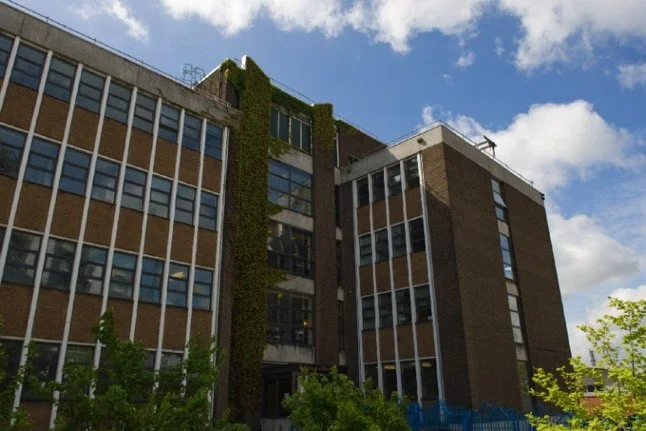
Thinking of applying to study Dentistry at Queen's University Belfast? Good choice. Queen's is Northern Ireland's only dental school, one of the most tight-knit BDS programmes in the UK, and home to one of the clearest, most transparent admissions systems of any dental school. That transparency is a gift — because once you understand exactly how Belfast selects, shortlists and interviews, you can prepare with real precision.
This guide covers everything you need for the Queen's University Belfast (QUB) Dentistry interview for 2027 entry: how the school shortlists, how the Multiple Mini Interview (MMI) works, how the UCAT is used, what topics come up, over 40 example interview questions sorted by theme, real student comments, and our top tips for interview day.
Grab a cup of tea — this is a long one, but by the end you'll know the Belfast dental interview inside out. ☕
An Introduction to the Belfast School of Dentistry 🏛️
Queen's University Belfast was founded in 1845, making it one of the oldest universities in the UK and Ireland, and it remains the only Russell Group university in Northern Ireland. Dentistry sits within the School of Medicine, Dentistry and Biomedical Sciences, with teaching based at the Centre for Dentistry on the Royal Victoria Hospital campus — one of the busiest hospital sites in Northern Ireland.
The five-year Bachelor of Dental Surgery (BDS, UCAS code A200) is famous for a few things:
- Small cohort sizes. Only around 60 students per year — roughly 45 Home/Republic of Ireland places and around 15 international places. You will genuinely know your lecturers, and they will know you.
- Early clinical exposure. Students get hands-on experience early, progressing to managing their own patient lists and carrying out full courses of treatment before graduating.
- Excellent facilities. Recently refurbished clinical skills laboratories and around 90 dental chairs at the Royal Victoria Hospital site support hands-on learning from the start.
- A supportive, close community. Because the cohort is so small, Belfast dental students consistently describe the course as feeling like a family — something that comes through strongly in student satisfaction surveys.
How Does Belfast Stand Out From Other UK Dental Schools? 🌟
There are only around 16 dental schools in the UK, and Belfast has carved out a distinct identity among them:
- The only dental school in Northern Ireland. If you want to train and eventually practise in NI, Queen's is the natural (and only local) route.
- Consistently strong league table performance. Dentistry at Queen's has ranked around 7th in the UK in the Complete University Guide in recent years — impressive for a small school.
- Outstanding student satisfaction. Belfast Dentistry has recorded some of the highest National Student Survey satisfaction scores of any UK dental course — around 97–98% overall satisfaction in recent survey years.
- A transparent, points-based admissions system. Unlike some dental schools with opaque "holistic" scoring, Queen's publishes a clear formula: your academics and UCAT get you to interview, and the interview alone decides your offer. You always know where you stand.
- The personal statement is not scored. This makes Belfast a popular strategic choice — your interview performance is what counts.
Worldwide Rankings and Student Experience 🌍
For the university as a whole:
- Queen's University Belfast sits comfortably inside the global top 200 in both the QS World University Rankings and the Times Higher Education World University Rankings.
- Queen's has been ranked number one in the UK for international outlook, reflecting its diverse student community and global research partnerships.
- Around 93% of graduates are in work or further study within 15 months of finishing — among the strongest graduate outcomes in the UK.
- Belfast itself is regularly rated a top-10 UK student city, with some of the lowest student living costs of any major UK city. Your student loan genuinely stretches further here. 💷
- In the National Student Survey, Queen's performs strongly overall — and Dentistry specifically has been a standout performer, with near-perfect satisfaction scores in multiple survey years.
Put simply: a Russell Group education, a top-ranked dental course, small class sizes, and an affordable, friendly student city. It's easy to see why competition for places is fierce.
How Does Belfast Decide Who to Call for Interview? 📋
Queen's uses a clearly defined two-stage selection process for Home and ROI applicants:
Stage 1: Academic Score + UCAT (Out of 45 Points)
Every Home/ROI applicant is given a score out of 45, built from two parts:
Academic performance (up to 36 points). Your best nine GCSE subjects are scored on a points system, with top grades (9/A*) earning the most points. This makes Belfast one of the most GCSE-heavy dental schools in the UK — strong GCSEs are essential.
UCAT performance (up to 9 points). Your UCAT result is converted into decile-based points, with up to 9 points available for the highest deciles. Note that the UCAT now consists of three cognitive sections — Verbal Reasoning, Decision Making and Quantitative Reasoning — following the removal of Abstract Reasoning.
All Home/ROI applicants are then ranked by their combined score out of 45, and the top-ranked candidates are invited to interview. There is no fixed UCAT cut-off — the threshold moves each year depending on the strength of the applicant pool.
What About the Personal Statement? ✍️
Your personal statement is not formally scored at Belfast. It should still clearly show your motivation for dentistry and insight into the profession — and it may inform interview discussion — but it won't earn or lose you shortlisting points.
International Applicants 🌏
International (non-ROI) applicants are assessed holistically — academic record, predicted grades, reference, personal statement and English language ability — and the UCAT is not required. Shortlisted international candidates are interviewed online, so there's no need to travel to Belfast for the interview itself.
Stage 2: The Interview Decides Everything
Here's the crucial bit: once you've been invited to interview, offers are made solely on interview performance. Your GCSEs and UCAT got you through the door — but at interview, everyone starts on a level playing field. This is why interview preparation matters so much at Belfast.
How Does Belfast Interview? The MMI Format Explained 🎤
Queen's uses a Multiple Mini Interview (MMI) format for Dentistry.
Interview Structure and Timings ⏱️
Rather than one long panel interview, the MMI is a circuit of short, focused stations. Based on the format used in recent cycles:
- Typically around four stations, each with two questions (the exact number of stations can vary year to year, so read your invitation carefully).
- Each station lasts roughly 4–6 minutes, with a short break (around 2 minutes) between stations.
- There are usually two assessors at each station, scoring you independently.
- The whole circuit takes around 40 minutes to an hour including briefings.
- You'll usually have a brief moment to read the station instructions before you begin — use it to gather your thoughts.
In earlier years Belfast ran longer circuits of 7–8 stations, so be prepared for the format to flex slightly — the skills being tested stay the same.
In Person or Online? 💻
- Home and ROI applicants: interviewed in person in Belfast.
- International applicants: interviewed online via video.
What Are the Assessors Looking For? 🔍
Importantly, the Belfast MMI assesses your non-cognitive (non-academic) qualities — not your dental science knowledge. You won't be quizzed on tooth anatomy. Instead, the stations are designed to test whether you have the personal qualities of a future dentist:
- Empathy and compassion
- Communication skills
- Ethics and moral reasoning
- Resilience and coping with pressure
- Maturity, responsibility and professionalism
- Teamwork and leadership
- Insight into dentistry as a career and awareness of the demands of the course
- Motivation for dentistry — and for Queen's specifically
When Are the Belfast Dentistry Interviews Held? 🗓️
Interviews at Queen's typically run from mid-December through to March of the application cycle. For 2027 entry, that means roughly December 2026 to March 2027.
- Invitations can start arriving from late November onwards, so keep a close eye on your emails (and your junk folder!).
- Candidates in recent cycles have reported that many Home interviews cluster in late January and February, with some later dates — often for international applicants — running into March.
- Your invitation will confirm your exact date, venue and format, plus any documents you need to bring.
Practical tip: treat December to March as your core preparation window, and aim to be interview-ready by early December. Don't leave your MMI practice until an invitation lands. ⚠️
How Many Are Interviewed, and How Many Receive Offers? 📊
Belfast doesn't publish exact figures every year, but based on recent cycles:
- Roughly 160–200 Home/ROI applicants are invited to interview for around 45 Home places.
- Around 45% of interviewed candidates have converted their interview into an offer in recent cycles — although this varies year on year.
- A separate, smaller pool of international applicants is interviewed for approximately 15 international places.
So if you get an interview at Belfast, your odds are genuinely good — close to a coin flip — and entirely in your own hands, because offers are based purely on interview ranking.
How Is the UCAT Used at Belfast? 🧠
To recap the key points about the UCAT at Queen's for Dentistry:
- The UCAT is required for all Home and ROI applicants and must be sat in the year of application.
- Your UCAT score is converted into decile-based points, worth up to 9 of the 45 shortlisting points — roughly 15–20% of your pre-interview score.
- Because scoring is by decile, what matters is how you rank against other test-takers, not your raw score alone.
- There is no published fixed cut-off score; the effective threshold depends on the overall applicant pool and your GCSE points each cycle.
- Very low UCAT deciles can make shortlisting extremely difficult unless your GCSE profile is near perfect, because you'd be conceding up to 9 points to competitors.
- The Situational Judgement Test (SJT) band is not used as a primary ranking tool in the published points formula — the decile points come from the cognitive sections.
- The UCAT is not required for international applicants, who are assessed holistically.
- The UCAT is not used again after shortlisting — once you're at interview, it plays no further role.
What Is the Interview Scoring Method? 🎯
At each MMI station, two assessors score you independently against set criteria for the qualities being tested at that station — for example empathy, communication or ethical reasoning. Your scores from all stations are combined to give a total interview score, and all interviewed candidates are then ranked.
Offers go to the highest-ranked candidates at interview — nothing else is added back in at this stage. A brilliant UCAT won't rescue a weak interview, and a modest UCAT won't hold back a superb one. Every station is a fresh start with fresh assessors, so if one station goes badly, take a breath and reset. 🔄
When Are Offers Released? 📬
Because interviews run through to March, Queen's typically releases the majority of its Dentistry offers in March and early April, once all interviews are complete and candidates have been ranked. Some decisions may trickle out earlier, and everything is communicated through UCAS Hub. All decisions are made in time for the standard UCAS decision deadlines in spring.
If places remain or become available around results day in August, candidates on any reserve list may be contacted in ranked order.
Belfast Dentistry Interview Questions: 40+ Examples Sorted by Topic 💬
Below are more than 40 example questions organised by the themes Queen's assesses at its MMI stations. Belfast stations typically pose two related questions in a short scenario-and-discussion style, so we've written them the way you're likely to hear them: a direct question, sometimes followed by a probing follow-up.
Remember: these are realistic practice examples based on the competencies Belfast assesses, not leaked questions. The school changes its questions every cycle.
🦷 Motivation for Dentistry
- Why do you want to be a dentist?
- What have you done to find out whether dentistry is the right career for you?
- Tell us about a moment during your work experience or research that confirmed your decision to apply for dentistry.
- Dentistry is a lifelong career. What do you think will keep you motivated in 20 years' time?
- If you don't receive an offer for dentistry this year, what will you do?
- What do you think will be the most rewarding part of being a dentist? And the most difficult?
🏫 Why Queen's University Belfast?
- Why have you applied to study dentistry at Queen's University Belfast?
- What do you know about the structure of the BDS course at Queen's, and what appeals to you about it?
- Why do you want to study dentistry in Northern Ireland?
- What do you think you would contribute to a small cohort of around 60 dental students?
- Queen's dental students gain clinical experience early in the course. Why do you think early patient contact matters?
❤️ Empathy and Compassion
- Tell us about a time you helped someone through a difficult situation. What did you do, and how did you feel?
- A patient arrives at your practice visibly anxious and close to tears about their appointment. What would you say to them?
- An elderly patient tells you they've stopped coming to the dentist because they're embarrassed about the state of their teeth. How would you respond?
- Why is empathy important in dentistry, and how is it different from sympathy?
- Describe a time when you had to consider a situation from someone else's point of view, even though you disagreed with them.
🗣️ Communication Skills
- How would you explain a root canal treatment to a nervous 10-year-old patient?
- Tell us about a time you had to explain something complicated to someone. How did you check they understood?
- A patient with limited English attends your clinic alone. How would you make sure they understand their treatment options?
- What role does non-verbal communication play in a dental surgery?
- Tell us about a time you received difficult feedback. How did you respond?
⚖️ Ethics and Moral Values
- A young mother brings her 12-month-old child for a check-up. You find severe decay and suspect a poor diet at home. How do you handle the conversation?
- A patient asks you to carry out a cosmetic treatment that you believe is unnecessary and could damage their teeth. What do you do?
- Your friend, a fellow dental student, tells you they've been signing each other into compulsory clinics. What do you do?
- Should dental treatment be free for everyone on the NHS? Discuss both sides.
- A patient refuses a treatment you believe is clearly in their best interests. What ethical principles are at play, and what would you do?
- You notice a senior colleague hasn't changed their gloves between patients. How would you handle this?
- What is patient confidentiality, and can you think of a situation where it might be broken?
💪 Resilience and Coping With Pressure
- Tell us about a time something went badly wrong for you. How did you cope, and what did you learn?
- Dentistry is a demanding five-year course. How do you manage stress, and how do you know when you need help?
- Describe a time you had to juggle several commitments at once. How did you prioritise?
- You've just made a mistake during a procedure on a patient. Talk us through what you would do next.
- How do you respond to failure? Give us a real example.
🤝 Teamwork and Leadership
- Tell us about a time you worked in a team to achieve something. What was your role?
- Describe a time you had to deal with conflict within a group. What did you do?
- Dentists lead a team including nurses, hygienists and receptionists. What makes a good team leader?
- Tell us about a time you had to step back and let someone else take the lead. How did that feel?
- A member of your team consistently arrives late, and it's affecting patient care. How would you approach them?
🩺 Insight Into Dentistry and the Profession
- What are the biggest challenges facing NHS dentistry at the moment?
- What do you understand about the difference between NHS and private dentistry?
- What is the role of the General Dental Council (GDC)?
- What does the pathway from dental student to registered dentist look like after graduation?
- How has technology changed dentistry in recent years, and where do you think it's heading?
- What did you learn from your work experience about the day-to-day realities of being a dentist — the parts people don't see?
- Why is preventive dentistry important, and how would you encourage a reluctant patient to improve their oral health?
🧤 Manual Dexterity and Personal Qualities
- Dentistry requires excellent fine motor skills. What hobbies or activities have helped you develop manual dexterity?
- Tell us about a skill that took you a long time to master. How did you stay committed?
- What personal quality do you most need to improve before becoming a dentist, and what are you doing about it?
Questions Specific to Belfast: What Makes the QUB Interview Different? 🎓
Every dental school has its own flavour, and Belfast is no exception. Based on the school's published admissions policy and reports from past candidates, keep these Belfast-specific points in mind:
- Expect "Why Queen's?" and "Why Northern Ireland?" These come up frequently. Have specific, genuine answers ready: the small cohort, early clinical experience at the Royal Victoria Hospital, the Centre for Dentistry's facilities, Belfast as a student city, or personal connections to NI. Generic answers stand out — for the wrong reasons.
- Local NHS awareness helps. Northern Ireland's health service (Health and Social Care, or HSC) is run separately from NHS England, and access to NHS dentistry in NI has been a live issue. Showing awareness of dental provision in Northern Ireland demonstrates real insight and interest in training there.
- Stations lean heavily on communication, ethics and empathy. Past interviewees consistently report that Belfast's stations focus on these human qualities rather than science — exactly what the school's admissions policy says it assesses.
- The two-questions-per-station format. Belfast stations often pair an opening question with a follow-up that digs deeper. If your first answer is strong, expect the assessors to probe: "Why?", "What would you do differently?", "How did that change you?" Practise expanding on your answers, not just delivering them.
- Assessors may seem neutral or reserved. Candidates sometimes describe Belfast assessors as giving little away. Don't read a blank face as a bad sign — it's standardised scoring, not disapproval.
What Past Students Say: Anecdotal Comments 💭
Here's a flavour of what recent Belfast dentistry interviewees and students have shared on forums and in student communities (paraphrased):
"The stations were much more about me as a person than about dentistry facts. They wanted to know how I'd handled real situations — my part-time job came up more than my science A-levels."
"I was thrown by how calm and quiet the assessors were. Nobody smiled much. I thought I'd bombed it — then I got an offer. Don't panic if you get nothing back from them."
"My interview was in late February and the offer came through in spring via UCAS. The wait after interview was honestly the hardest part of the whole application."
"The ethics question had a follow-up I wasn't expecting. My advice: whatever answer you give, be ready for 'why?' — they always dig one layer deeper."
"Everyone at the interview day was lovely — current students showed us around and it genuinely made me want to go to Queen's more. The small cohort thing is real; it feels like a family."
"I wish I'd practised talking about my work experience in more depth. They didn't just want to know that I'd done it — they wanted to know exactly what I'd noticed and learned."
Top Tips to Succeed at the Belfast Dentistry Interview 🏆
Before the Interview
- Start preparing in November. Invitations can arrive from late November, and December interview dates leave little turnaround time.
- Know the Belfast selection process cold. Understanding that offers rest 100% on the interview should shape how seriously you prepare for it.
- Mine your own life for examples. Belfast's questions are heavily experience-based: "Tell us about a time when…". Build a bank of 8–10 real stories from work experience, school, part-time jobs, sport, music and volunteering, and know what each one demonstrates.
- Rehearse your work experience in depth. Don't just list where you went — reflect on what you observed, what surprised you, and what it taught you about the realities of dentistry.
- Read up on dentistry in Northern Ireland. Awareness of local dental access issues and the HSC system is a genuine differentiator.
- Practise the MMI rhythm. Short stations reward concise, structured answers. Time yourself: can you deliver a complete, reflective answer in three to four minutes?
On the Day
- Take a breath before answering. A 20–30 second pause to structure your thoughts beats a rushed ramble every time.
- Treat every station as a fresh start. Assessors at station three haven't seen station two. Wipe the slate clean between stations.
- Show your qualities, don't just claim them. If you say you're empathetic, demonstrate it in how you discuss the scenario — warm tone, patient-centred language, open body posture.
- Expect the follow-up. Belfast loves the second, deeper question. After every answer you practise, ask yourself "why?" and answer that too.
- Don't be rattled by neutral assessors. Standardised scoring means poker faces. Stay warm, confident and engaged regardless.
- Be yourself. With only ~60 places, Belfast is choosing people it will teach in small groups for five years. Genuine enthusiasm and honesty go a long way. 😊
Key Facts at a Glance ⚡
- Dental school: Centre for Dentistry, School of Medicine, Dentistry and Biomedical Sciences, Queen's University Belfast (Royal Victoria Hospital campus)
- Course: BDS Bachelor of Dental Surgery, 5 years, UCAS code A200
- Places: ~45 Home/ROI + ~15 international per year
- Shortlisting: Two-stage process — Stage 1 score out of 45 (best 9 GCSEs up to 36 points + UCAT decile points up to 9); Stage 2 is the MMI
- UCAT: Required for Home/ROI applicants; scored by decile (max 9 points); no fixed cut-off; not required for international applicants
- Personal statement: Not scored
- Interview format: MMI — typically ~4 stations, 2 questions per station, 4–6 minutes each, 2 assessors per station, ~40–60 minutes total
- Delivery: In person in Belfast for Home/ROI applicants; online for international applicants
- Interview window: Mid-December to March (invitations from late November)
- Interviewed vs offers: Roughly 160–200 Home candidates interviewed; around 45% of interviewees have received offers in recent cycles
- Offers decided by: Interview performance alone — candidates are ranked on MMI score
- Offers released: Mostly March–April, via UCAS Hub
- Rankings: ~7th UK dental school (Complete University Guide); QUB in global top 200 (QS & THE); ~97% NSS satisfaction for Dentistry in recent survey years
Final Thoughts 🎯
The Belfast dentistry interview rewards preparation of a very particular kind: not memorising dental facts, but knowing yourself, reflecting deeply on your experiences, and communicating with warmth under time pressure. The school tells you exactly what it values — empathy, resilience, ethics, communication, professionalism and genuine motivation — so build your preparation around those qualities.
Get shortlisted, and the offer is entirely within your control. Practise the questions above out loud, dig into your own stories, learn a little about dentistry in Northern Ireland, and walk into that MMI circuit ready to show Queen's the future dentist you're becoming. Good luck! 🍀
Useful Links 🔗
- Queen's University Belfast – Dentistry BDS course page: https://www.qub.ac.uk/courses/undergraduate/dentistry-bds-a200/
- QUB Admission Policy Statement for Dentistry: https://www.qub.ac.uk/schools/mdbs/Study/dentistry/
- QUB Centre for Dentistry: https://www.qub.ac.uk/schools/mdbs/research/centre-for-dentistry/
- QUB Admissions and Access Service: https://www.qub.ac.uk/directorates/sgc/admissions/
- Dental Schools Council – Entry requirements for UK dental schools: https://www.dentalschoolscouncil.ac.uk/study/applying-to-dental-school/
- UCAT Official Website: https://www.ucat.ac.uk/
- General Dental Council (GDC): https://www.gdc-uk.org/
- UCAS – Applying for Dentistry: https://www.ucas.com/
Always verify the latest admissions criteria directly with Queen's University Belfast before applying, as policies are reviewed annually and details for 2027 entry may be updated during the cycle.