Bristol Dental School Interview Questions for 2027 Entry: The Complete Guide for Dentistry Applicants
Applying to study Dentistry at the University of Bristol (BDS, UCAS code A206) for 2027 entry? You're aiming for one of the most sought-after dental schools in the UK — and one with a famously distinctive interview. From the legendary pasta task to a five-minute presentation on a controversial dental topic, Bristol's interview is unlike any other.
This guide walks you through everything you need to know: how Bristol selects candidates for interview, how the interview works, what topics come up, how the UCAT is used, and over 40 example Bristol dentistry interview questions sorted by theme — plus top tips and real student insights to help you walk into (or log into!) your interview with confidence.
⚠️ A quick but important note: at the time of writing, Bristol has not yet published its final interview arrangements for 2027 entry. Everything below is based on the University of Bristol's official pages for the most recent admissions cycle (2026 entry) and its 2027 entry course page. Always double-check the official Bristol interview page and Admissions Statement (linked at the end) before your interview, as details can change from year to year.
An Introduction to Bristol Dental School 🏛️
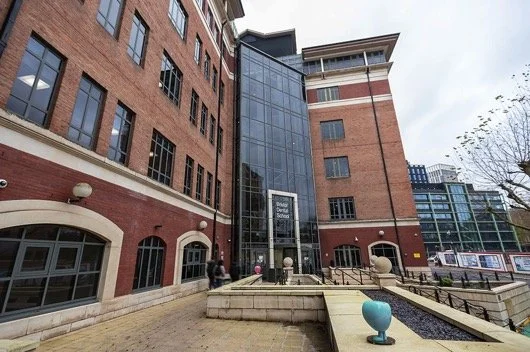
Bristol Dental School is part of the University of Bristol, a research-intensive Russell Group university in the vibrant, creative city of Bristol in the South West of England. The school has been training dentists for well over a century, but today's students learn in a strikingly modern environment: in September 2023, the school moved into a brand-new, purpose-built Dental School Building with state-of-the-art simulation suites and clinical facilities, designed with input from current students and staff.
The five-year BDS programme is accredited by the General Dental Council (GDC) and is built around four themes of development:
- 🧑⚕️ Practitioner — hands-on clinical skills from early in the course
- 🔬 Scholar and scientist — the biomedical science underpinning dentistry
- 🌱 Professional and agent of change — ethics, professionalism and leadership
- 🧍 Person and citizen — your own wellbeing, values and role in society
Clinical exposure starts early. First-year students become familiar with the clinic environment through peer group activities and observation, before moving on to treating real patients under supervision from year two — treating an increasingly complex range of oral and dental disease across Bristol and the surrounding region. After third year, you can even intercalate to add a BA, BSc or master's degree.
Bristol also runs a six-year Gateway to Dentistry programme, a widening participation route for students from backgrounds under-represented in dentistry.
How Does Bristol Stand Out in the UK and Worldwide? 🌍
Bristol has serious academic credentials, both for dentistry specifically and as a university overall:
- 🥈 2nd in the UK for Dentistry in the Guardian University Guide 2026 — one of the very top-ranked dental courses in the country
- 🌐 51st in the world and 8th in the UK in the QS World University Rankings 2026, continuing a steady climb up the global league tables
- 📚 Ranked around 78th globally by Times Higher Education, with a particularly strong reputation among employers
- 🏙️ Consistently one of the UK's most popular student cities — Bristol is famous for its music, street art, harbourside and buzzing student scene, and the university's student experience benefits from a large, active Students' Union and strong pastoral support (the dental programme has its own in-house personal tutor and senior tutor network)
Put simply: Bristol combines a top-two-ranked dental course, brand-new facilities and a world-top-100 university in one of the UK's best-loved student cities. It's easy to see why competition is fierce.
How Bristol Dental School Decides Who to Interview 🎯
Bristol's shortlisting process is refreshingly transparent — and unusually UCAT-heavy.
Step 1: Academic screening ✅
Your application is first checked against the academic entry requirements:
- A-levels: AAA including Chemistry and one of Biology, Physics, Mathematics or Further Mathematics (contextual offer: ABB, with an A in Chemistry)
- GCSEs: at least a 7 (A) in Maths and a 4 (C) in English
- Equivalent requirements apply for the IB (36 points), BTEC, Access and other qualifications
Step 2: UCAT ranking 📊
Here's the crucial part: once you meet the academic minimum, selection for interview is based on your UCAT score. Bristol uses the combined score from all cognitive subtests, excluding the Situational Judgement Test, to rank applicants and set a threshold for interview invitations.
For 2026 entry, the final UCAT threshold to be invited to interview was 2340 for Home applicants and 1970 for Overseas applicants — though Bristol is clear that the threshold changes year on year depending on the strength of the applicant pool.
A few important consequences of this system:
- ✍️ Your personal statement is not scored for shortlisting — although your motivation and experiences will absolutely matter at interview
- 💼 Work experience is not a formal requirement, but it is encouraged, and you'll struggle to answer interview questions well without some insight into the profession
- 🧮 A strong UCAT genuinely changes everything at Bristol — it is one of the most UCAT-driven dental schools in the UK
How Bristol Interviews: Style, Structure and Timings 🎤
Bristol does not use a traditional multiple mini interview (MMI) circuit for dentistry. Instead, it uses what it calls a Structured Interview Format — think of it as sitting somewhere between a panel interview and an MMI: one continuous interview, but with clearly defined sections, set tasks and standardised questions.
Based on the most recent cycle (2026 entry), here's what to expect:
- 💻 Delivery: online, hosted remotely via Zoom
- ⏱️ Length: approximately 45–60 minutes
- 👥 Assessors: four assessors are present throughout
- 🪪 ID check: you must show photo ID (passport, driving licence, college photo card) at the start — no ID, no interview
- 📶 The interview begins with connection and sound checks; if your internet fails mid-interview you won't be penalised, and Bristol will reschedule if needed
The Famous Pre-Interview Tasks 🍝🎤
This is what makes Bristol's dental interview truly unique. In recent cycles, candidates have been asked to prepare two tasks in advance:
1. The Pasta Task 🍝
You're asked to build a 3-dimensional model out of dried pasta — specifically, a model of an environmental habitat that represents your personality. On the day, you show your model to the assessors and answer questions about it. It's a brilliant (and slightly bonkers) way for Bristol to assess your manual dexterity, creativity, planning and self-awareness all at once.
In previous years, Bristol has set similar creative tasks — a personalised matchbox containing five items you'd bring to university, and a "Tell Me How" task where you taught the interviewers a skill in five minutes. The format changes, but the underlying qualities being assessed stay the same.
2. The Presentation Task 🎬
You must prepare a five-minute presentation on a current controversial topic in dentistry, delivered live to your assessors, using a maximum of three slides or visual aids (with a hard copy as backup in case of technical problems). Popular topic choices include water fluoridation, NHS dentistry access, cosmetic dentistry and social media, teeth whitening regulation, dental tourism and amalgam use.
Confidentiality and Conduct Rules 🔒
Bristol takes integrity extremely seriously. You must not discuss your interview questions with others afterwards, record the interview, or use any notes, devices or AI tools (such as ChatGPT) during the interview — Bristol explicitly states that doing so would be treated as academic misconduct and could jeopardise any offer. Honesty and professionalism are being assessed from the moment you log on.
When Are Bristol Dentistry Interviews Held? 🗓️
- The 2027 entry course page states that applicants must be available for interview from November to April following the UCAS deadline
- In the most recent cycle, interviews ran on various dates between December and February
- You must respond to your interview invitation within two weeks of receiving it by email — if you don't, Bristol will assume you've withdrawn and your application will be made unsuccessful. Set up email alerts and check your junk folder religiously! 📧
What Topics Are Covered in the Bristol Dentistry Interview? 📋
The interview assesses your suitability for dentistry beyond your grades. Expect structured questions and tasks covering:
- 💡 Motivation for dentistry and understanding of the profession
- 🏫 Why Bristol and knowledge of the BDS course
- 🩺 Work experience and realistic insight into dental careers
- 🗣️ Communication skills and empathy
- ⚖️ Ethics, professionalism and GDC values
- 🤝 Teamwork and leadership
- ✋ Manual dexterity (via the pasta task)
- 🎤 Presentation and critical thinking (via the presentation task)
- 📰 Current issues in dentistry and the NHS
- 🧘 Personal qualities, resilience and self-awareness
How Many Are Interviewed, and How Many Receive Offers? 📈
Bristol doesn't publish a fixed interview quota, and numbers vary year on year, but publicly available admissions data from recent cycles gives a helpful picture:
- Bristol typically receives several hundred applications for a relatively small number of BDS places (in one recent cycle, roughly 595 applications were received and around 150 candidates were interviewed)
- In another recent cycle, around 245 candidates were interviewed and approximately 178 received offers
- Overall, once you reach interview at Bristol, your chances are genuinely strong — historically, roughly half or more of interviewed candidates have received an offer
The message is clear: the UCAT gets you through the door, but the interview decides your fate — and at Bristol, a good interview performance very often converts into an offer. 💪
How Is the UCAT Used at Bristol? 🧮
To recap the key points, because this catches many applicants out:
- ✅ The UCAT is required for all BDS applicants
- ✅ Bristol uses the combined cognitive score (excluding Situational Judgement) to rank applicants for interview
- ✅ Once academic minimums are met, shortlisting is effectively driven by your UCAT ranking
- ✅ The threshold changes annually — for 2026 entry it was 2340 (Home) and 1970 (Overseas)
- ✅ Once you're invited to interview, the UCAT has done its job — your interview performance determines whether you receive an offer
What Is the Interview Scoring Method? 📝
Bristol states that the only record kept of your interview is the assessors' score sheets. In its structured interview format, each of the four assessors scores your responses against standardised criteria for each section and task — covering areas such as motivation, communication, ethical reasoning, insight into dentistry, and your performance on the pasta and presentation tasks.
Because Bristol interviews across a window of several weeks, most candidates are placed on hold until all interviews are complete, so that everyone can be ranked fairly against the same standard before offers are made. Bristol aims to contact you with the outcome of your interview within three weeks, but a final offer decision usually comes later.
When Are Offers Released? 📬
- Bristol aims to update you within three weeks of your interview, but explicitly warns that offers are unlikely to be made until after all interviews are completed — you may be on hold for several months
- With interviews typically finishing by late winter, most offers land in early spring, comfortably before the UCAS decision deadline in May
- No offer is made for BDS Dentistry without an interview
Patience is genuinely part of the process at Bristol — being on hold is normal and absolutely not a bad sign. 🕰️
40+ Bristol Dentistry Interview Questions, Sorted by Topic 💬
Bristol's structured interview blends direct questions, scenario-based prompts and task-related follow-ups. The examples below are written in that style, based on the themes Bristol assesses and questions reported from past cycles. Remember: Bristol asks candidates not to share their actual questions, so treat these as realistic practice material rather than a leaked script!
Motivation and Insight into Dentistry 💡
- Why do you want to be a dentist rather than a doctor, hygienist or dental therapist?
- Tell us about a moment or experience that confirmed dentistry was the right path for you.
- Why do you think you are suited to dentistry?
- What do you think will be the most challenging part of a career in dentistry, and how have you tested your assumptions?
- Dentistry involves five intensive years of training with little timetable flexibility. How do you know you're ready for that commitment?
- What does a typical week look like for an NHS general dental practitioner?
- Beyond general practice, what career paths are open to a dentistry graduate?
Why Bristol? 🏫
- Why have you applied to Bristol Dental School specifically?
- What do you know about the structure of the BDS course at Bristol?
- Bristol's course is built around four themes, including "professional and agent of change". What do you think that means for a dental student?
- How would you make use of the opportunity to intercalate after third year?
- Our students begin treating patients from year two. How will you prepare yourself for early clinical responsibility?
Work Experience and Realistic Understanding 🩺
- What were the two most important things you learned from your work experience, and why do they matter?
- Describe something you observed during work experience (or wider reading) that surprised you about dentistry.
- From what you have seen or read, how does a dentist work with the wider dental team?
- If you were unable to get in-person work experience, what did you do instead to understand the profession?
- Tell us about a dental procedure you observed or researched. Explain it to us as if we were the patient.
Communication and Empathy 🗣️
- A nervous eight-year-old needs a filling. How would you explain the procedure and gain their cooperation?
- Speak to this patient, who is worried about the treatment you will be carrying out tomorrow. What would you say?
- A patient becomes upset about long waiting times at your practice. How do you de-escalate the situation?
- How would you explain to an elderly patient with hearing difficulties that they need a tooth extracted?
- Describe a time you had to deliver unwelcome news to someone. What did you learn?
- Why is listening just as important as speaking in dentistry?
Ethics and Professionalism ⚖️
- A patient insists on an elective cosmetic treatment that you believe is clinically inappropriate. What do you do?
- What would you do if you caught a colleague turning up to work under the influence of alcohol?
- You notice a fellow student cutting corners with cross-infection control. What steps would you take, and why?
- When, if ever, is it appropriate to break patient confidentiality?
- A 15-year-old patient asks you not to tell their parents about the cause of their dental erosion. How do you respond?
- What are the GDC's core principles, and why do they matter to you as an applicant?
- Is it ever acceptable for a dentist to treat a close friend or family member? Discuss the issues.
Teamwork and Leadership 🤝
- Describe a time you worked in a team where things went wrong. What was your role in fixing it?
- Two members of the dental team disagree about a patient's treatment plan. How would you help resolve it?
- The clinic is short-staffed and the appointment list is overrunning. How would you prioritise and support the team?
- Give an example of a time you showed leadership without having an official leadership role.
- What makes a good team member in a dental surgery?
Manual Dexterity and the Pasta Task ✋🍝
- Talk us through your pasta model. Why did you choose this habitat, and how does it represent your personality?
- What was the most difficult part of constructing your model, and how did you overcome it?
- If you could rebuild your model, what would you do differently?
- Which qualities did this task require, and how do they relate to clinical dentistry?
- What other evidence can you give us of your manual dexterity, and how do you continue to improve it?
The Presentation Task and Critical Thinking 🎬
- Why did you choose this controversial topic, and what is the strongest argument against your position?
- Who is most affected by the issue you presented, and what would you change if you were in charge of policy?
- How did you decide which sources to trust when researching your presentation?
Current Issues in Dentistry and the NHS 📰
- What do you think is the biggest challenge facing NHS dentistry today?
- Should water fluoridation be expanded across the UK? Argue both sides.
- Sugar consumption remains a major cause of tooth decay in children. What role should dentists play in prevention?
- Which recent advancement in dental technology has interested you most, and why?
- How has the rise of cosmetic dentistry and social media changed public expectations of dentists?
Personal Qualities and Resilience 🧘
- Describe a time you received difficult feedback. What changed as a result?
- How do you manage stress, and what will you do to protect your wellbeing during an intensive clinical course?
Questions Specific to Bristol Dental School 🎯
If you want to focus your preparation on what makes Bristol Bristol, prioritise these areas — they reflect the school's distinctive format and values:
- 🍝 The pasta task (or its successor). Bristol has a long tradition of unusual creative tasks — pasta habitats, personalised matchboxes, "Tell Me How" teaching tasks. Whatever is set for 2027 entry, assessors want to see planning, fine motor control, creativity and genuine self-reflection. Practise talking about your creation as much as building it.
- 🎤 The five-minute presentation. Choose a genuinely controversial topic (fluoridation, NHS access, whitening regulation, dental tourism), keep to three visual aids maximum, rehearse to time, and prepare for challenging follow-up questions on both sides of the argument.
- 🏫 Course knowledge. Be ready to discuss the new Dental School Building, the four course themes, early patient contact from year two, intercalation and the Gateway to Dentistry programme.
- 🔒 Professional integrity. Bristol's conduct rules (no notes, no AI, no sharing questions) are themselves a values statement — expect professionalism and honesty to be probed directly.
What Do Students Say? Anecdotal Comments from Past Interviewees 🗨️
Candidates who have been through the Bristol dentistry interview tend to report similar themes:
- 😅 "The pasta task sounded ridiculous until I realised how much they could learn from it — they asked me more about my model than I expected, so be ready to reflect, not just describe."
- 💻 "I joined the Zoom call five minutes early, and the interview started with sound checks and showing my passport. It felt formal but the assessors were friendly."
- 🎤 "The presentation follow-up questions were tougher than the presentation itself — they wanted to know the counter-arguments to everything I'd said."
- ⏳ "I heard back that my interview had gone to plan within a few weeks, but my actual offer didn't arrive until much later. Being on hold was nerve-racking but totally normal."
- 🗣️ "Four assessors sounds intimidating, but only one or two spoke at a time. It felt like a structured conversation rather than an interrogation."
(These comments are paraphrased from publicly shared applicant experiences and are illustrative — every interview is different!)
Top Tips to Succeed at Your Bristol Dentistry Interview 🌟
- 🍝 Start your creative task early. Don't build your pasta model the night before. Plan it, photograph your process, and prepare honest reflections on what it says about you.
- 🎤 Rehearse your presentation out loud, to time. Five minutes disappears fast. Practise in front of family or teachers and invite hostile questions.
- ⚖️ Learn the GDC principles. Bristol's ethical scenarios reward answers grounded in real professional standards, patient safety and candour.
- 🏫 Know the Bristol course inside out. The four themes, early clinical contact, the new building, intercalation — weave them naturally into "Why Bristol?"
- 💻 Sort your tech and setting. Test Zoom, check your internet speed (at least 1.5Mbps), find a quiet, well-lit room with a neutral background, and have your photo ID and hard-copy slides ready.
- 📧 Respond to your invitation within two weeks. This is non-negotiable — miss it and your application ends.
- 🗣️ Practise structured answers. Use a clear approach (for example, situation → action → result → reflection) so four assessors can score you easily.
- 📰 Follow dental news. NHS dentistry access, fluoridation and prevention are perennial hot topics — have an informed, balanced view.
- 🤐 Play it completely straight. No notes, no devices, no AI during the interview — Bristol treats breaches as a fitness-to-practise issue.
- 😊 Let your personality show. Bristol's quirky tasks exist precisely because they want to meet the real you — warmth, curiosity and self-awareness go a long way.
Key Facts at a Glance ⚡
- 🎓 Course: BDS Dentistry, 5 years, UCAS code A206 (plus 6-year Gateway to Dentistry)
- 🏆 Rankings: 2nd in the UK for Dentistry (Guardian University Guide 2026); University of Bristol 51st in the world and 8th in the UK (QS 2026)
- 📚 Typical offer: AAA including Chemistry + one of Biology/Physics/Maths/Further Maths (contextual: ABB)
- 🧮 UCAT: required; interview selection based on combined cognitive score excluding SJT; 2026 entry threshold was 2340 (Home) / 1970 (Overseas)
- 📅 UCAS deadline: 15 October
- 🎤 Interview format: structured interview via Zoom, roughly 45–60 minutes, four assessors
- 🍝 Pre-interview tasks (recent cycle): pasta model of a habitat representing your personality + 5-minute presentation on a controversial dental topic (max 3 visual aids)
- 🗓️ Interview window: be available November–April; recent interviews ran December–February
- ⏱️ Respond to invitation: within 2 weeks, or your application is withdrawn
- 📬 Offers: interview outcome within ~3 weeks, but final offers usually after all interviews finish; historically around half or more of interviewed candidates receive offers
- 🪪 On the day: photo ID essential; no notes, devices or AI permitted
Useful Links 🔗
- University of Bristol — BDS Dentistry (A206) 2027 entry course page: https://www.bristol.ac.uk/study/undergraduate/2027/dentistry/bds-dentistry/
- University of Bristol — Dentistry and Gateway to Dentistry interview information: https://www.bristol.ac.uk/study/undergraduate/after-you-apply/interviews/dentistry/
- University of Bristol — Dentistry Admissions Statement 2027: https://www.bristol.ac.uk/study/media/undergraduate/admissions-statements/2027/dentistry.pdf
- University of Bristol — BDS Gateway to Dentistry: https://www.bristol.ac.uk/study/undergraduate/2027/dentistry/bds-gateway-to-dentistry/
- University of Bristol — Contextual offers: https://www.bristol.ac.uk/study/undergraduate/entry-requirements-qualifications/contextual-offers/
- Dental Schools Council — applying to dental school: https://www.dentalschoolscouncil.ac.uk/
- General Dental Council — standards and education: https://www.gdc-uk.org/
- UCAT Consortium — test information and bursaries: https://www.ucat.ac.uk/
- UCAS — applying for dentistry: https://www.ucas.com/
Good luck with your Bristol Dental School interview — build that pasta model with pride! 🍝🦷