
1. Introduction 🦷🎓
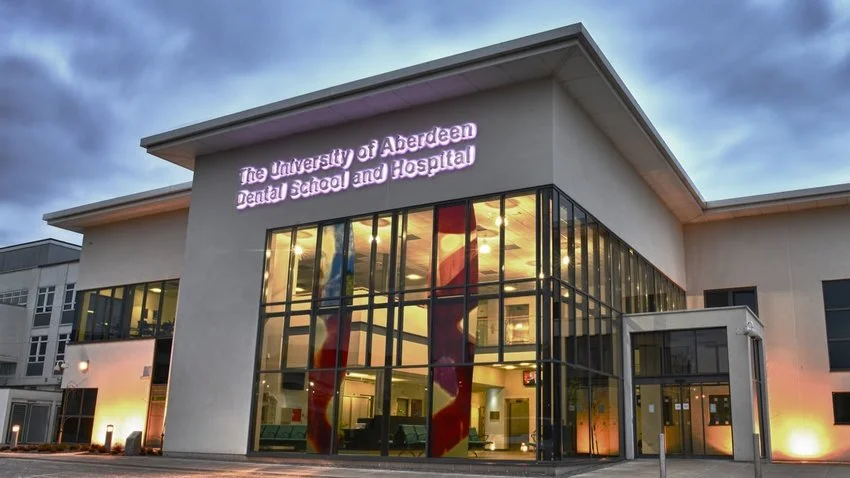
The University of Aberdeen offers a graduate‑entry, four‑year BDS Dentistry degree based at the Institute of Dentistry on the Foresterhill Health Campus – one of the largest integrated healthcare sites in Europe. The programme is designed specifically for graduates, using your existing scientific knowledge and skills and introducing patient contact from the very start of Year 1.
With only around 20 places per year, competition is intense. Understanding exactly how the selection and interview process works will help you prepare calmly and confidently.
Throughout this guide, key factual details are taken directly from the University of Aberdeen Institute of Dentistry website, which is the most authoritative source on the Aberdeen dentistry interview process. Where helpful, we also draw on the Dental Schools Council and specialist interview‑prep sites for extra context.
2. How does Aberdeen decide who to invite to a Dentistry interview? 📊
All applicants – including graduates – apply through UCAS (the central university application system in the UK) by 16 October for entry the following September. Applications submitted after this date are not considered for Dentistry at Aberdeen.
2.1 Pre‑interview scoring
Aberdeen uses a clear scoring system to decide who is invited to interview:
Academic record and predictions – 60%
UCAT score – 40%
Key points:
Academic requirements for graduates
You must normally hold at least a 2:1 honours degree in a relevant medical or health science (e.g. Biomedical Science, Anatomy, Pharmacy, Physiotherapy, Medicine, Veterinary Medicine, Oral Health Sciences with strong academic performance).
Your prior degree must cover relevant biomedical subjects, and you may be asked for detailed transcripts to confirm this.
UCAT (University Clinical Aptitude Test)
All applicants must sit the UCAT, a computer‑based aptitude test used across UK medical and dental schools. It assesses reasoning, decision‑making and situational judgement rather than academic knowledge.
Aberdeen does not use a fixed UCAT cut‑off. Instead, your overall UCAT score is converted into a score and combined with your academic score (60% academic, 40% UCAT) to rank applicants for interview.
Only the four cognitive subtests (Verbal Reasoning, Quantitative Reasoning, Decision Making, Abstract Reasoning) are scored at this stage; the Situational Judgement Test (SJT) is not used for interview selection but may be used later when deciding between borderline candidates at offer stage.
Aberdeen publishes, on its UCAT webpage, the lowest UCAT scores invited to interview for recent cycles. For example, for 2025 entry the lowest invited scores were 2320 (Scottish Fees) and 2470 (Rest of UK), illustrating that you do not need a “perfect” score, but you do need to be competitive within each year’s applicant pool.
2.2 How many applicants are interviewed?
Specialist interview‑prep sources report that Aberdeen receives roughly 200 applications per year, of whom around 60 are invited to interview, with 30–40 offers typically made for 20 places.
These numbers vary each year, but they give a rough idea:
About 1 in 3–4 applicants gets an interview
Around half to two‑thirds of interviewees may receive an offer
Aberdeen also states that its selection process follows the Dental Schools Council “Guiding Principles for the Admission of Dental Students”, meaning the school aims to be fair, transparent and inclusive, and to look beyond grades alone.
✅ Turn dental interview practice into performance.
Our dentist-designed mock MMI mirrors real stations—communication, ethics, critical thinking, data interpretation, manual dexterity—assessed by experienced tutors and former assessors 🥇. Gain confidence and a personalised action plan. ➡️ Click here to secure your spot — strict 10 places per circuit.
3. How does Aberdeen interview for 2026 entry? 📅
The University of Aberdeen uses a Multiple Mini Interview (MMI) format for Dentistry – a series of short, structured stations with different interviewers.
For 2026 entry, the School of Medicine, Medical Sciences and Nutrition (which includes Dentistry) currently states that:
Dentistry (BDS) interviews are held in person at the Dental School, Foresterhill Health Campus
Interview dates for 2026 entry: 3rd–8th December 2025
Interviews use a modified MMI format, with candidates rotating through a number of stations.
Always double‑check these dates on the official Aberdeen website when you apply, as the university may adjust the timetable slightly from year to year.
4. What is the Aberdeen Dentistry interview style? 🎤
4.1 The MMI format at Aberdeen
Aberdeen’s “Coming to Interview” guidance for Dentistry explains the structure in detail:
The interview follows an MMI format
The whole interview experience lasts just over 1½ hours
You move around seven successive stations
Each station typically lasts about 7 minutes
At each station, one selector explores a particular domain (e.g. work experience, ethics, communication) and scores you against set criteria
Your communication and interpersonal skills are scored at every station
On the day, you’ll arrive about 30 minutes early for a tour of the dental school and a welcome briefing. You can ask questions here and get a feel for the building, clinics and simulation labs.
4.2 What Aberdeen is looking for
Aberdeen uses an objective scoring system to assess non‑academic qualities such as:
✅ Work experience and caring insight
✅ Understanding of dentistry and current issues
✅ Problem‑solving and analytical skills
✅ Enthusiasm, interest and motivation for dentistry
✅ Communication and interpersonal skills
✅ Manual dexterity and fine motor skills
✅ Ability to reflect on your experiences and learning
✅ Potential contribution to the care of others
The university explicitly notes that:
Candidates are often nervous, and the panel’s aim is to put you at ease so you can do your best
The MMI is not there to re‑test pure academic knowledge – your academic ability has already been assessed before the interview
Instead, selectors are interested in how you think, behave and reflect as a future dental professional
5. When are Aberdeen Dentistry interviews held? ⏰
From Aberdeen’s application process timeline for Dentistry:
16 October – UCAS deadline for Dentistry
October–November – UCAS forms assessed and academic scores allocated
Early November – UCAT results sent to universities
November–March – historically, top ~60 candidates interviewed
End of March / early April – initial offers made via UCAS
For 2026 entry, Aberdeen has been more specific and currently lists 3–8 December 2025 as the main in‑person Dentistry interview window.
In practice:
Expect your invitation (if successful) sometime in late autumn
Interviews are concentrated in early December, with any mop‑up dates if needed
Try to keep this period free, especially if you are applying from further afield
6. What topics are covered in an Aberdeen Dentistry interview? 📚
Aberdeen’s own MMI guidance describes the question domains that selectors explore. Combined with wider UK Dentistry interview trends reported by the Dental Schools Council and specialist guides, common themes include:
6.1 Motivation and preparation for Dentistry
Why do you want to study Dentistry, and why Aberdeen’s graduate‑entry BDS?
What have you learned from researching dental curricula and postgraduate training (e.g. foundation training, specialist pathways)?
How do you see yourself using your prior degree in your dental career?
6.2 Understanding the realities of a dental career
Day‑to‑day life in NHS dentistry
Pressures on access to NHS dental care and health inequalities
The emotional demands of treating anxious or vulnerable patients
The balance between clinical, ethical and business considerations
6.3 Work experience and caring roles
You may be asked to reflect on:
Shadowing in general practice or hospital clinics
Volunteering or employment in caring or customer‑facing roles
What you observed about communication, team working and professionalism
Aberdeen specifically notes that candidates may be asked to:
Discuss their preparation for entry to Dentistry
Outline learning points from previous experiences
Reflect on their own and others’ skills and abilities
Consider their potential contribution to the care of others
6.4 Ethics, professionalism and the General Dental Council (GDC)
Expect scenarios about:
Consent and confidentiality
Professional boundaries
Raising concerns about colleagues
Managing conflicts of interest (e.g. cosmetic vs clinically‑necessary treatment)
These align with the GDC’s standards on professionalism and patient‑centred care, which UK dental schools aim to instil from the start.
6.5 Communication, empathy and teamwork
You may be asked to:
Explain a complex idea clearly to a non‑specialist
Describe a time you dealt with conflict or miscommunication
Explore how you would support an anxious or distressed patient
6.6 Problem‑solving and critical thinking
Aberdeen emphasises problem‑solving and analytical skills. Questions might involve:
Interpreting brief information and suggesting a sensible plan
Considering the pros and cons of different options
Justifying your reasoning and changing your mind when presented with new information
6.7 Manual dexterity and fine motor skills
You will not usually be asked to do a practical task, but you may be asked about:
Hobbies that show manual skills (e.g. musical instruments, art, sewing, model‑making, lab work)
Times when you needed precision and attention to detail
How you plan to maintain and improve your dexterity over time
6.8 Resilience, wellbeing and time‑management
As a graduate‑entry student, you’re expected to understand that the course is demanding. Topics might include:
Managing stress during exams or clinical placements
Balancing academic work, clinical duties and life outside university
Coping with setbacks and constructive feedback
7. How many applicants receive an interview and how many receive an offer? 📈
As noted earlier:
The BDS Dentistry programme has around 20 places per year.
Independent interview‑prep sources suggest:
Around 200 applicants annually
Roughly 60 candidates invited to interview
About 30–40 offers made
This roughly translates to:
Interview chance: c. 30% (varies by year and applicant background)
Offer chance once interviewed: perhaps 50–65%
Remember, these figures are approximations based on recent cycles and may change as the course evolves or expands. Always treat them as a guide, not a guarantee.
8. Example Aberdeen Dentistry MMI stations and questions 📝
Aberdeen clearly states that many MMI question types are in the public domain and encourages applicants to familiarise themselves with typical questions while ensuring their answers are personal and reflective.
Below are example station themes and practice questions, based on:
The official Aberdeen interview domains
General UK Dentistry MMI guidance from the Dental Schools Council and specialist providers.
⚠️ These are not the exact questions Aberdeen will use, but they are realistic practice material aligned with what the university says it assesses.
Station 1 – Motivation for Dentistry & Why Aberdeen 🟢
Why have you chosen to study Dentistry rather than Medicine or another healthcare profession?
Aberdeen’s BDS is a graduate‑entry, four‑year course. How does that suit your skills and circumstances better than a standard five‑year programme?
What specific aspects of Aberdeen’s curriculum and teaching style appeal to you, and how have you researched them?
Station 2 – Understanding the Dental Profession & NHS Dentistry 🔵
What do you see as the main challenges facing NHS dental services in Scotland at the moment?
A patient complains they cannot find an NHS dentist in their area. How might this make you feel as a future dentist, and what could be done at system level to improve access?
How might advances such as digital dentistry and tele‑dentistry change the way dentists work over the next decade?
Station 3 – Work Experience & Reflection 🌱
Tell me about one experience (clinical or non‑clinical) that confirmed Dentistry was the right choice for you.
What did you learn about communication and teamwork from your work or volunteering in a caring environment?
Describe a time you observed a healthcare professional dealing with a difficult situation. What did they do well, and what would you have done differently?
Station 4 – Ethics & Professionalism ⚖️
A regular patient asks you to “fudge” their records to help them get insurance cover for cosmetic treatment. How would you respond?
A colleague seems to be cutting corners and you worry this may put patients at risk. What are your responsibilities, and how would you act?
Why are honesty and integrity particularly important for dentists, and how can students demonstrate these during training?
Station 5 – Communication & Empathy 💬
Explain to a nervous teenager why they need a filling and what will happen during the procedure, in language they can understand.
Describe a time when someone misunderstood you. How did you resolve the situation, and what would you do differently now?
How would you approach an adult patient who is very anxious about visiting the dentist due to a bad experience as a child?
Station 6 – Teamwork & Leadership 🤝
Give an example of when you worked in a multi‑disciplinary team (e.g. group project, sports, work). What was your role, and what did you learn?
Dentistry often involves leading a small clinical team (nurse, technician, receptionist). What makes a good team leader in a dental setting?
How would you handle a disagreement with a more senior team member about how to manage a patient?
Station 7 – Problem‑Solving & Prioritisation 🧠
You are a student on clinic and you suddenly find that two patients have arrived at once, both expecting treatment from you. How would you prioritise and manage the situation?
A community has high rates of dental decay in young children. What possible causes and solutions can you suggest?
Talk me through how you would approach an unfamiliar problem in a structured way.
Station 8 – Manual Dexterity & Hobbies 🎨
Which of your hobbies best demonstrate fine motor skills, and how do they help you prepare for clinical dentistry?
Tell me about a task that required sustained concentration and precision. How did you maintain your focus?
You are struggling with a particular manual skill on phantom head clinic. How would you address this?
Station 9 – Resilience & Wellbeing 🌈
Describe a time you faced a significant setback in your studies or personal life. How did you respond, and what did you learn about yourself?
Dental training can be demanding. What strategies will you use to look after your mental health while on the course?
How would you support a fellow student you think is stressed or burnt out?
Station 10 – Graduate Skills & Prior Degree 🎓
How has your previous degree prepared you for studying Dentistry at an accelerated level?
Tell me about a project or dissertation where you analysed scientific evidence. How might those skills help you as a dentist?
What was the most challenging part of your undergraduate studies, and how did you overcome it?
Station 11 – Data Interpretation & Critical Appraisal 📈
Here is a short summary of a study looking at sugar intake and dental decay in children. What are the key messages, and what limitations might this research have?
Why is evidence‑based practice important in Dentistry?
How would you explain conflicting pieces of evidence to a patient who is confused by different health messages in the media?
Station 12 – Values & Personal Insight 🌟
What values do you think a good dentist should have? How do you demonstrate these now?
If we spoke to your friends or colleagues, what would they say are your main strengths and weaknesses?
Looking back over your application, what are you most proud of, and what would you like to improve before starting dental school?
Use these questions to practise timed answers (about 6–7 minutes per station), ideally with someone else playing the role of interviewer.
9. When are offers released for Aberdeen Dentistry? 🎉
Aberdeen’s Offers page explains how decisions are made after interviews:
Of those invited to interview, offers are made to candidates who achieve the highest scores, based only on interview performance.
Offers are made once the interview cycle is complete, typically by the beginning of April.
The dental school then notifies UCAS, and you can track your application on UCAS Hub.
Types of offer:
Unconditional offer – you have already met all entrance requirements
Conditional offer – usually depends on achieving specified academic grades in your current studies
Successful applicants with unconditional offers usually know by May which dental school they will attend. Those holding conditional offers must wait until examination results are released in the summer, when universities match results to offers.
Aberdeen notes that Clearing is rare for Dentistry – they prefer to reconsider candidates who were interviewed but not initially offered a place, if spaces later become available.
10. Top tips for the University of Aberdeen Dental School interview 💡
Here are some structured, practical tips tailored specifically to Aberdeen’s graduate‑entry BDS.
10.1 Understand Aberdeen’s unique programme
Read the Dentistry, BDS pages in detail so you can talk convincingly about:
48‑month graduate‑entry structure
Early patient contact from Year 1
Small cohort size (around 20 students) and the benefits for teaching and support
Case‑based and enquiry‑based learning
Be ready to explain how this structure matches your learning style and previous degree.
10.2 Know the MMI format and practise timed answers
Simulate seven 7‑minute stations with a short gap between them.
Practise speaking clearly and concisely; you don’t need to fill every second with talking, but you must reach a conclusion.
Use a simple structure like STAR:
Situation – brief background
Task – what you had to do
Action – what you actually did
Result & Reflection – what happened and what you learned
10.3 Deeply reflect on your experiences
Aberdeen places strong emphasis on reflection and learning from experience.
For each key experience (work, volunteering, university projects), write down:
What happened
What went well / less well
What you learned about yourself
How it will make you a better dental student / dentist
Practise articulating this in simple, honest language.
10.4 Keep up with NHS and dental hot topics
Use reliable sources (e.g. NHS, BDA, Dental Schools Council, serious news outlets) to understand:
Access to NHS dentistry and regional inequalities
Preventive vs restorative dentistry
Public health measures (fluoride, sugar taxes, smoking cessation)
Digital technologies (scanners, CAD/CAM, tele‑consultations)
Aim to have a balanced view rather than memorised facts.
10.5 Prepare for ethics and professionalism
Read the GDC standards for dental professionals (even just the summaries) so you understand core principles: patient interest first, consent, confidentiality, honesty.
Practise reasoning through scenarios:
Identify the key issues
Weigh up different options and their consequences
Justify a reasonable, patient‑centred decision
Reflect on what you would do if wrong or challenged
10.6 Don’t neglect manual dexterity
Be ready to discuss specific hobbies that demonstrate fine motor skills – ideally over a period of time, not a one‑off.
If you haven’t done much yet, start something simple now (e.g. drawing, origami, crochet, musical instrument) and be honest about where you’re at.
10.7 Treat the day as a two‑way conversation
Remember the tour and welcome session: use this time to:
Ask current students about:
Workload and support
Clinical exposure
Life in Aberdeen
Notice whether the environment feels supportive and friendly – this can help you answer “Why Aberdeen?” authentically.
10.8 Look after the practicalities
From Aberdeen’s own guidance, bring:
Photographic ID (e.g. passport)
Completed Work Experience Form
Consent to Use Data and Fitness declaration
Degree transcript if requested
Arrive in professional attire, avoiding anything you would not wear to see real patients in clinic.
10.9 For graduate applicants: sell your degree, not just your grades
Show how your previous degree has given you:
Scientific understanding
Study skills and self‑direction
Maturity and resilience
Avoid simply repeating your academic transcript; focus on insight and growth.
10.10 Practise – but don’t script
Aberdeen explicitly warns against memorised or copied answers; selectors want to hear your own thoughts, not rehearsed textbook responses.
Use practice questions to build structures and confidence, not word‑for‑word speeches.
It’s fine to pause, think and then speak – that often comes across as mature and reflective.
11. Student comments on the Aberdeen dental interview & course 🗣️
While universities don’t usually publish full interview reports, some students have shared their experiences of Aberdeen Dentistry publicly.
11.1 Henry’s experience – a graduate‑entry student
In a detailed article on “I Want To Be A Dentist”, Henry, a final‑year Aberdeen dental student, describes his journey:
After completing a degree in Oral Health Sciences, he applied mainly to shortened, graduate‑entry courses, including Aberdeen.
He received conditional offers from both Aberdeen and UCLan, but ultimately chose Aberdeen because:
The open day and interview felt very welcoming – he felt the school really wanted him there
The facilities were modern, with teaching and clinics in the same building
The small year group (maximum twenty students) meant interactive teaching and easy access to staff
He highlights:
Early and frequent clinical experience
Supportive supervisors and opportunities in outreach clinics in places like Elgin and Stornoway
The need for professionalism and long days, but also the possibility of balancing study with a social life and part‑time work
Henry’s advice to future applicants includes:
Stand out – have something individual in your application and at interview.
If you don’t get in first time, it’s not the end of the world – alternative routes can still lead to Dentistry.
Research the dental school and city carefully – you’ll be there for four years.
Practise interview techniques with someone who can give honest feedback.
Talk to people who have been through the process.
These comments align closely with what Aberdeen itself emphasises: reflective, motivated graduates who have really thought about the profession and the course.
12. Final thoughts
The University of Aberdeen graduate‑entry BDS is a fantastic option if you already hold a relevant degree and are ready for an intensive, clinically‑focused programme in a small, friendly dental school.
If you:
Understand the selection process and MMI format
Prepare thoroughly but speak authentically
Reflect deeply on your experiences
Keep up with NHS dental issues and GDC standards
…you’ll put yourself in a strong position to turn an interview invitation into an offer.
You’ve already done the hard bit by seriously considering a demanding, patient‑centred career. The interview is your chance to show Aberdeen who you are – not just what you’ve memorised.
Good luck – and remember, every mock interview you do now makes the real thing feel that bit more manageable. 🌟
References & further reading
(Primary / official sources – University of Aberdeen)
University of Aberdeen, Institute of Dentistry – Dentistry (BDS) overview and structure The University of Aberdeen
Institute of Dentistry – Application Process and Timeline The University of Aberdeen
Institute of Dentistry – Interview page (MMI format and assessed qualities) The University of Aberdeen
Institute of Dentistry – Coming to Interview (station structure, timings, on‑the‑day guidance) The University of Aberdeen
Institute of Dentistry – Academic Requirements (including graduate entry criteria) The University of Aberdeen
Institute of Dentistry – UCAT (use of UCAT, scoring, past cut‑offs) The University of Aberdeen
Institute of Dentistry – Entrance Requirements & Admissions Policy (non‑academic requirements, equality, and DSC guiding principles) The University of Aberdeen
Institute of Dentistry – Offers (how and when offers are made) The University of Aberdeen
School of Medicine, Medical Sciences & Nutrition – Interview page (Dentistry 2026 dates and modified MMI) The University of Aberdeen
(Sector‑wide and contextual sources)
Dental Schools Council – main site and entry‑requirements publications for UK dental schools Dental Schools Council
GDC – Standards for the Dental Team and professional guidance (via BluePeanut dentistry interview questions guide) Blue Peanut Medical
(Interview‑prep & student insight sources – used for context and example themes)
BluePeanut Medical – Dental School Interview Guide 2026 and Dentistry School Interview Questions (national trends, hot topics, question styles) Blue Peanut Medical