University of Central Lancashire (UCLan) Dentistry Interview Questions – 2026 Entry

🦷 Introduction – UCLan Dentistry and Why the Interview Matters
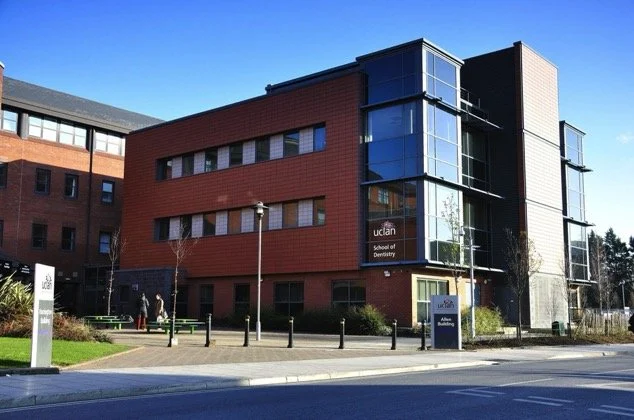
The University of Central Lancashire (UCLan) runs a four‑year graduate‑entry Bachelor of Dental Surgery (BDS) programme (UCAS code A202), primarily for UK applicants with a prior biomedical degree. It is based in Preston in Year 1 and then in community‑based Dental Education Centres (DECs) in Accrington, Blackpool, Carlisle and Morecambe Bay for much of the later years.
The cohort is deliberately small (around 29 students per year, according to UCLan student testimony), which means the school can offer close supervision and a very personalised learning environment. UCLan reports a 100% success rate for its BDS graduates securing Dental Foundation (DF1) posts since 2011, underlining the quality of its training.
Because places are so limited, the interview is crucial. It is where UCLan decides not just who is clever enough, but who has the values, communication skills and professionalism to become a safe, caring dentist serving the local community.
This guide focuses on 2026 entry, using:
UCLan’s own BDS course page (the most authoritative source).
The Dental Schools Council (DSC) “Entry Requirements for UK dental schools – 2026 entry” booklet.
Reputable interview‑prep sites and student accounts for extra colour and examples.
🎯 How Does UCLan Decide Who to Call for a Dentistry Interview?
1. Academic requirements
For 2026 entry, UCLan’s own site and the DSC guide state that applicants must:
Hold at least a 2:1 degree in a biomedical discipline (or closely related medical/health science).
Have 3 A‑levels at grade C or above, with at least two subjects from Biology, Chemistry, Physics or Mathematics (General Studies does not count).
Hold GCSE English and Maths at grade B (6) or above.
BTEC Extended Diploma is not accepted.
Non‑UK degrees are considered if equivalent, but this is a UK‑focused graduate‑entry route.
You’ll also need:
IELTS 7.0 overall with no component below 7.0 if you require an English language test.
A clear DBS (criminal record) check and Occupational Health clearance before starting.
2. UCAT (University Clinical Aptitude Test)
From 2024 entry onwards, all UCLan BDS applicants must sit the UCAT before applying.
For 2026 entry UCLan states that:
Your UCAT score is used to rank applications before interview.
The highest‑scoring applicants are then invited to interview.
The Dental Schools Council confirms that UCLan uses UCAT and multiple mini‑interviews (MMIs) as core parts of selection.
🔍 In simple terms: if you don’t sit UCAT, you cannot be considered. If you sit it but score poorly compared to others, you are unlikely to get an interview.
3. Verification of prior learning
Because this is a graduate‑entry route straight into “Year 2 BDS”, UCLan checks that your previous degree covers enough biomedical science. You must:
Complete an online Verification of Prior Learning form.
For 2026 entry this had to be submitted by Wednesday 15 October 2025.
If the form shows gaps in your biomedical knowledge, your application may not progress.
4. Personal statement, reference and work experience
For 2026 entry, according to the DSC 2026 entry requirements booklet for UCLan:
Personal statements are no longer used in selection.
Work experience is “no longer used” as a formal selection factor.
UCLan does, however, still require an academic reference (for example from your degree course leader, tutor or project supervisor).
So the key filters for interview are:
Meeting the academic criteria.
Submitting verification of prior learning.
Achieving a sufficiently strong UCAT score.
✅ Turn dental interview practice into performance.
Our dentist-designed mock MMI mirrors real stations—communication, ethics, critical thinking, data interpretation, manual dexterity—assessed by experienced tutors and former assessors 🥇. Gain confidence and a personalised action plan. ➡️ Click here to secure your spot — strict 10 places per circuit.
🗓 How Does UCLan Interview for 2026 Entry?
UCLan helpfully publishes specific details of the interview process for 2026 entry on its BDS course page.
Confirmed 2026 entry interview dates
For September 2026 entry, interviews will be held on:
Monday 15 December 2025
Tuesday 16 December 2025
Wednesday 17 December 2025
UCLan is explicit that no other interview dates will be held. This means:
If you are invited, you must be available on one of those dates.
There is usually very limited flexibility for rescheduling.
UCLan also states that they will confirm closer to the time whether interviews are online or at Preston campus.
Interview format – officially
The official description for 2026 entry is:
A series of Multiple Mini Interviews (MMIs).
Stations will cover:
Communication skills
Knowledge of dentistry
Ethics
Professionalism
Team working
A separate UCLan article on MMIs (written for medical applicants but very relevant) notes that MMIs typically involve 6–8 stations of around 8–10 minutes each.
Third‑party interview guides and ex‑applicants describe UCLan’s Dentistry MMI as lasting around 40–60 minutes in total, sometimes with an additional manual dexterity task.
⚠️ Important: Station numbers, timings and whether there is a separate manual dexterity station can change slightly year‑to‑year. Always rely on the information sent in your own interview email, as that is definitive for your cohort.
💬 What Is UCLan’s Dental Interview Style? (MMIs Explained Simply)
MMI = Multiple Mini Interview.
Instead of one long panel interview, you move round a circuit of short stations, each with a different task or question. You might:
Talk to an interviewer about a scenario.
Role‑play a conversation with a “patient” (often an actor or student).
Interpret some information (e.g. a graph about oral health).
Reflect on your own experiences.
Demonstrate manual dexterity in a simple practical task (for example assembling or shaping something carefully with your hands).
Each station usually has:
A clear prompt (on paper or read out).
Specific marking criteria – often aligned to GDC standards and NHS values.
A new interviewer, so a poor performance at one station doesn’t automatically ruin your whole interview.
This suits UCLan’s ethos: they want to see you thinking on your feet, behaving professionally and communicating clearly – not just reciting memorised answers.
📅 When Are UCLan Dentistry Interviews Usually Held?
For 2026 entry, UCLan has confirmed interviews will be held 15–17 December 2025.
From Student Room threads and third‑party guides, applicants in previous cycles report:
Interview invitations often start arriving in late November, giving roughly 2–3 weeks’ notice.
The actual interviews are clustered in December, similar to the 2026 schedule.
Always check:
Your email (including junk folder).
Your UCLan applicant portal.
Your UCAS Hub.
📚 What Topics Are Covered in a UCLan Dentistry Interview?
From UCLan’s official description plus dental‑school‑wide guidance, you can expect stations drawn from the following topic areas:
1. Communication and empathy
Explaining a procedure in simple language.
Talking to an anxious or upset patient.
Listening actively and showing empathy.
2. Knowledge of dentistry and the career
What a dentist actually does, day to day.
The structure of dental training and DF1.
Key challenges in dentistry – e.g. oral health inequality, NHS dental access, sugar consumption and caries rates.
3. Ethics and professionalism
Consent, confidentiality, capacity and safeguarding.
Dealing with mistakes honestly and safely.
Professional behaviour in and out of clinic (including social media).
Understanding GDC “Standards for the Dental Team” and NHS values (e.g. respect, compassion, working together).
4. Team working and leadership
Working in a dental team (dentists, nurses, therapists, reception staff).
Handling conflict or communication breakdown.
Being a good follower as well as a leader.
5. Insight into UCLan and its community model
Because UCLan’s BDS is strongly community‑based, expect questions about:
Working in smaller towns / more deprived communities.
Access to dental care and how community clinics help.
Why UCLan’s DEC model appeals to you.
6. Resilience, motivation and suitability
Your journey into dentistry (especially as a graduate).
Handling setbacks (e.g. previous applications, exam difficulties).
Coping with stress and workload.
7. Manual dexterity and fine motor skills
Several sources mention that UCLan has used manual dexterity tasks such as wax shaping, pegboards or fine manipulation tasks to assess hand–eye coordination and patience.
You will likely be assessed on:
Care, precision, patience and ability to follow instructions.
How you talk through what you’re doing.
📊 How Many Applicants Receive an Interview and an Offer?
UCLan does not publish full admissions stats on its website, but reputable interview‑prep sites drawing on FOI data and experience suggest:
Applications per year: roughly 260 for the BDS graduate‑entry route.
Number interviewed: typically 110–160 applicants.
Places per year: about 29 students.
This implies, very approximately:
Around 2 in 5 applicants might be invited to interview (varies by year).
Around 1 in 4 to 1 in 5 interviewees might receive an offer, depending on numbers and cohort quality.
A UCLan BDS student interview also mentions a cohort size of around 29, which aligns with these figures.
📌 Takeaway: UCLan BDS is small and selective. Getting to interview is an achievement in itself – and from there, every station really does count.
📝 Extensive Example UCLan‑Style Dentistry Interview Stations & Questions
Below is a large bank of example MMI stations and questions designed to match:
UCLan’s official topic list (communication, knowledge of dentistry, ethics, professionalism, teamworking).
Common Dentistry MMI formats across the UK.
They are not official questions, but they are realistic and ideal for practice.
🧠 1. Motivation and understanding of UCLan & Dentistry
Station idea: One interviewer panel; discussion only.
Example questions:
Why have you chosen Dentistry rather than Medicine, Dental Therapy or another healthcare career?
Why does the University of Central Lancashire’s BDS course appeal to you specifically?
UCLan’s later years are based in community Dental Education Centres, not a big teaching hospital. How do you think this will shape your training and career?
What do you understand by primary care dentistry, and how does UCLan’s course reflect this?
UCLan graduates have an excellent record of securing Dental Foundation posts. Why do you think that is, and how does it influence your choice?
🧬 2. Insight into the profession & healthcare system
Station idea: Discussion about “the bigger picture” in dentistry.
Example questions:
What are the main challenges facing NHS dentistry in England at the moment?
How might socio‑economic factors influence a person’s oral health?
Explain the importance of prevention in dentistry and give examples of preventive strategies.
What do you know about water fluoridation and the arguments for and against it?
Why might access to dental care be more difficult in some parts of Lancashire and Cumbria, and how could community‑based clinics help?
🤝 3. Communication and empathy stations
Station idea 1 – Explaining a procedure:
You are a dental student seeing a patient who needs their first filling. The patient looks nervous and says: “I hate dentists. Is it going to hurt?”
How would you explain the procedure in simple, reassuring language?
How would you check that they have understood and consented?
Station idea 2 – Breaking bad news (low‑stakes):
A patient has repeatedly missed appointments and now faces needing more extensive treatment.
How would you discuss this with them without sounding judgemental?
How would you encourage them to engage with future care?
Station idea 3 – Non‑verbal communication:
You are asked to describe a picture or diagram to an interviewer who cannot see it and guide them to draw it. The focus is on:
Clarity of instructions.
Logical sequencing.
Checking understanding.
⚖️ 4. Ethics and professionalism
Station idea 1 – Confidentiality:
A friend messages you saying they’ve seen a social media post showing your clinical partner “joking” about a patient on their private account. The patient is not named, but the situation is recognisable.
What are the ethical issues here?
How would you respond as their colleague?
Station idea 2 – Consent and capacity:
An adult patient with learning difficulties attends with a carer, who insists on extracting a tooth the patient seems frightened about.
How would you approach this situation ethically and legally?
How would you establish what the patient wants and understands?
Station idea 3 – Honesty about mistakes:
You are a dental student and accidentally damage a tooth while practising under supervision.
Who should you tell, and what should you say?
How can honesty protect the patient and your future career?
👥 5. Teamwork, leadership and reflection
Station idea – Reflective discussion:
You are asked to talk about a time when you:
Had to work with someone you didn’t get on with.
Dealt with a conflict in a team.
Took the lead under pressure.
Follow‑up questions might include:
What skills did you use?
What would you do differently next time?
How do these experiences prepare you for working in a dental team?
🎭 6. Role‑play stations
Example role‑plays:
Angry patient:
A patient arrives late and is told they will need to rebook. They are angry and complain that it’s “a waste of time”. You must de‑escalate the situation while maintaining professionalism and clinic policy.
Anxious child (via parent):
You talk with a parent whose child is terrified of dental treatment. The focus is on listening, signposting and offering practical ideas in plain English.
Colleague under strain:
Another student appears overwhelmed by workload and is making more mistakes. Role‑play a conversation where you raise your concerns supportively.
👐 7. Manual dexterity & practical skills
Inspired by the kinds of tasks described by interview‑prep providers (wax, wire, pegboard and fine motor activities).
Possible station tasks (the exact task can vary):
Use soft material (for example modelling wax or putty) to reproduce a simple shape or pattern shown on a card.
Use tweezers to move small objects (beans, beads or coins) from one tray to another under time pressure, keeping them in neat groups.
Arrange coloured pegs to match a diagram as accurately as possible.
Thread a cord through a series of small holes in a particular order.
Typical follow‑up questions:
How did you manage your time and stress during the task?
What helped you stay precise and calm?
How do your hobbies (e.g. drawing, sewing, playing an instrument, crafts) help develop your manual skills?
📈 8. Data interpretation & problem‑solving
Station idea:
You are shown a simple graph comparing tooth decay rates in children from two local areas, before and after a school‑based brushing programme.
Questions might include:
What does this graph show, in your own words?
What possible explanations are there for the differences?
What further information would you need before drawing firm conclusions?
Another could focus on NHS dentistry funding, a short article or infographic, and ask you to:
Summarise the key points.
Explain potential impacts on patients and dentists.
🌱 9. Values, resilience and wellbeing
Station idea – Values and resilience:
Tell us about a time you faced a serious setback (academic or personal). How did you respond, and what did you learn?
Studying Dentistry is intense. What strategies will you use to protect your mental health?
How does your experience as a graduate (perhaps with work or other responsibilities) prepare you for the demands of UCLan’s BDS course?
📬 When Are UCLan Dentistry Offers Released?
UCLan does not publish an exact “offers release date” for Dentistry. However, combining:
The confirmed mid‑December interview dates for 2026 entry.
Student reports of offers in previous years arriving from January through to February.
UCAS guidance that universities must normally respond to on‑time applications by the end of March.
…it is reasonable to expect that:
Most UCLan BDS decisions (offers or rejections) will come between late January and March, though some may appear earlier or later.
Always rely on:
The deadline shown in your UCAS Hub.
Any timescales mentioned in UCLan’s own emails.
💡 Top Tips for the UCLan Dentistry Interview (2026 Entry)
Here are targeted tips based on UCLan’s official guidance, the university’s own MMI advice article, and student experiences.
1. Understand the UCLan BDS model deeply
Know that this is a graduate‑entry, community‑focused, primary‑care‑based programme.
Be ready to explain why you want:
A small cohort (around 29 students).
Extensive experience in Dental Education Centres rather than a big dental hospital.
2. Nail the basics: UCAT, verification form and admin
Make sure you can talk about when and how you prepared for UCAT, what you learnt, and how your performance reflects your abilities.
Be familiar with what you wrote in your verification of prior learning form, as it shows the mapping between your first degree and BDS.
3. Prepare naturally – don’t memorise speeches
UCLan’s own MMI tips stress that rehearsed, robotic answers often perform badly. Instead:
Practise explaining your ideas in different words each time.
Use bullet‑point prompts rather than scripts.
Focus on clear structure:
Point → Example → Link to Dentistry/UCLan.
4. Time management is crucial
MMI stations are typically around 8–10 minutes, and many students lose marks by overrunning or finishing too early.
Practise answering common questions in 2–3 minutes.
Ask a friend to time you moving between mock stations.
If you get stuck, summarise your key idea and stop, rather than waffling.
5. Revise core ethics and professional guidance
At minimum, be comfortable with:
GDC “Standards for the Dental Team” – especially putting patients’ interests first, maintaining trust, and communication.
Basic medical ethics principles (autonomy, beneficence, non‑maleficence, justice).
NHS values, especially respect, compassion, improving lives and everyone counts.
Use simple, real examples from your own life to show that you already try to live these values.
6. Keep up with dental “hot topics” 🔥
Interview‑prep resources and UCLan’s own MMI article highlight the importance of knowing about current issues.
In the weeks before interview:
Skim UK news on NHS dentistry access, waiting lists and contract debates.
Read a couple of short pieces about sugar, diet and oral health, or public health campaigns.
Make brief notes: “Issue → Why it matters → How dentists are involved”.
7. Practise manual dexterity and talking while you work
Because UCLan may include a manual dexterity test, practise tasks like:
Drawing simple shapes very neatly.
Threading needles, sewing or small crafts.
Building small models from LEGO, wire, or modelling clay.
While you do a task, talk aloud calmly: “I’m doing X because… This lets me be more accurate by…”. This is exactly what you may need to do in the station.
8. Use official UCLan and DSC resources first
The Dental Schools Council and UCLan’s own website emphasise that applicants must always check each dental school’s site directly for the latest admissions information.
Print or save the BDS course page and highlight: entry criteria, interview dates, interview topics.
Bring your understanding into answers like “Why UCLan?” or “How will you cope with the course structure?”.
9. Look after your wellbeing
From student accounts, the path to UCLan can involve resits, previous rejections and years of preparation.
Plan revision in small, consistent chunks.
Schedule breaks, sleep and exercise.
Talk to supportive friends, family or mentors – confidence matters at interview.
10. On the day: calm, professional, human 😊
Dress smartly but comfortably (think smart‑casual clinic style).
Arrive early (or log in early if online).
If one station goes badly, reset – MMIs are designed so you can recover at the next one.
🗣 Student Insights on the UCLan Dentistry Interview
Several sources share comments from UCLan dental students and applicants:
One graduate entry student describes UCLan as a small, supportive cohort (around 29 students) where you get to know your peers and staff well and do not “get lost in a big group”.
She emphasises that she had several failed applications before receiving her single UCLan interview – and that “you only ever need one interview” to change everything, highlighting resilience and persistence.
Her tips include:
Be yourself and don’t give up.
Study each university carefully so you can show why it suits you.
Know GDC standards and NHS values, and dress smartly.
Remember that “a one‑hour interview could set you up for your whole life” – try not to let nerves win.
Applicants on forums also note:
UCLan uses UCAT to rank and then invite the highest‑scoring candidates.
Interview emails have tended to arrive late November, with about 2 weeks’ notice.
Many find the wait for outcomes stressful, but those who prepared early and practised MMIs felt far more in control.
✅ Quick Pre‑Interview Checklist for UCLan BDS (2026 Entry)
Before your interview, try to be able to say “yes” to:
I understand UCLan’s course structure, community DECs and small‑cohort philosophy.
I know the confirmed 2026 interview dates and my allocated slot.
I can explain why my graduate background prepares me for Dentistry.
I’ve practised MMI‑style stations (communication, ethics, teamworking, data, manual dexterity).
I can talk about current challenges in NHS dentistry.
I’m comfortable with GDC standards, basic ethics principles and NHS values.
I’ve tested my tech/travel and know what to bring/wear.
I have strategies to stay calm, breathe and reset between stations.
If most of these are ticked, you will walk into your UCLan Dentistry interview with a solid, well‑targeted preparation – and a genuinely competitive chance. 🌟
📚 References
University of Central Lancashire – Dental Surgery BDS (A202) course page, including entry requirements, UCAT use, verification of prior learning and 2026 interview dates and format. University of Lancashire
Dental Schools Council – “Entry requirements for UK dental schools: 2026 entry”, University of Central Lancashire School of Dentistry section. Dental Schools Council
UCLan – “Top tips for completing your MMI”, article by Dean Hardy (MBBS student) with general MMI advice and typical station timings. University of Lancashire
Studyinghealthcare.ac.uk / Dental Schools Council resources – general guidance on dental school entry requirements and the need to check each school’s website for up‑to‑date admissions information. Studying Healthcare