University of Birmingham Dental School Interview Questions for 2027 Entry
Here is the sentence that should change how you prepare for this interview, taken word for word from Birmingham's own admissions statistics document:
"Offers are made based upon interview rankings. No previous information such as academic achievement or UCAT score is taken into account when making offers."
Read that twice. 😮
At most dental schools, your University Clinical Aptitude Test (UCAT) score follows you into the interview room and keeps scoring points. At Birmingham it does not. It gets you through the door — and then it is switched off. Straight A* predictions and a monster UCAT buy you a seat at the Multiple Mini Interview (MMI) circuit and absolutely nothing after that.
Birmingham's own numbers prove it. For 2026 entry, the highest UCAT score of anyone interviewed was 2660. The highest score of anyone who received an offer was 2470. Somebody walked in with the best UCAT in the room and walked out without an offer. 🎯
This guide covers how Birmingham shortlists, what the MMI circuit actually tests, the real published UCAT and offer statistics, when interviews are held — and 84 practice questions written in Birmingham's own station format.
🦷 An introduction to Birmingham Dental School
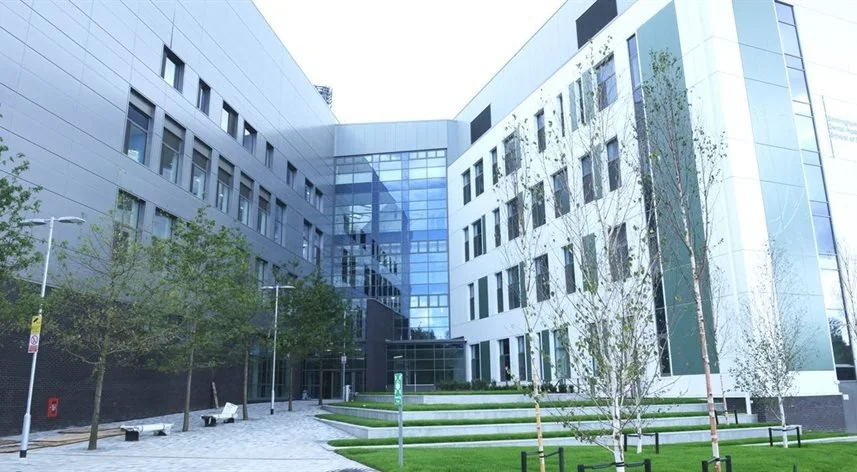
The School of Dentistry does not sit on the University's Edgbaston campus. It sits about a mile away at Pebble Mill, on the site of the old British Broadcasting Corporation (BBC) studios, inside the Birmingham Dental Hospital and School of Dentistry — a £50 million building that opened in 2016 and was officially opened by Her Majesty The Queen and the Duke of Edinburgh.
That building is the school's single biggest selling point, and Birmingham describes it precisely: "the first integrated, stand-alone hospital and school to be built in the UK for almost forty years." Hospital and school are not neighbours here. They are the same building, designed from scratch as one thing. 🏥
The history behind it is older than almost anywhere else in the world:
- 1858 — a dental hospital is established in Birmingham. The University calls it "the oldest now in this country, and possibly the world."
- 1880 — formal teaching of dental students begins
- 1900 — Mason's College becomes the University of Birmingham and becomes the first university in the UK to grant dental degrees, awarding the Bachelor of Dental Surgery (BDS) and Master of Dental Surgery (MDS)
- 2016 — the Pebble Mill building opens
Today the school hosts more than 600 undergraduate and postgraduate students and trainees, admitting over 120 Dental Surgery and Dental Hygiene and Therapy students a year.
The course itself
The Bachelor of Dental Surgery is a five-year programme, with Universities and Colleges Admissions Service (UCAS) course code A200 and institution code B32.
- Year 1 — foundation sciences: Body Systems, Craniofacial Anatomy, Introduction to Cells and Tissues. You are observing treatment in clinic from the start.
- Year 2 — Behavioural Management, Simulated Clinical Procedures, Dental Materials Science. By the end of this year, you are treating your own patients.
- Year 3 — Human Diseases and Restorative Dentistry specialty teaching; clinical responsibility steps up
- Year 4 — advanced patient care with speciality modules in Paediatric Dentistry, Oral Pathology and Prosthodontics
- Year 5 — advanced clinical practice and specialisation
Teaching runs through lectures, seminars, small-group tutorials, laboratory work and clinic, with feedback on every assessment within four weeks. The virtual learning environment is Canvas.
And a genuinely strong line for your "why Birmingham" answer: the General Dental Council (GDC) inspected the programme in 2025 and, in Birmingham's words, "the 2025 GDC report confirmed that we hit 100% of the accreditation standards." ✅
What makes Birmingham Dental School stand out?
Five things separate Birmingham from the other fifteen dental schools in the United Kingdom.
🏥 One building, one team. The integrated hospital-and-school model means your lecture, your simulation session and your patient are all under the same roof. No shuttling across a city between a university department and a distant hospital.
🕰️ The deepest history in the country. Oldest dental hospital, and the first UK university to award dental degrees. That is not just trivia — it is why Birmingham has the referral networks and the patient volume it does.
🦷 A fully computerised phantom head laboratory. Birmingham's simulation suite is the bridge between "I can do this on a plastic tooth" and "I can do this on a person", and it is the reason manual dexterity shows up on their assessment list.
🌍 One of the largest and most diverse patient populations in the UK. The West Midlands gives you a caseload you simply cannot get in a small city. If you want to talk about health inequality with real examples, you will see them here.
🎉 BUDSS, founded in 1886. The Birmingham University Dental Students' Society is the oldest and largest dental student society in the UK, and membership is about £15 a year. Alongside it sits MedSoc, with over 2,500 members and more than 70 societies built around healthcare students' timetables.
📊 Rankings and student experience ratings
Dentistry subject rankings
- 10th in the UK — Complete University Guide, Dentistry subject league table 2027
- Top 20 in the world for Dentistry — Quacquarelli Symonds (QS) World University Rankings by Subject 2026
- 1st in England for "teaching on my course" — National Student Survey (NSS) 2026
- 8th in the UK in the Russell Group — NSS 2026
In the Complete University Guide's 2027 dentistry table, Birmingham scores 95 for graduate prospects, 88 for research quality, 78 for student satisfaction and 66 for entry standards.
That 95 for graduate prospects is the number worth holding on to. It is one of the highest figures in the entire dentistry table, and it answers the only question that really matters at the end of five years. 🎓
And "1st in England for teaching on my course" isn't a marketing line — it comes from students on the course, in the national survey. 💙
The University of Birmingham worldwide
- 68th in the world and joint 10th in the UK — QS World University Rankings 2027. This is Birmingham's highest position in a decade, up 23 places since 2023.
- 12th in the UK — Complete University Guide 2027, up from 14th
- Seven subjects in the world top 50 in the QS subject rankings, including Dentistry, with sixteen more in the top 100
- A founding member of the Russell Group
Student experience — Birmingham's current headline
🏆 Daily Mail University of the Year 2027. Awarded in 2026 for student outcomes and experience, educational innovation and investment. Birmingham rose seven places to 13th out of 128 ranked universities.
⭐ Highest-ever student satisfaction score in the National Student Survey 2026, ranking first in the Russell Group and top ten nationally.
💼 Over 80% of 2024 graduates were in graduate-level jobs or further study fifteen months after graduating.
🎪 The Guild of Students serves over 34,000 students and Birmingham is one of the greenest cities in the UK with more than 8,000 acres of parks — which matters more than you think on a five-year course.
🎯 How Birmingham Dental School decides who to call for interview
Birmingham publishes its shortlisting process in three plain steps, in the same document as the raw numbers. Very few schools are this transparent.
Step 1: academic screening
"Applications will be screened to ensure they meet academic requirements."
Crucially, you are screened against your own applicant category. A contextual or Pathways to Birmingham applicant is measured against the contextual offer (typically AAB or ABB), not the standard AAA.
Step 2: personal statement review
"Personal statements will then be reviewed for motivations to do the course, specific mentions of Dentistry and reasoning behind the application."
Notice the middle phrase — "specific mentions of Dentistry". Birmingham is checking that you wrote a dentistry personal statement, not a general healthcare one with the word "teeth" sprinkled in. Since the 2026 entry, the UCAS personal statement is three structured questions rather than one essay, so make sure you name dentistry and reason it out in each one. ✍️
Step 3: the UCAT decides
"The UCAT score will then be used to determine if an interview is offered."
And two published caveats you should take seriously:
- "There is no minimum UCAT cut-off score." The effective threshold moves every year with the size and strength of the applicant pool.
- "The exact mechanism by which we shortlist candidates may change annually based upon the number of applicants in a particular year and other external factors."
🔑 What this three-step design actually means
Birmingham's process is front-loaded and then blind. Everything you built over two years — the grades, the UCAT, the statement — exists purely to get you to a February morning at Pebble Mill. After that, none of it counts.
So the strategy splits cleanly in two. Before Christmas, the UCAT matters more than anything. From January on, it is worth nothing, and every hour goes into the MMI. Applicants who keep quietly reassuring themselves about their 2500 all the way to the interview have misunderstood the process. 💡
🧪 How the University Clinical Aptitude Test (UCAT) is used at Birmingham
The rules
- Every applicant must sit the UCAT in their year of application, before the 15 October deadline
- The total cognitive score is used to shortlist for interview
- No minimum cut-off is published, and Birmingham states plainly: "No further information on how we use the UCAT will be released if you contact us."
- The Situational Judgement Test (SJT) band is not used. Birmingham's exact wording: "The band score for the Situational Judgement Test (SJT) component of UCAT will not be used at any stage, although this may change in the future."
- Elite athletes on the University's sport recruitment scheme may have the UCAT threshold reduced by up to 10%, with contact required before 30 September
⚠️ The SJT point is a real differentiator — Sheffield rejects Band 3 and 4 outright, Birmingham ignores the band entirely. But do not read that as permission to coast: Birmingham has flagged that this "may change in the future", and you almost certainly have other dental schools on your UCAS form that do use it.
📈 The real numbers Birmingham publishes
This is the most useful thing on the whole Birmingham admissions site, and most applicants never find it. The school publishes UCAT ranges for interviewed and offered candidates every year.
For 2026 entry (excluding contextual and widening participation candidates, who are considered separately):
- Interviewed: highest 2660, lowest 2190, mean 2303
- Offered: highest 2470, lowest 2210, mean 2288
Sit with those four numbers for a moment, because three separate lessons fall out of them.
The three lessons hiding in Birmingham's UCAT data
Lesson one — the realistic target is about 2300. The mean interviewed score was 2303. Against a national mean of 1891 for the 2025 cycle, that is a demanding but entirely achievable score, not a mythical one.
Lesson two — 2190 got someone an interview. The lowest interviewed score was well below the mean. If you are sitting on a score in the low 2200s and writing Birmingham off, look at that number again. 🙌
Lesson three — and this is the important one — the UCAT genuinely stops mattering. The mean score of offer holders (2288) was lower than the mean score of interviewees (2303). The top scorer in the room (2660) did not get an offer, while somebody with 2210 did. That is not noise. That is the published policy — "no previous information such as academic achievement or UCAT score is taken into account when making offers" — showing up in the data. ⚖️
🚨 The scale change you must understand before comparing any old numbers
Abstract Reasoning was removed from the UCAT from 2025 onwards. There are now three cognitive subtests instead of four, and the maximum total is 2700, not 3600.
Birmingham flags this in its own document: "The UCAT changed in 2025 for 2026 entry, with one module (Abstract Reasoning) being removed. Scores from pre-2025 are therefore not directly comparable."
This matters enormously when you look at Birmingham's historic table, because the older rows are on the old scale:
- 2026 entry (new 2700 scale): interviewed 2190–2660, mean 2303
- 2025 entry (old 3600 scale): interviewed 2870–3420, mean 3013
- 2024 entry (old 3600 scale): interviewed 2780–3370, mean 2914
If you see a tutoring site telling you Birmingham "wants 3000", it is quoting the old scale, and it is useless to you. On the current scale, 3000 is not a score that exists. 🚫
For context: the 2025 national UCAT picture
Across 41,354 tests in the 2025 cycle:
- Verbal Reasoning: 602
- Decision Making: 628
- Quantitative Reasoning: 661
- Total cognitive mean: 1891, with the median (fifth decile) at 1880 and the ninth decile at 2220
Line that up against Birmingham's mean interviewed score of 2303, and the picture is clear: Birmingham interviewees are sitting comfortably above the ninth decile nationally. Aim high. 📊
📚 Academic entry requirements for 2027 entry
- A-levels: AAA including Biology (or Human Biology) and Chemistry, plus one other subject. You must take all three A2 subjects in Year 13.
- Not accepted as your third A-level: General Studies, Critical Thinking, or the Extended Project Qualification (EPQ)
- GCSEs: seven GCSEs in total, including English Language or Literature at grade 7/A, Mathematics at grade 7/A, and Biology and Chemistry (or dual award science) at grade 8/A*
- International Baccalaureate (IB): minimum 32 points overall, with 6, 6, 6 at Higher Level including Chemistry and Biology
- Scottish qualifications: AAAAA at Higher plus AA at Advanced Higher in Chemistry and Biology
- Cambridge Pre-U: D3, D3, D3 including Biology and Chemistry
- Irish Leaving Certificate: minimum H1 in four subjects including Biology and Chemistry
- Graduates: a 2:1 in a health-science-related degree (or 65% if unclassified), plus a minimum of ABB at A-level including Chemistry and Biology, and GCSE grade C in Maths and English
- English language: IELTS 7.0 with a minimum of 7.0 in each component
- Age: you must reach 18 by 1 October of your year of entry
⚠️ The rules that end applications
These are the ones people fall foul of. Read them properly.
📌 Resits are not considered — at A-level or GCSE. This is one of the strictest resit policies of any UK dental school. If you have resat, check very carefully before using Birmingham as a choice.
📌 You cannot apply to both Dentistry and Medicine at Birmingham. An application to both will not be considered. Your fifth UCAS choice needs to be something else — Biomedical Science, for instance.
📌 Only four of your five UCAS choices may be dentistry. That is a national rule, not a Birmingham one, but it bites here.
📌 One shot at interview. If you are interviewed at Birmingham and not made an offer, you cannot simply reapply the following year. A second application requires evidence of significant sustained activity — a completed degree, or two to three years of work.
📌 Transfers are not accepted, from UK or overseas dental schools, because GDC graduation requirements differ between programmes.
📌 Incomplete applications, including a missing reference, will not be considered, and nothing sent after the 15 October deadline will be looked at.
📌 Deferred entry is genuinely fine. Around 10% of the cohort take a gap year, and Birmingham states you will not be disadvantaged, provided the year involves work, travel or voluntary service. ✅
Widening participation and contextual offers
- Pathways to Birmingham: an alternative offer of a minimum of ABB at A-level (predicted BBB) including Chemistry and Biology, with a minimum of seven GCSEs at grade 4 or above, five specified subjects at minimum grade 5, and two at grade 7 or above
- Contextual offers are one grade below the standard offer and are based on receipt of Free School Meals in the last six years, or documented local authority care
- The impact is real: for 2026 entry, 92 widening participation applicants were interviewed and 26 received offers — meaning widening participation candidates made up over a quarter of all interviews and 22% of all offers 🌱
🔬 Work experience: what Birmingham actually asks for
Birmingham is more specific than most schools about the minimum, and more generous than most about what happens if you cannot get it.
What they ask for:
- Ideally at least three days of work shadowing in an NHS or mixed NHS/private dental practice. Note the emphasis on NHS — private or hospital-only experience can supplement this but not replace it.
- Voluntary work in a healthcare setting — nursing homes, care homes, hospices, hospitals
- For 2027 applicants, remote volunteering is acceptable where in-person placements are not available
And the reassurance, in their words: candidates unable to secure a placement "will not be disadvantaged in our selection processes."
What they are looking for underneath it:
- Evidence you are "highly motivated towards a career in dentistry"
- A commitment to working for the benefit of the community
- An understanding of empathy when serving a diverse population
- Demonstration of NHS values: working together for patients, respect and dignity, compassion, commitment to quality of care, and resilience
- Evidence of an informed career choice — you know what the job is, not what you imagine it is
You may be asked about your placements in the interview, so the reflection matters far more than the hours. Three days you can talk about intelligently beats three weeks you cannot. 🧠
🗣️ How Birmingham Dental School interviews: format, structure and timings
The format: Multiple Mini Interviews
Birmingham runs an MMI circuit, confirmed both on its own admissions pages and in the Dental Schools Council's entry requirements document for 2027 entry.
- Structure: "four to ten mini-interviews lasting five to ten minutes each"
- Assessors: one or two per station
- Numbers: approximately 300 candidates interviewed (320 in each of the last two cycles)
- Support on the day: current dental students give tours and look after candidates
What each station assesses
Birmingham names the attributes explicitly. This is your mark scheme, and it is worth memorising:
- 🎯 Motivation for the career
- 💬 Communication
- 🤍 Empathy
- 🪞 Self-insight
- ⚖️ Ethical reasoning
- ✋ Manual dexterity
- 👥 Leadership
Underneath those seven, Birmingham says it is looking for students who "embrace the values of healthcare and will excel in the profession, including respect, compassion, resilience and commitment to quality of care."
🖐️ The manual dexterity station — Birmingham's distinctive one
Most dental schools quietly hope you have good hands. Birmingham puts manual dexterity on its published list of assessed attributes, which tells you it has a station for it.
How to actually practise for a manual dexterity station
You cannot revise for this in the normal sense, but you can absolutely prepare:
- Practise fine motor tasks under time pressure while being watched — wire bending, plasticine or wax carving, knot tying, threading, mirror drawing, building something small from written instructions
- Practise talking while your hands work. Assessors are often as interested in whether you narrate, stay calm and adapt as in the finished object.
- Practise recovering from a mistake. Dropping something is not the failure. Panicking, going silent, or pretending it did not happen is.
- If the station asks you to instruct someone else to build something you can see and they cannot, that is a communication station wearing a dexterity costume — slow down and be precise.
What "four to ten stations" really means for your preparation
That published range is wide, and Birmingham does not commit to a number in advance. Prepare as though there could be eight or nine, and take three practical things from it:
⏱️ Time your answers to five minutes, not fifteen. A station is short. Two long, meandering answers will eat a whole station.
🔄 A bad station is survivable. That is the entire design philosophy of the MMI. Each station is scored independently by different assessors who have not met you. Walk out of a station you fluffed and genuinely reset — the next assessor knows nothing about it.
🔔 Practise with a buzzer. The rhythm of stopping mid-sentence, walking, reading a new brief on a door in sixty seconds and starting again is a skill in itself.
Delivery: in person at Pebble Mill, no exceptions
Birmingham could not be clearer: "No alternative interview dates are available, and online or telephone interviews are not offered." Even "applicants based overseas are also expected to attend in person."
There is no Zoom option, no reserve date, and no telephone fallback. Interviews take place in person at the Dental School in Birmingham. Book your travel the day your invitation lands. 🚆
📅 When are Birmingham dentistry interviews held?
The timeline for 2027 entry:
- 15 October 2026 — UCAS deadline. A complete application, including your reference. Nothing after this date is considered.
- October to December 2026 — academic screening, personal statement review, UCAT ranking
- Late 2026 into January 2027 — interview invitations issued progressively as places on the circuit fill
- By mid-January 2027 — unsuccessful applicants are notified. Birmingham's own advice: "You should not be concerned if you do not hear a final decision until January."
- February half-term week 2027 — MMI interviews, in person at the Dental School. In the English school calendar, this is expected to be the week beginning Monday 15 February 2027.
- From late February 2027 — offers issued in interview-rank order
📌 Because invitations go out progressively rather than in one batch, silence in November means nothing. Do not read anything into a friend hearing before you do.
🧠 What topics are covered in the Birmingham dentistry interview?
Mapping everything Birmingham publishes onto what you should prepare:
- Motivation for dentistry — and why dentistry rather than medicine
- Knowledge of the profession — the dental team, the GDC, NHS dentistry and its pressures
- Reflection on work experience and volunteering — what you understood, not what you did
- Communication — explaining, listening, checking understanding, adapting to your audience
- Empathy — with patients, with colleagues, and in situations you have not experienced
- Self-insight — honest strengths, real weaknesses, and what you have done about them
- Ethical reasoning — consent, confidentiality, capacity, resource allocation, professional boundaries
- Manual dexterity — a practical task, performed under observation
- Leadership and teamwork
- NHS values — working together for patients, respect and dignity, compassion, commitment to quality of care, resilience
- Professionalism and the GDC's Standards for the Dental Team
- Commitment to Birmingham specifically — this school, this building, this course
🔢 How many are interviewed, and how many get offers?
Birmingham publishes this openly, which is rare and very useful. For 2026 entry:
- 880 applications (140 from overseas)
- 320 interviewed (16 overseas, 92 widening participation)
- 118 offers (9 overseas, 26 widening participation)
- 65 places (up to 3 for international students)
The two previous cycles, for comparison:
- 2025 entry: 791 applications · 317 interviewed · 141 offers · 71 places
- 2024 entry: 937 applications · 320 interviewed · 140 offers · 72 places
📉 What the numbers really say
Roughly one in three applicants gets an interview. 320 out of 880 is about 36% — considerably kinder than most dental schools, where the shortlisting bottleneck is far tighter.
Roughly one in three interviewees gets an offer. 118 out of 320 is about 37%.
Overall, about one in seven applicants receives an offer — around 13%.
Offers comfortably exceed places. 118 offers for 65 places, because Birmingham expects a proportion of offer holders to firm elsewhere or miss their grades.
The trend that should worry 2027 applicants
⚠️ Notice the direction of travel on places: 72, then 71, then 65. Places are government-controlled, and they have fallen in each of the last two cycles, while applications rose from 791 to 880. Do not assume 2027 will be easier than 2026.
For international applicants, the maths is brutal but honest: 140 applied, 16 were interviewed, 9 received offers, for up to 3 places. If you are applying from overseas, go in with your eyes open. 🌍
✅ What is the interview scoring method?
Birmingham does not publish a numerical marking scheme, a pass mark or a per-station weighting. What it does publish is far more revealing than most schools manage:
1. Every station is scored independently. One or two assessors per station, each seeing you cold, each scoring against the named attribute for that station.
2. Your scores are totalled and candidates are ranked. "Offers are made based upon interview rankings."
3. Nothing else enters the calculation. "No previous information such as academic achievement or UCAT score is taken into account when making offers."
4. Offers go down the ranked list until the intake target is met.
Why this matters more than a published mark scheme would
Because the ranking is purely interview-based, the MMI is not a formality or a final check — it is the entire selection decision. At schools that combine UCAT and interview scores, a strong test performance cushions a shaky station. At Birmingham there is no cushion.
The upside is real and worth holding on to if your UCAT was solid rather than spectacular: **on the day, you start level with everyone else in the building. **** The person who scored 2660 has exactly the same number of points as you do when the first buzzer goes. 🏁
📮 When are offers released?
- By mid-January 2027 — applicants who will not be interviewed are notified
- February half-term week 2027 — the MMI circuit runs
- From late February 2027 onwards — offers released in interview-rank order, typically rolling out across late winter and spring as the ranking is worked through
- All offers are conditional on achieving the stipulated grades, a satisfactory Disclosure and Barring Service (DBS) check, and completed health and immunisation requirements
After you accept
Birmingham asks for a full health declaration and immunisation record, including screening for blood-borne viruses (Hepatitis B, Hepatitis C and Human Immunodeficiency Virus), evidence of Hepatitis B immunisation, two doses of Measles, Mumps and Rubella (MMR) vaccine or an immunity blood test, Bacillus Calmette–Guérin (BCG) or Heaf test evidence, and Varicella immunity. Your DBS instructions arrive roughly two to three weeks after you firmly accept. You will also sign up to the GDC's Standards for the Dental Team in your first week. 🩺
📢 One thing every 2027 applicant must know
Birmingham flags this prominently across its admissions pages: the Government plans, under the 10 Year Health Plan for England, to require newly qualified dentists to work in the NHS for a minimum period. This is expected to apply to students entering a dental course from academic year 2027/28 — which is you.
Detail is still awaited from the Department of Health and Social Care. Have a considered view on it, because it is one of the most likely ethics or motivation questions in the 2027 cycle. 💭
❓ 84 example Birmingham dentistry interview questions, sorted by assessed attribute
These are written as MMI station prompts, grouped under the seven attributes Birmingham names, plus a professionalism section and a Birmingham-specific section.
Practise them to a five-minute clock, standing up, with someone silently marking. That is the format you will actually face. ⏱️
🎯 Station type: motivation for the career
- Why dentistry? You have four minutes.
- Why dentistry rather than medicine? Be specific.
- When did you decide, and what has tested that decision since?
- What is the least appealing part of being a dentist, and how do you know you could live with it?
- Talk us through what you have done to check that this career is genuinely right for you.
- This is five years of study followed by Dental Foundation Training. How do you feel about committing to that now?
- If you spent forty years in general practice in one town, would that still appeal to you?
- What would you say to someone who described dentistry as a well-paid trade rather than a profession?
- What have you read, watched or attended about dentistry in the last six months that changed your mind about something?
- If you do not get a dentistry place this year, what will you do?
- What do you think you will find hardest about the first two years here?
- Tell us about the moment in your work experience that made dentistry feel real.
💬 Station type: communication
- Explain to us, as though we were a nervous eight-year-old, what a filling is and why they are needed.
- Teach us something you know well in three minutes. It does not have to be scientific.
- How would you explain a treatment plan to a patient whose first language is not English?
- A patient has read online that root canal treatment causes cancer. Respond to them.
- Tell a patient that the tooth they wanted saved will have to be extracted.
- What makes someone a good listener? Give us a specific example of when you listened well.
- Describe a time your communication failed. What did you change afterwards?
- How would you tell a patient that their own habits are causing their pain, without them becoming defensive?
- Explain to a colleague, over the phone, how to get to your school from the nearest railway station. They cannot see a map.
- How does the way you speak change between an elderly patient, a child, and a friend your own age?
🤍 Station type: empathy
- A patient has been waiting ninety minutes and is angry with the receptionist. You are the only clinician free. What do you do and say?
- A patient bursts into tears in the chair before you have touched them. What is your first move?
- Describe a time you supported someone who was frightened. What did you actually do?
- What does empathy mean in a clinical setting, and how is it different from sympathy?
- Birmingham serves one of the most diverse populations in the UK. What does empathy look like when your patient's culture, faith or language differs from yours?
- A teenager is embarrassed about the state of their teeth and will barely open their mouth. How do you handle the appointment?
- A patient who has not seen a dentist in fifteen years finally comes in. How do you make sure they come back?
- A carer brings in a resident with dementia who is distressed by the chair. Talk us through your approach.
🪞 Station type: self-insight
- What is your biggest weakness, and what have you actually done about it?
- Tell us about a genuine failure. Not a disguised strength — a failure.
- Tell us about feedback that was hard to hear. What did you do with it?
- What would the person who knows you best say is the most annoying thing about working with you?
- How do you know when you are struggling, and what do you do about it?
- Dentistry involves repeating intricate manual tasks under time pressure for hours. What makes you think you can do that?
- What do you do to look after your own wellbeing, and would it survive a five-year clinical course?
- Rates of stress and burnout in dentistry are high. Why do you think that is, and what would you do about it?
⚖️ Station type: ethical reasoning
- A 15-year-old asks you not to tell their parents about something they have disclosed. What do you consider?
- A patient who smokes heavily wants dental implants. Talk us through your thinking.
- A patient asks you to whiten a healthy set of teeth that you think already look fine. What do you do?
- Should patients who repeatedly miss NHS appointments lose their place on a practice list? Argue both sides.
- You make a clinical error that the patient never notices. What do you do?
- A colleague arrives smelling of alcohol. What do you do, and in what order?
- There is one emergency appointment left and three patients who want it. How do you decide?
- A patient cannot afford the treatment you believe is best for them. What are your options?
- Should sugary drinks be taxed more heavily? Make the case both ways, then tell us where you land.
- Newly qualified dentists may soon be required to work in the NHS for a minimum period. What do you think of that, and who benefits?
✋ Station type: manual dexterity
These are performed, not answered. Practise them with a friend watching and a timer running.
- Bend this length of wire to match the shape on the card in front of you. You have five minutes.
- Carve the shape shown into this block of soap or wax.
- Build the model in front of you using only the written instructions provided.
- Thread these beads onto wire in the order shown, using tweezers only.
- Draw the figure in front of you while looking only at its reflection in a mirror.
- Tie the three knots demonstrated on the card, in order.
- Your partner cannot see the object in front of you. Instruct them to build a copy of it using only your voice.
- Complete the task while explaining aloud what you are doing and why. If something goes wrong, tell us how you are adjusting.
👥 Station type: leadership and teamwork
- Tell us about a team you were part of that was not working. What did you do?
- What does good leadership look like to you? Have you ever actually led anything?
- When have you had to follow a decision you disagreed with?
- How do you handle a team member who is not pulling their weight when you are not in charge?
- Describe a time you had to rely completely on someone else.
- What is the difference between being assertive and being difficult?
- You are the newest member of a dental team and you notice something being done unsafely. What do you do?
- What have you learned about teamwork from something outside school — a job, a sport, music, volunteering?
🏛️ Station type: professionalism, NHS values and knowledge of dentistry
- Who is in the dental team, and what does each member actually contribute?
- What is the General Dental Council, and what does it do?
- Name three principles from the GDC's Standards for the Dental Team and explain why they matter.
- What are the three biggest challenges facing NHS dentistry right now?
- What do you understand by the term "dental deserts"?
- What is a Unit of Dental Activity, and why do dentists talk about them so much?
- From a patient's point of view, what is the difference between NHS and private dental treatment?
- How does oral health in the UK differ between the richest and poorest areas, and why?
- What role should prevention play in modern dentistry, and does the current system reward it?
- A fellow student posts a photograph of a patient's mouth on social media. What do you do?
🏫 Questions specific to the University of Birmingham
These are the ones that separate applicants who researched the school from applicants who researched dentistry. Every answer here should contain at least one proper noun. 🎯
- Why Birmingham, rather than the other three dental schools on your UCAS form?
- What do you know about how our course is structured?
- Our students are treating their own patients by the end of Year 2. How do you feel about that?
- Our dental hospital and school are one integrated building at Pebble Mill. What difference do you think that makes to how you would learn?
- Birmingham was the first university in the UK to grant dental degrees, and our dental hospital dates back to 1858. Does that history matter to you, or is it just marketing?
- Our 2025 GDC report confirmed we met 100% of the accreditation standards. What would you want to know about a dental school before choosing it?
- We train in one of the most diverse healthcare regions in the country. What are the advantages and the challenges of that for a student clinician?
- What appeals to you about our computerised phantom head laboratory, and what do you think simulation cannot teach you?
- We make our offers purely on interview performance, with no reference to your UCAT score or your grades. What do you think of that policy?
- What would you contribute to this school beyond your clinical work — to BUDSS, to the Guild, to the year group?
💡 How to build a "why Birmingham" answer that scores
The answer that scores nothing
"Birmingham has a great reputation, and I love the city." Every candidate says this. It contains no information about Birmingham that isn't also true of Bristol, Leeds, or Manchester.
The answer that scores, in three moves
- Name something structural. The integrated hospital-and-school building at Pebble Mill. Treating your own patients by the end of Year 2. The computerised phantom head laboratory.
- Say why it suits you, with evidence. Link it to something you actually did — a placement, a conversation, an open day.
- Finish with what you would give back. BUDSS, MedSoc, outreach, the Guild.
💬 What students say about the Birmingham dentistry interview
⚠️ The themes below are drawn from recurring feedback shared by applicants and current students across several cycles, paraphrased rather than quoted from named individuals. Treat them as a steer, not as gospel.
"The building genuinely sold it to me." Overwhelmingly the most common comment. Applicants repeatedly describe walking into Pebble Mill and understanding immediately why an integrated hospital and school is different. Several said Birmingham moved up their UCAS ranking on the strength of the visit alone.
"It was much friendlier than I expected." Candidates describe assessors who smile, nod and try to put you at ease rather than stone-faced examiners. The student ambassadors giving tours receive particular praise. 😊
"Five minutes is shorter than you think." The most repeated practical regret. Applicants who had rehearsed to a timer said it was the single most useful thing they did. Those who had not described being stopped mid-sentence.
"I hadn't practised the practical station at all." A recurring theme. Candidates say they drilled ethics scenarios and "why dentistry" for weeks and then met a hands-on task cold. Several noted afterwards that Birmingham publishes manual dexterity on its assessed list in plain sight.
"Nobody asked about my UCAT." Applicants consistently report that their score never came up. Which lines up exactly with what Birmingham publishes about how it makes offers.
"They wanted reflection, not a CV." Candidates who listed their work experience report the conversation going flat. Those who talked about one specific moment and what they took from it describe follow-up questions and a warmer tone.
"Wait to be interrupted, don't rush." Several applicants said their instinct was to speak fast to fit everything in, and that the answers that landed best were the slower ones with a clear structure.
"Getting there was the stressful bit." Because interviews are in person at Pebble Mill — a mile from the main campus — and there is no alternative date, applicants travelling from a distance strongly recommend arriving the night before. 🚉
🌟 Top tips for the Birmingham dentistry interview
1. Understand the two-phase game. 🎯 Before Christmas, the UCAT is close to everything. After the invitation lands, it is worth nothing. Split your preparation accordingly, and stop thinking about your score the moment you are shortlisted.
2. Read Birmingham's admissions statistics document. Almost nobody does. It gives you the real UCAT ranges, the real offer numbers, and Birmingham's own sentences about how offers are decided. It is the best free preparation resource for this school.
3. Prepare properly for the manual dexterity station. ✋ Birmingham names it publicly. Wire bending, wax carving, mirror drawing, knot tying, instruction-following — with someone watching and a clock running. Practise recovering from a mistake out loud.
4. Rehearse for five minutes, standing up. MMI stations are short and physical. Sitting on your bed reciting answers is not the same skill.
5. Learn the seven attributes and build one story for each. Motivation, communication, empathy, self-insight, ethical reasoning, manual dexterity, leadership. That is the published mark scheme. Do not prepare for anything else.
6. Reset between stations. 🔄 Different assessors, independent scores, no shared notes. The station you fluffed is genuinely over. Candidates who carry a bad station into the next three lose far more marks than the bad station cost.
7. Have five stories, not fifty facts. ⭐ A placement, a caring role, a team, a failure, a time you led something. Five well-reflected experiences can answer forty different prompts.
8. Name Birmingham things. Pebble Mill. The integrated hospital and school. Patients from the end of Year 2. The phantom head laboratory. BUDSS since 1886. Generic praise for the city scores nothing.
9. Learn the NHS values and have an honest opinion. Working together for patients, respect and dignity, compassion, commitment to quality of care, resilience. Birmingham names them on its own preparation page.
10. Have a view on the NHS work requirement. 📢 It is expected to apply to your cohort from 2027/28 entry, and Birmingham flags it on every admissions page. Prepare a balanced answer — who it helps, who it constrains, and where you land.
11. Read the GDC Standards for the Dental Team. Birmingham explicitly tells you to familiarise yourself with the ethical and professional standards dentists are held to. It is free and it is short.
12. Check the resit and duplicate-application rules before you commit to a choice. ⚠️ Resits are not considered. You cannot apply to Birmingham for both Dentistry and Medicine. Getting either of these wrong wastes a UCAS choice entirely.
13. Book travel the day your invitation arrives. 🚆 In person, at the Dental School, February half-term week, no alternative dates and no online option. If you are coming a long way, stay the night before.
14. Be kind to the other candidates. You will spend a morning in a waiting room with them, watched by students and staff. Values-based recruitment does not switch off between stations.
15. Ask the student ambassadors real questions. They are on the course you are applying to, in the building you would be learning in. Nobody will ever give you a better answer about what Year 3 is actually like.
⚡ Key facts at a glance
🏛️ Dental school: Birmingham Dental Hospital and School of Dentistry, Pebble Mill — a £50 million integrated hospital and school opened in 2016, about a mile from the Edgbaston campus
📜 History: dental hospital founded in 1858 (the oldest in the country); teaching from 1880; the first UK university to grant dental degrees, from 1900
🎓 Degree: Bachelor of Dental Surgery (BDS), 5 years, UCAS course code A200, institution code B32
🥇 Rankings: 10th in the UK for dentistry (Complete University Guide 2027) · Top 20 in the world for Dentistry (QS World University Rankings by Subject 2026) · 1st in England for teaching on my course (NSS 2026) · University 68th in the world and joint 10th in the UK (QS 2027) · 12th in the UK (Complete University Guide 2027)
⭐ Student experience: Daily Mail University of the Year 2027 · highest-ever NSS satisfaction score in 2026, 1st in the Russell Group and top ten nationally · over 80% of 2024 graduates in graduate-level work or study at 15 months
✅ Accreditation: the 2025 GDC report confirmed the programme met 100% of accreditation standards
📅 Application deadline: 15 October 2026 · maximum four dentistry choices · you cannot apply to Birmingham for both Dentistry and Medicine
📝 Entry requirements: A-level AAA including Biology and Chemistry plus one other (no General Studies, Critical Thinking or EPQ) · IB 32 points with 6,6,6 at Higher Level including Chemistry and Biology · Highers AAAAA plus Advanced Higher AA · Pre-U D3,D3,D3 · seven GCSEs including English 7/A, Maths 7/A, Biology and Chemistry 8/A* · IELTS 7.0 in every component · must be 18 by 1 October
🚫 Resits: not considered, at A-level or GCSE · Transfers: not accepted · Reapplication after interview: only with evidence of significant sustained activity · Deferred entry: welcomed, around 10% take a gap year
🌱 Contextual: one grade below standard offer · Pathways to Birmingham minimum ABB (predicted BBB) · based on Free School Meals in the last six years or documented local authority care
🧪 UCAT: required in year of application · total cognitive score used to shortlist · no minimum cut-off published · SJT band not used at any stage · elite athlete threshold reduction of up to 10%
📊 2026-entry UCAT (new 2700 scale, excluding contextual and widening participation): interviewed 2190–2660, mean 2303 · offered 2210–2470, mean 2288
⚠️ Scale warning: Abstract Reasoning was removed from 2025, taking the maximum from 3600 to 2700. Birmingham's pre-2025 figures (means of 2914 and 3013) are not comparable to your score
🦷 Work experience: ideally 3+ days in an NHS or mixed NHS/private practice, plus healthcare volunteering · remote volunteering accepted for 2027 applicants · no disadvantage if a placement cannot be secured
🗣️ Interview format: Multiple Mini Interview — four to ten stations, five to ten minutes each, one or two assessors per station
📍 Delivery: in person at the Dental School only — no online, no telephone, no alternative dates, including for overseas applicants
🗓️ Interview dates: February half-term week 2027, expected to be the week beginning Monday 15 February 2027
🎯 Assessed: motivation for the career · communication · empathy · self-insight · ethical reasoning · manual dexterity · leadership — underpinned by respect, compassion, resilience and commitment to quality of care
🏁 Scoring: offers made on interview ranking alone — "no previous information such as academic achievement or UCAT score is taken into account when making offers"
👥 2026-entry numbers: 880 applications · 320 interviewed · 118 offers · 65 places (up to 3 international). Widening participation: 92 interviewed, 26 offers
📉 Places trend: 72 (2024) → 71 (2025) → 65 (2026)
📮 Timeline: unsuccessful applicants notified by mid-January 2027 · interviews February half-term · offers from late February, in rank order · all offers conditional on grades, DBS and health clearance
📢 2027/28 entrants: the Government's 10 Year Health Plan is expected to require newly qualified dentists to work in the NHS for a minimum period — this is likely to apply to your cohort
🔗 Useful links
- University of Birmingham — Dental Surgery BDS course page
- Birmingham — Applying to dentistry
- Birmingham — Dentistry entry requirements
- Birmingham — Preparing to apply to dentistry
- Birmingham — Selection for interview
- Birmingham — Dentistry interviews
- Birmingham — Successful dental applicants: non-academic requirements
- Birmingham — BDS Dental Surgery frequently asked questions
- Birmingham — BDS (A200) admissions statistics (PDF)
- Birmingham — About the School of Dentistry
- Birmingham — Learning, teaching and facilities in the School of Dentistry
- Birmingham — Student experience in the School of Dentistry
- Birmingham — Open days
- Dental Schools Council — Entry requirements for 2027 entry (PDF)
- Dental Schools Council
- UCAT Consortium — official test information
- UCAT Consortium — Test statistics
- UCAT Consortium — How universities use the UCAT
- General Dental Council — Standards for the Dental Team
- NHS Constitution for England
- UCAS — Applying to university
- Complete University Guide — Dentistry league table