Online MMI Medical School Interviews vs In‑Person: What Actually Changes and How to Prepare
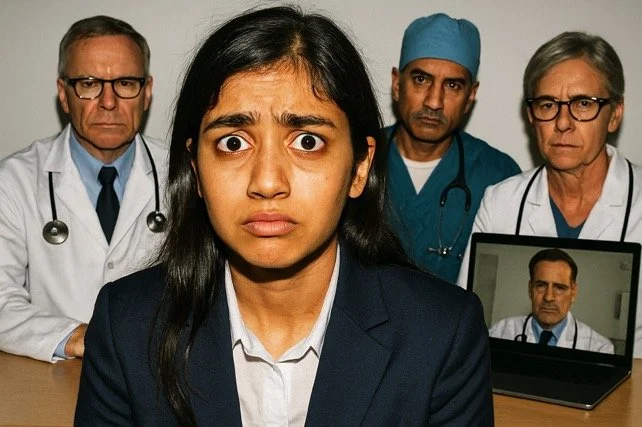

What is a Multiple Mini Interview (MMI)?
A Multiple Mini Interview (MMI) is a type of medical school interview consisting of a circuit of short, timed stations. At each station, you face a new interviewer (or assessors) and a new task or question designed to evaluate qualities like communication, ethical reasoning, empathy, teamwork, and problem-solving. UK medical schools widely use MMIs as an alternative to traditional panel interviews. Each station typically lasts a few minutes (e.g. 5–8 minutes), and you rotate through several stations back-to-back. This format helps assess a range of skills and attributes in a structured way.
Originally, MMIs were conducted face-to-face on campus, with candidates moving between rooms or cubicles for each station. In recent years, especially during and after the COVID-19 pandemic, many schools shifted to online MMIs, conducting these interviews over video conferencing platforms. Notably, most UK medical schools continued with online interviews even after the height of the pandemic, though a few have returned to in-person formats. For example, Oxford’s medical school confirmed its 2025 interviews (for 2026 entry) will be held online, and many Cambridge colleges are running interviews online or in a mixed format. On the other hand, some popular schools, like Norwich Medical School, explicitly stated that their MMIs would be in person again by 2023. Always check your invitation details to know which format your interview will use.
Importantly, whether online or in-person, the core purpose and criteria of the MMI remain the same. Interviewers will assess the same competencies and use similar questions in both formats. Your overall preparation on common topics – such as why you want to be a doctor, medical ethics scenarios, current NHS issues, teamwork examples, etc. – should not change drastically across formats. However, the experience and logistics of the interview differ, so you need to prepare for them. Let’s explore what actually changes in an online MMI versus an in-person MMI.
Online vs In-Person MMIs: Key Differences
Both online and face-to-face MMIs aim to assess candidates fairly and cover similar content, but the experience can feel very different. Here are the key differences you should be aware of:
📍 Location & Atmosphere:
An in-person MMI requires you to travel to the medical school campus on the interview day. You’ll likely wait in a room with other applicants, maybe talk to student ambassadors, and possibly get a tour of the medical school or facilities. This can be exciting but also adds to nerves – and you’ll need to plan transport and maybe an overnight stay if it’s far. In contrast, an online MMI takes place from the comfort of your own home (or school). There’s no travelling or navigating a new place; you can set up in a familiar, comfortable environment. On the flip side, you won’t get to see the campus or meet other candidates and staff in person during an online interview. Some applicants find it relaxing to avoid the travel and waiting, while others miss the in-person feel of being on campus. Remember to eliminate distractions at home – you want a quiet space where you can focus just as you would in a formal interview setting.
💻 Technology & Logistics:
With online MMIs, technology becomes your interview room. You must have a reliable computer or device with a good webcam and microphone, plus a stable internet connection. Universities typically use platforms like Zoom, Microsoft Teams, or a similar video conferencing tool – your invitation will specify which one. For example, Nottingham’s medical school instructed all candidates for 2023 entry to use Microsoft Teams and ensure they have a webcam, microphone, strong Wi-Fi, and a private, quiet space with no interruptions. You’ll need to familiarise yourself with the software in advance – practice logging in, checking your audio/video, and using features like the waiting room or breakout rooms. In person, by contrast, the logistics are handled by the school on the day – you’ll be guided from station to station by staff. You don’t have to worry about internet speed or your microphone not working, but you do have to ensure you arrive on time at the correct location, and perhaps navigate a campus you’ve never been to. Essentially, online = you manage the tech, in-person = you manage the travel.
💬 Interaction & Communication:
In any interview, how you communicate is crucial – but the medium changes some dynamics. Body language and eye contact work differently online. In person, you can shake hands (if appropriate), make direct eye contact, and use natural gestures and posture. Online, you’ll be framed in a webcam view, often showing just your head and shoulders. Interviewers might find it harder to pick up on non-verbal cues. You should be mindful to sit upright, look into the camera (not just the screen) to simulate eye contact, and perhaps exaggerate nodding or smiling a touch to convey engagement. Small hand gestures might not be evident on camera, so don’t rely on them too much. Also, speaking in a video call requires adjustment – there can be a slight audio lag. You’ll want to communicate clearly and a bit more slowly, pausing briefly after each question to avoid talking over someone. In person, the conversation flow might feel more natural, and you can read the room better (e.g. the interviewer’s expressions). Online, there may be intentional neutrality (interviewers often keep a neutral expression), and it’s harder to get feedback from their body language. Hence, you need confidence in your answers without much encouragement. Overall, you can communicate effectively in both settings – practice the specific skills for video calls (e.g. checking you’re not on mute before speaking – every applicant’s nightmare! 🙈).
📑 Interview Structure:
The MMI format itself is usually preserved, but online logistics can force tweaks to the structure. In a traditional in-person MMI, you physically rotate through a series of stations – for example, eight different tables/rooms with eight different interviewers. Online, schools achieve this in a few ways: some use breakout rooms or separate video calls to mimic moving stations, while others might reduce the number of stations or switch to a panel-style format on a single call. For instance, the University of Dundee noted that face-to-face MMIs involve moving between stations with different interviewers. In contrast, their remote “MMI” was adapted into a single-panel interview with the same panel asking questions for all station scenarios. This was likely to simplify the virtual process. Similarly, some universities ran fewer or shorter online stations than they would in person. The complexity of organising 10 separate Zoom rooms with strict timing is high, so expect possibly fewer stations or a modified format in a virtual MMI.
On the other hand, some schools have managed to run full MMIs via Zoom using breakout rooms, keeping the structure very close to in-person (e.g. using a coordinator to move candidates through virtual stations). A few even offered choice – for example, Manchester in 2023 allowed applicants to choose between an in-person MMI on campus or an online MMI via Zoom, and assured that “all candidates will be assessed in the same way – the only difference is whether you attend campus or online.” In summary, the content and timing of stations are meant to be equivalent, but the format might be streamlined for online use. Always read the school's instructions beforehand so you know how the online interview will be conducted (number of stations, use of breakout rooms or a single panel, timing, etc.).🤝 On-the-Day Experience:
Beyond the interview itself, think about the whole experience. In person, the interview often feels like an “event”: you might dress in a full suit, travel potentially long distances, arrive at a historic university building or hospital campus, register with reception, perhaps be welcomed by staff or current medical students, and wait in a room with other nervous applicants. You may chat and realise everyone is just as anxious as you – a bit of moral support! You also get to soak up the medical school's atmosphere, which can be inspiring. Some universities incorporate campus tours, hospital visits, or presentations on interview day. Online, much of this is stripped away. You will likely be sitting at your desk at home, logging into a meeting link. There’s no group waiting room (sometimes just a virtual waiting room where you’re on hold), and no opportunity to see the facilities or meet students. The upside is you’re in a familiar place, which can help you stay calm. You eliminate the risk of train delays or getting lost on campus. Distractions are reduced – no other candidates walking around or anything – allowing you to focus purely on the interview. However, you must create your own professional environment: ensure family or housemates know not to interrupt, that pets are in another room, that the phone is on silent, and that your background is neutral and tidy. Essentially, the day will feel very different: one is a big outing, the other is like a critical Zoom call. Both require you to be mentally prepared and focused when it’s time to perform.
Online MMIs take place via video call, allowing you to interview from a comfortable home environment. However, you’ll need to carefully manage your technology and surroundings. Ensure you have a quiet, well-lit space, a stable internet connection, and that you won’t be disturbed.
As you can see, the format changes come with pros and cons. Some candidates actually prefer online interviews because they feel more relaxed at home and save time and money on travel. Others perform better in person, feeding off the energy in the room and making a personal connection on campus. Medical schools are aware of these differences and do their best to make the process fair in either case. No matter the format, they aim to give every candidate an equal opportunity to demonstrate their qualities. In fact, many schools report that their selection outcomes didn’t change significantly with virtual interviews – meaning a well-prepared applicant will shine whether on-screen or in-person. The key is to adapt your preparation to the format. Let’s go through how you can prepare for each scenario.
🎥 Ready to Ace Your Medical or Dental MMI?
Practise exactly how universities assess you — calmly, confidently, and under real conditions.
- ✔️ Realistic MMI stations written by experienced medics & dentists
- ✔️ Live mock circuit with real exam timing
- ✔️ Personalised feedback to help you improve quickly
- ✔️ Ethics, communication & role-play fully covered
- ✔️ Build confidence, structure and clarity
Limited places • Trusted by medical & dental applicants across the UK
💻 Preparing for an Online MMI Interview
Getting ready for an online medical school interview involves the usual interview preparation , plus special attention to tech and the environment. Here are some tips to help you succeed in a virtual MMI:
Test Your Tech Setup:
Well before the interview day, ensure your technology is up to scratch. This includes a computer with a working webcam and microphone, and a stable high-speed internet connection. If your built-in laptop camera or mic isn’t great, consider borrowing or buying an external webcam/microphone for clearer video and audio. Do a test call (e.g., on Zoom/Teams) to ensure your face is well-lit and clearly visible, and that your voice comes through without echo or distortion. If possible, have a backup device or connection (for example, if your Wi-Fi drops, know how to switch to a mobile hotspot quickly). Being technically prepared will reduce stress on the day – you don’t want last-minute glitches. Tip: On the interview day, log in a bit early to test everything once more.
Familiarise Yourself with the Platform:
Different medical schools use different video platforms, so read your invitation carefully to see if it’s Zoom, Microsoft Teams, Blackboard Collaborate, etc. Download and update the required software in advance. Practice using it – you might ask a teacher or friend to help you run a mock interview over video. For example, have a friend create a Zoom meeting, send you the link, and practice joining it, muting/unmuting, sharing your screen if needed, etc. This way, the interview interface will feel familiar. Also, learn any specifics the school sends: some may use a Zoom “breakout room” format where you are automatically moved between stations, whereas others might have you leave and join new calls for each station. Knowing the process will help you stay calm and focused on answering questions, not on figuring out Zoom buttons.
Set Up a Professional Environment:
Your surroundings on camera matter. Choose a quiet, well-lit, and neutral background for your interview. Ideally, sit at a desk or table with a plain wall behind you or a tidy, non-distracting background. Avoid having lots of clutter, posters, or people walking past behind you. Check the lighting – face a window or lamp so that you’re clearly visible (avoid sitting with a bright window behind you, or you’ll appear in silhouette). Let everyone at home know when your interview is happening so they don’t inadvertently interrupt. Consider putting a “Do Not Disturb – Interview in Progress” note on your door. Turn off phone ringtones and computer notifications. This preparation will ensure the interviewers’ attention is on you, not a barking dog or message pings in the background.
Dress the Part (Yes, Fully!):
Even though you’re at home, dress as professionally as you would for an in-person interview. This usually means smart business attire – for example, a blazer or suit jacket, a shirt or blouse, and so on. Not only will this make a good impression on your interviewers (they will see that you took it seriously), but it will also psychologically prepare you for “interview mode.” 💼 Tip: Don’t just dress smart from the waist up! While it’s tempting to wear pyjama bottoms off-camera, you’ll feel more composed if you’re fully in professional attire – and it avoids any embarrassing moments if you need to stand up. Keep jewellery and makeup subtle, similar to an in-person setting. Dressing well also ties into mindset: you’ll sit up straighter and feel more confident.
Practice Virtual Communication Skills:
As we talked about earlier, communicating over video requires some tweaks. Practice speaking to your webcam when answering questions, so that on the interviewer’s screen, it appears you’re making eye contact. This can feel odd at first – you might naturally want to look at the interviewer’s face on your screen, which actually looks like you’re looking down from their perspective. Get used to glancing at the camera while talking, at least periodically, especially for your key points. Also, work on speaking clearly at a measured pace. You might record yourself in a mock interview and play it back to check if you’re enunciating well and not rushing. Practice a slight pause before you respond to a question, in case there’s a lag – this helps avoid accidentally talking over your interviewer.
Additionally, be aware of your body language on camera: try to keep your upper body visible (frame yourself from about the chest up) and shoulders relaxed. Use facial expressions and head nods to show you are engaged and listening, since finer hand gestures may not be seen. These things can be practised with a friend or family member acting as the interviewer on a video call. The more you simulate the virtual format, the more comfortable you’ll become.Have a Plan B for Tech Issues:
Despite best efforts, sometimes technology fails – power cuts, internet outage, software crash, etc. Prepare a contingency plan. For example, have the admissions office's phone number or email handy so you (or a parent/teacher) can quickly inform them if you get disconnected. Universities are typically understanding of technical glitches and will reschedule or adjust if a serious issue arises – but you must communicate. If your internet is unreliable, you could arrange to interview at a different location (perhaps your school or a friend’s house with better Wi-Fi). Close all other programs on your computer to minimise crashes, and have any required tabs or documents open in advance. Knowing you have a backup plan will also keep you calmer if something goes wrong.
Finally, prepare as thoroughly for content in an online interview as you would for any interview. Don’t let the comfortable setting lull you – you should practise answering questions to time just like for an in-person MMI. Use a timer for practice stations. If possible, try a full mock online MMI with timed stations and someone giving you prompts; this will reveal any format-specific issues (e.g., you might realise you tend to cut people off on Zoom due to lag). The key is: treat an online interview with the same respect as an in-person one. If you do that, plus handle the technical aspects, you’ll come across as confident and professional on the day.
🏫 Preparing for an In-Person MMI Interview
For an in-person MMI, you won’t have to worry about webcams or Wi-Fi – but you will be stepping into an unfamiliar environment and meeting your interviewers face-to-face. Here are tips to help you prepare for success on the big day:
Know the Logistics & Plan Ahead:
When you receive your interview invitation, note the date, time, and location (building/room) carefully. Plan your travel arrangements well in advance. If the interview is in a different city, book train or coach tickets early (they’re often cheaper in advance) and factor in travel time and possible delays. Aim to arrive with plenty of time to spare – at least 30 minutes early on campus, or even earlier if you want to gather your thoughts. This buffer helps you avoid last-minute panic from a traffic jam or cancelled train. If you’re driving, check parking availability. If it’s an unfamiliar city or campus, look at maps and maybe even do a practice run (or virtual Google Street View tour) to locate the venue. Knowing exactly where you’re going will reduce anxiety. Some universities hold their MMIs in hospitals or medical school buildings that might be separate from the main campus, so double-check you have the correct address. Pack any required documents the night before – for example, photo ID, the interview confirmation letter or email, and any paperwork they asked you to bring. Being organised with logistics will allow you to focus on your performance rather than finding the right room at the last minute.
Dress Professionally and Comfortably:
For an in-person interview, your attire will be entirely on display. Wear formal interview clothes that adhere to any guidelines given by the school. Typically, this means a suit or smart blazer with a shirt/blouse, smart trousers or a skirt, and clean, polished shoes. Keep colours fairly conservative (e.g. navy, black, grey, or other professional tones). Make sure your outfit is comfortable enough to sit, stand, and move around in – MMIs might have you walking quickly between stations, so practice moving in your outfit and shoes. If you’re not used to formal shoes, break them in beforehand to avoid blisters. Check that your clothes are neat and ironed. It can be handy to bring a small bag with emergency items: e.g. a spare pair of tights or a sewing kit (if a button pops) – not that you’ll likely need it, but it gives peace of mind. Also, consider the weather: if it’s winter and you’ll be waiting in a chilly corridor, a smart coat is fine (you can usually remove it before stations). Overall, dress in a way that makes you feel confident and “like a doctor in training.”
Practice Face-to-Face Communication:
In-person interviews will involve more direct interpersonal interaction, so brush up on those skills. Work on giving a firm but polite handshake if offered (post-COVID, not everyone shakes hands, but be prepared just in case a station actor or interviewer initiates one). Maintain good eye contact with your interviewers – show engagement and sincerity by looking at them when you speak and when they talk to you. Practice this with teachers or friends; it can feel intense, but remember to blink and nod naturally. Be mindful of your posture and body language: stand and sit up straight to project confidence, but also try to appear relaxed and open (unclench your fists and drop your shoulders). You might do some mock questions with a teacher in person to simulate the pressure of someone watching you answer.
Additionally, practice speaking clearly without the aid of a screen – in a room, your volume should be loud enough to be easily heard, but not shouting. If you tend to sputter when nervous, practice slowing down and pausing, so you don’t rush through a complex scenario. It can also help to practise answering while wearing a face mask if the school indicates masks might be required (some hospitals still have mask rules) – although by 2025 most have relaxed this, it’s worth checking. Overall, the goal is to appear confident, courteous, and attentive in person.Prepare for Station Interaction:
MMIs often include interactive stations – for example, a role-play with an actor (perhaps playing a patient or upset relative) or a group task with other applicants. In person, these can involve props or real-time interactions that feel very different from on-screen scenarios. To prepare, consider the types of stations that are common: ethical dilemmas, breaking bad news role-plays, manual task teaching, group discussions, etc. If you can, practise some role-play scenarios with a friend or teacher playing the role of the patient/actor. This will help you get comfortable thinking on your feet and reacting naturally. For group tasks, you might simulate a problem-solving task with friends to practise finding the balance between leading and listening. Being in the room with others means you should be very conscious of courtesy – introduce yourself with a smile at a role-play station, thank the actor or interviewer at the end, and be polite to staff and other candidates throughout the day. Often, universities brief their actors and interviewers to observe your communication style and empathy in these interactions. Little things like saying “Good morning” or acknowledging someone’s feelings in a role-play (“I’m sorry to hear that, I can understand this is upsetting…”) can showcase your interpersonal skills. These nuances come across more strongly in person.
Mind Your Manners and Stay Positive:
From the moment you arrive on campus, consider that you are in an assessment setting. Medical schools often involve current students or staff in greeting candidates, and while it’s not usually formally assessed, you want to make a good impression as a courteous, professional individual. So, be friendly and respectful to everyone you meet, from the receptionist who checks you in to the student giving you a tour. Keep your mask of professionalism on even when you’re in the waiting area with other applicants – certainly be chatty and supportive if you like, but avoid saying anything negative about other universities or bragging; you never know who might overhear. During the interviews, if a station doesn’t go as well as you’d hoped, do not dwell on it or show frustration – keep your composure and move forward to the next station with a fresh mindset. Each station is a new opportunity to do well, and the assessors usually don’t know how you did at the previous station. If you flub something entirely, take a deep breath, reset your confidence, and nail the next one. Resilience is a quality they look for, after all!
Utilise the Visit (If Available):
One advantage of an in-person interview is that you get to actually see the medical school environment. If they offer a tour or if you have free time after your interview, take the opportunity to look around. This can both give you a better gut feeling of the place (useful if you end up with multiple offers to choose from) and provide you with conversational material – e.g. in an interview station, asking “Why this medical school?”, you can reference something you noticed on your visit that impressed you. Even if there’s no formal tour, simply walking through the campus or peeking at the library or cafeteria can be insightful. That said, on the day, your primary focus is the interview performance – so prioritise that. If chatting with current students is an option, feel free to ask them questions; it shows enthusiasm. Just remember to stay focused and not let the environment overwhelm you. If you find your nerves spiking while waiting, try techniques like deep breathing or positive self-talk (“I’ve prepared for this, I can do this!”) to keep calm.
In-person medical school interviews often involve face-to-face conversations with interviewers or role-players. You’ll be in a formal setting, so practice maintaining good eye contact and confident body language. Being able to communicate your empathy and enthusiasm in person is key.
Lastly, continue to prepare your knowledge and responses as diligently as you would for any interview. Review the NHS Hot Topics (current health issues in the UK), refresh your understanding of medical ethics principles, and reflect on your work experience and personal motivations. The content of questions will likely be similar whether the MMI is online or in-person. For example, ethics scenarios, personal insight questions (“Tell us about a time you demonstrated teamwork,” etc.), and understanding of a doctor’s role are all fair game. Make sure you can articulate why you want to study at that particular university – interviewers love to see that you are excited about their school. And of course, know your personal statement (if applicable) since anything on it is fair game for questions.
In short, preparing for an in-person MMI means being ready both mentally and logistically: you want to arrive on time, in the right place, looking professional, and feeling confident. Combine that with the solid interview preparation you’ve done, and you’ll be set to make a great impression.
Final Thoughts
Facing a medical school interview can be daunting, whether it’s via a laptop screen or in a room full of doctors. But remember: the goal of both online and in-person MMIs is the same – to give you a chance to showcase the qualities that will make you a great medical student and doctor. Admissions tutors understand that not every brilliant candidate will have perfect internet or that some may be a bit stiff initially when speaking in person due to nerves. They will usually make allowances and try to put you at ease. Your job is to prepare as thoroughly as you can, so that you can walk (or log) into the interview with confidence.
Stay positive and be yourself. If you’re online, let your personality come through on camera – smile and engage as if you were in the room. If you’re in person, channel any nervous adrenaline into enthusiasm for the opportunity to be there. Adapt to the format but don’t overthink it – at the end of the day, the interviewers are looking for the same attributes: communication, empathy, ethical reasoning, teamwork, dedication to medicine, and so on. You’ve worked hard to get to this stage, so showcase your strengths.
Finally, make use of the resources available to you. Many UK medical schools and the Medical Schools Council provide guidance, including specific tips, on online vs. offline interviews. For example, the MSC’s official advice includes checking your interview platform in advance, practising answering questions under timed conditions, dressing professionally, and seeking help from teachers or advisers for mock interviews. Don’t hesitate to reach out for support – whether it’s a teacher running a mock MMI, a friend on a video call acting as an interviewer, or just reading guides (like this one! 😊). Every bit of practice will boost your confidence.
Good luck with your interview! By understanding the differences between online and in-person MMIs and preparing accordingly, you’ll be well-equipped to perform your best in either format. Remember, medical schools want you to do well – they are excited to meet the person behind the UCAS form. So please take a deep breath, believe in yourself, and show them what you have to offer.