Queen Mary (Barts & The London) Dentistry Interview Questions – Complete Guide for 2026 Entry

🔷 Introduction: Queen Mary Dentistry & Barts & The London
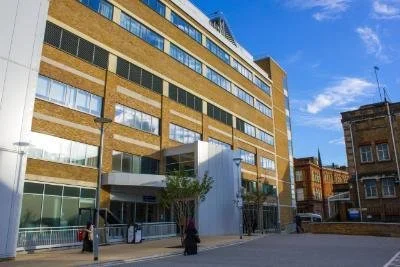
Queen Mary University of London (QMUL) delivers its Dentistry BDS (A200) through the Institute of Dentistry at Barts & The London School of Medicine and Dentistry. It’s a five‑year BDS degree based mainly at the Royal London Hospital site in Whitechapel, East London, with early clinical experience, state‑of‑the‑art simulation labs and access to a very diverse local population.
For 2026 entry, the official course page highlights an innovative curriculum covering prevention and treatment of dental disease, oral cancer screening, trauma management, orthodontics and oral surgery, preparing you for registration with the General Dental Council (GDC).
QMUL is consistently highly ranked for Dentistry – for example, it is currently first in London for Dentistry in the Complete University Guide 2026, and in the UK top 10 for Medicine and Dentistry in the QS subject rankings.
🧮 How Queen Mary decides who to invite for a Dentistry interview
1. Academic requirements
A‑levels (standard entry)
Queen Mary’s minimum standard offer for Dentistry (A200) is:
A*AA at A‑level, achieved in one sitting over no longer than two years
Subjects must include:
Biology or Chemistry
A second science from Biology, Chemistry, Physics or Mathematics
A third A‑level in any subject (but Further Maths is not accepted if Maths is already taken in the same sitting)
The Dental Schools Council (DSC) entry‑requirements guide confirms this level of offer for QMUL and collates official admissions information supplied by UK dental schools.
GCSEs
From a recent Freedom of Information (FOI) response, QMUL state that for the BDS they require at least 6 GCSEs at grades 7–6 (A–B) including: WhatDoTheyKnow
Biology
Chemistry (or Double Science as a substitute)
English Language or Literature
Mathematics
GCSEs beyond this minimum are not scored in the selection formula – once you meet the minimum, they do not get you extra points.
Resits
The same FOI confirms that A‑level resits are normally not considered, unless extenuating circumstances have been agreed with the school before you apply. WhatDoTheyKnow
✅ Turn dental interview practice into performance.
Our dentist-designed mock MMI mirrors real stations—communication, ethics, critical thinking, data interpretation, manual dexterity—assessed by experienced tutors and former assessors 🥇. Gain confidence and a personalised action plan. ➡️ Click here to secure your spot — strict 10 places per circuit.
2. UCAT and minimum threshold
All BDS applicants must sit the UCAT (University Clinical Aptitude Test). QMUL combines UCAT and academic performance when shortlisting.
From QMUL’s official selection‑criteria page and admissions‑statistics page:
Your total UCAT score (from the cognitive subtests) is converted into a decile (top 10%, next 10%, etc.).
Applications with a total UCAT score below the 4th decile are not considered further.
Above this minimum, candidates are ranked on a weighted score combining UCAT total and UCAS tariff (your predicted/achieved grades turned into points).
UCAT deciles move slightly each year, but QMUL’s admissions statistics show the minimum UCAT threshold to be considered has recently been around 2361, which is roughly in or above the 4th decile.
Separately, for those actually invited to interview, official data show that the lowest UCAT among interviewees for 2024 entry (home, non‑contextual) was 2780, with an average of about 2912.
📝 UCAS tariff = a points system which converts your A‑levels (and some other qualifications) into a numerical score.
Decile = dividing all applicants’ UCAT scores into ten equal sized groups.
3. The scoring formula for shortlisting
From QMUL’s FOI response and official selection criteria:
They check you meet minimum GCSE and A‑level requirements.
They exclude anyone below the UCAT 4th decile.
For everyone remaining, they add your overall UCAT score to your UCAS tariff score to give a single total, then rank all applicants in that cycle.
Those above the weighted cut‑off are invited to interview.
Importantly:
The personal statement is not scored or weighted in this process.
However, your statement may still be read by interviewers as background about your experiences and interests. External interview guides, based on QMUL’s own stated aims, also highlight that they look for evidence of academic ability and broader contribution to school/community life.
🟦 How does Queen Mary interview for Dentistry (2026 entry)?
For 2026 entry, QMUL has not announced a radical change to the BDS interview process. Based on:
QMUL’s current selection‑criteria policy
Their 2026 course information
Detailed 2023–25 cycle guides from specialist interview resources written with QMUL dentistry students and tutors
you should expect a values‑based panel interview, very similar to recent years.
Always follow your official invitation email – that is the final word for your year. But typically the process is:
Shortlisting (December–January) – based on UCAT + UCAS tariff (as above).
Interview window (January–March) – you attend a single structured panel interview (often around 45–60 minutes).
Post‑interview ranking – interview score, UCAT, UCAS tariff and UCAT Situational Judgement Test (SJT) band may all be considered together when making offers.
🔍 SJT band = the Situational Judgement part of UCAT, graded from Band 1 (best) to Band 4 (lowest). QMUL state that SJT can be used in selection after interview.
🎙️ What is the Queen Mary Dentistry interview style?
Panel, not traditional MMI
External but well‑established interview guides (written with current QMUL dental students) consistently state that QMUL uses a traditional panel interview, not a circuit of MMI stations.
Key features reported for recent cycles:
✅ Panel format with 2–3 assessors – usually a senior academic or clinician plus another staff member or current dental student; sometimes a lay (public) member.
⏱️ Duration of about 45–60 minutes including ID checks and housekeeping.
📄 Often includes a short article or video related to dentistry, healthcare or ethics, which you discuss during the interview.
🧭 Strong focus on personal qualities: motivation, insight, communication, teamwork, resilience and contribution to student life.
Although one commercial site mentions a “two‑part process” (MMI + panel), their own detailed description and recent student reports describe a single panel interview with structured questions, so for now you should plan primarily for a panel‑style conversation, not an MMI circuit.
Tone of the interview
Students and tutors describe Queen Mary interviewers as generally friendly but sometimes deliberately neutral in expression – this is to avoid bias and test how you communicate under pressure.
Expect a professional but supportive atmosphere rather than an aggressive grilling.
🗓️ When are QMUL Dentistry interviews held?
Specialist guides for 2023/24 and 2024/25 cycles report that Queen Mary Dentistry interviews take place between January and March.
Applicants on The Student Room describe receiving emails saying shortlisting happens between 1 December and 31 January, with interviews set in the new year.
For 2026 entry, you should therefore expect:
Shortlisting emails: mainly December–January
Interviews: mainly January–March
…but exact dates will be in the email from QMUL.
📚 What topics are covered in a Queen Mary Dentistry interview?
The Dental Schools Council emphasises that UK dental schools use interviews to test values such as integrity, empathy, teamwork, communication and commitment to patient‑centred care, not just academic knowledge.
At Queen Mary specifically, recent cycles show a strong focus on the following themes:
Core themes
Motivation for Dentistry & for QMUL / Barts
Realistic insight into the career – pros, cons, lifestyle, training pathway
Work experience & volunteering – reflection on what you learned
Teamwork & leadership – giving examples from school, sport, work etc.
Organisation & problem‑solving – time management, dealing with stress
Communication & empathy – how you deal with different people
Initiative, resilience & maturity – bouncing back from setbacks
Contribution to student/university life – hobbies, societies, outreach
Ethics & professionalism – confidentiality, consent, social media, honesty
NHS & dental hot topics – access to NHS dentistry, inequalities, prevention vs treatment, impact of COVID‑19, funding and contracts
A common distinctive feature at QMUL is interest in your extracurricular life and what you will bring to the Barts community (sports, societies, outreach and the East London setting).
You may also be asked to:
Interpret or comment on a short article or video about dentistry or healthcare
Handle an ethical scenario involving a patient, parent or colleague
Talk about manual dexterity indirectly via hobbies (art, music, crafts, sport)
📊 How many applicants receive an interview & how many get an offer?
QMUL publishes official admissions statistics by course and fee status (Home/Overseas) for each year of entry.
From their latest Dentistry BDS (A200) data for 2023–2025 entry:
Applicants (Home): roughly 619–835 per year
Applicants (Overseas): roughly 60–99 per year
Interviews (Home): around 267–278 per year
Interviews (Overseas): around 18–29 per year
Offers (Home): roughly 148–182 per year
Offers (Overseas): around 10–13 per year
Minimum UCAT among interviewees: usually around 2760–2790 (Home) and 2710–2810 (Overseas)
Putting Home and Overseas together, that works out approximately as:
2023 entry: ~930 applicants → ~307 interviews → ~162 offers
2024 entry: ~851 applicants → ~292 interviews → ~159 offers
2025 entry: ~679 applicants → ~289 interviews → ~195 offers
So, very roughly:
Around ⅓ to ⅖ of applicants are invited to interview
Around ½ to ⅔ of interviewees receive an offer
Intake is about 70–75 BDS students per year (approximately 67 Home + 4 Overseas places in recent cycles).
Remember, QMUL explicitly warns that cut‑offs and ratios change each year and cannot be predicted exactly.
🧷 Example Queen Mary Dentistry interview questions & station themes
Below is a large bank of example questions tailored to Queen Mary (Barts & The London).
They are based on:
Themes and example questions published by BlackStone Tutors, Medic Mind and other interview providers for Barts Dentistry
Common dental interview topics recommended by the Dental Schools Council
General values‑based interview practice
The wording is adapted and expanded so you can use them freely for practice.
1️⃣ Motivation for Dentistry & for Barts
Why do you want to study Dentistry rather than Medicine or another healthcare profession?
What first sparked your interest in dentistry, and how has that interest developed over time?
Why have you chosen to apply specifically to Queen Mary / Barts & The London?
What do you know about the structure of the BDS course here?
How do you think studying in East London and Whitechapel will shape your experience as a dental student?
What aspects of clinical exposure at QMUL particularly appeal to you?
2️⃣ Insight into the career
What do you think will be the most rewarding aspects of a career in dentistry?
What do you think will be the most challenging aspects?
How does the role of a general dental practitioner differ from a hospital‑based dental specialist?
How do you see the work–life balance of a dentist, and how might it change over a career?
How might digital dentistry and new technologies change the profession over the next 10–20 years?
3️⃣ Work experience & reflection
Tell us about a work experience or shadowing placement that had a big impact on you. What did you learn?
Give an example of a time you saw good communication between a dentist and patient. What made it effective?
Did you ever see something in a clinic you disagreed with? How did you process that?
How has your volunteering or caring experience prepared you for working with patients?
What did you learn about teamwork in a dental practice or hospital setting?
4️⃣ Communication & empathy
Describe a time when you had to explain something complex to someone who was anxious or confused.
How would you handle a patient who is very nervous about treatment?
A parent insists their child is “fine” and refuses to accept your advice about oral hygiene. How would you respond?
How would you adapt your communication style when speaking to:
a young child,
an elderly patient,
someone whose first language is not English?
5️⃣ Teamwork, leadership & resilience
Tell us about a team project you were involved in. What was your role and what did you learn?
Describe a time you showed leadership.
Tell us about a time you failed or were disappointed. How did you deal with this?
Dentistry is demanding. How will you manage stress, workload and wellbeing at dental school?
What strategies do you use to stay organised during busy periods (e.g. exams, extracurricular commitments)?
6️⃣ Ethics & professionalism
What are the four pillars of medical ethics and how might they apply in dentistry? (Autonomy, Beneficence, Non‑maleficence, Justice.)
A patient asks you to remove healthy teeth for cosmetic reasons only, funded by the NHS. How would you approach this?
How would you respond if a colleague appeared to be under the influence of alcohol at work?
Do you think dentists should have a professional social media presence? What are the risks and benefits?
A patient refuses a necessary extraction despite clear risks of serious infection. How do you proceed?
7️⃣ NHS & hot‑topic scenarios
What are the main challenges currently facing NHS dentistry?
Why are some patients struggling to access an NHS dentist, and what could be done to improve this?
Do you think prevention or treatment should be the main focus of dental services? Why?
How did COVID‑19 affect dental care, and what long‑term changes has this caused?
What role should dentists play in tackling issues such as sugar consumption or vaping in young people?
8️⃣ Contribution to QMUL student life
What societies or clubs would you like to join at Queen Mary, and why?
How do you see yourself contributing to the Barts and The London student community?
Tell us about a hobby or interest that is important to you.
How might your interests benefit your future patients or colleagues?
9️⃣ Manual dexterity & practical skills
QMUL rarely asks direct “dexterity tests”, but they may explore it through your interests.
How do your hobbies (e.g. drawing, playing an instrument, crafts, sport) help develop the skills needed in dentistry?
Can you give an example where you had to perform a task requiring fine motor skills under pressure?
🔟 Article or video discussion
You might be shown a short article, infographic or video about a dental or healthcare issue, then asked:
What is the main message of this article/video?
Who are the key stakeholders and how might each be affected?
What ethical issues are raised?
How could this information influence public health policy or clinical practice?
Do you agree with the author’s viewpoint? Why or why not?
1️⃣1️⃣ Data interpretation or problem‑solving
Here is a graph showing rates of dental caries in different age groups. What trends do you notice and how might they influence clinical practice?
A practice has limited NHS funding for complex treatments. How could you help ensure fair access for patients?
Waiting times for NHS dental appointments in one area are very long. What factors might explain this and what could be done?
Use these themes to practise structured answers (e.g. using the STARR method – Situation, Task, Action, Result, Reflection) and to link your points back to Barts’ values and community.
📬 When are Queen Mary Dentistry offers released?
From recent interview‑cycle summaries and student reports:
QMUL does not normally issue rolling offers during the interview period.
Instead, decisions are released after all interviews are complete, typically after March for that cycle.
So if you interview in January or February, it is normal not to hear a final decision until late March or April. Always follow the timeframe given in your UCAS and university communications.
💬 Student comments & impressions
While official university documents don’t give “reviews” of the interview, we can glean useful insights from current students and applicants:
Medic Mind (working with QMUL dentistry tutors) describes Barts interviewers as **“friendly” but sometimes neutral in expression to avoid bias and test your composure. Candidates are advised not to be put off if panel members don’t smile constantly.
The same guide stresses that QMUL places unusual emphasis on extracurricular activities and how you’ll contribute to student life, and that knowing about East London, Whitechapel and local outreach clinics can strengthen your answers.
Applicant threads on The Student Room report that QMUL shortlists between early December and late January, with all interviews in the new year, and confirm that the UCAT “bottom 40%” (below 4th decile) are not considered – aligning with QMUL’s official policy.
Student review sites (e.g. StudentCrowd) show current QMUL dental students praising early patient contact, supportive staff and modern facilities, which gives a sense of the clinical environment you’re interviewing for.
Remember that online comments are anecdotal, but they can help you get a feel for the tone and culture of Barts & The London.
⭐ Top tips for smashing the Queen Mary Dentistry interview
Here are practical, Barts‑specific tips to help you feel confident on the day.
1. Understand how you were shortlisted
Know that you were invited largely because of your UCAT + UCAS tariff score, once you met minimum GCSE and A‑level requirements.
This means the interview is your main chance to show the personal qualities Queen Mary cares about.
2. Prepare for a panel, values‑based conversation
Practise longer, conversational answers rather than very short MMI‑style responses.
Work on structuring answers using a simple framework (e.g. STARR or PEEL – Point, Evidence, Explain, Link).
Ask a teacher, friend or mentor to run mock panel interviews where you speak for 5–8 minutes at a time.
3. Hone your article/video analysis skills
Regularly read or watch short pieces about NHS dentistry, oral health, health inequalities or public‑health campaigns.
Practise summarising:
What is the article saying?
Who is affected?
What ethical or social issues arise?
What solutions would you suggest?
4. Know your own experiences inside out
Be ready to go beyond listing activities. For each experience (work experience, volunteering, part‑time work, caring, clubs), ask yourself:
What did I observe?
What did I do?
What did I learn about myself and about dentistry?
How will this help me as a Barts dental student and future dentist?
5. Research Barts, QMUL and East London
Learn key facts about the Institute of Dentistry, Royal London Hospital and Blizard Building, and the kind of patients served in East London.
Look at QMUL’s clubs and societies and think genuinely about what you’d join or start.
6. Brush up on basic ethics & NHS issues
Make sure you can clearly explain:
The four pillars of medical ethics and apply them to dental scenarios.
Key challenges for NHS dentistry – funding, access, prevention, recruitment.
7. Practise non‑verbal communication
Record yourself answering questions – check eye contact, posture, facial expression and pace.
If interviews are online, set up a quiet, well‑lit space and practise using the same setup you’ll use on the day.
8. Show you’re a rounded, resilient person
QMUL places real weight on how you’ll contribute to the student community and cope with pressures.
Be ready with examples that show:
Hobbies and interests you’re committed to
Times you’ve shown resilience or helped others
How you look after your own wellbeing – exercise, sleep, support networks
9. Don’t obsess over “perfect” UCAT cut‑offs
Use past thresholds and stats as rough guides, not guarantees.
Focus on what you can control now: preparation, reflection, and calm, structured answers.
📚 References & further reading
(Key sources used – always check the latest versions before applying, as policies can change.)
Queen Mary University of London – Dentistry BDS 5 Years (A200) course page & entry requirements – official course info, A‑level standard offer, application deadline. Queen Mary University of London
QMUL Selection Criteria – Dentistry BDS (A200) – explanation of UCAT decile threshold, UCAS tariff and post‑interview selection factors. Queen Mary University of London
QMUL Admissions Statistics for Medicine & Dentistry – official numbers for applicants, interviews, offers and minimum UCATs for A200 Home/Overseas 2023–2025 entry. Queen Mary University of London
Dental Schools Council – Entry Requirements & application guidance – collated entry requirements and explanation of selection principles. Dental Schools Council