UCAT Decision Making: Mastering Syllogism Challenges
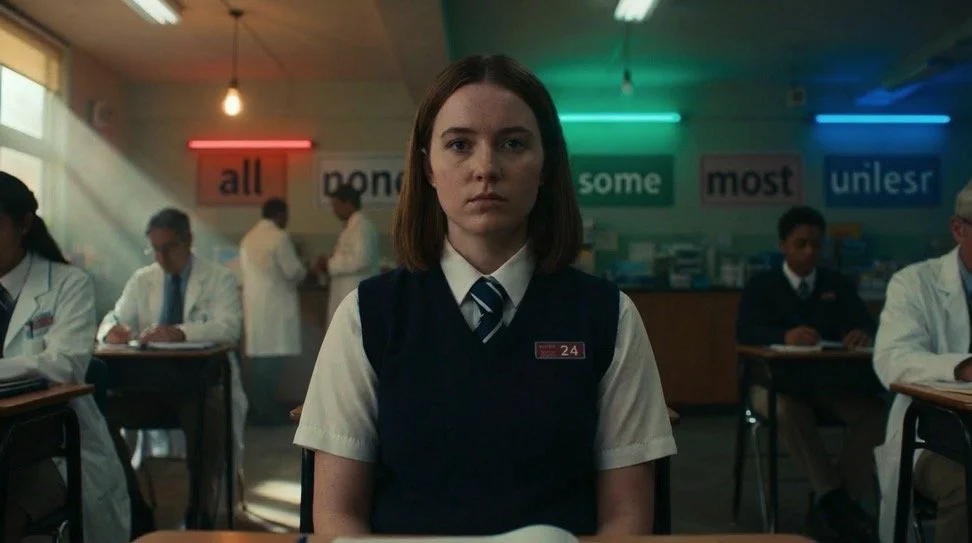
What Are UCAT Syllogisms?
In the UCAT (University Clinical Aptitude Test) Decision-Making subtest, syllogisms are logic puzzles in which you must decide whether conclusions follow from the given information. Typically, you’re presented with a short scenario or a set of premises, followed by several statements (conclusions) to evaluate as “Yes” or “No”. Each correct conclusion earns marks (Yes/No syllogism questions can be worth up to 2 marks, with partial credit). The challenge is to use deductive reasoning – focusing only on the information given – to judge whether each conclusion logically follows. This is crucial for future medics and dentists, as it mirrors the kind of logical decision-making you’ll use in clinical situations.
Example:
Premises: “All surgeons are doctors. Some doctors are researchers.”
Question: Does the conclusion “Some surgeons are researchers” follow?
Analysis: All surgeons are doctors. Some (at least one) doctor is a researcher. However, we cannot be certain that any of those researcher-doctors is a surgeon. It’s possible that the doctors who are researchers are in other specialties. Therefore, the conclusion “Some surgeons are researchers” does NOT logically follow from the premises. (It might be true by coincidence, but it’s not guaranteed by the given information.)
Why Syllogisms Matter:
Syllogism questions test your ability to interpret logical statements and avoid making assumptions. They often seem tricky because the UCAT uses abstract or even counterintuitive content (e.g., “All birds are mammals” could be a given premise!). You must treat the given premises as 100% true – regardless of how much they conflict with real-world knowledge – and base your conclusions solely on them. In other words, leave your outside knowledge at the door; even if a statement sounds false in real life, in the logic puzzle it should be accepted as true. This demands a formal logic approach, which can be unfamiliar at first. Let’s explore common syllogism challenges and how to tackle them.
🔴 Live UCAT Course – Limited Places Available
The UCAT is competitive — your preparation shouldn’t be.
Join our live, expert-led UCAT course and get real-time guidance to boost your score, build confidence, and secure medical or dental interviews.
Why students choose Blue Peanut:
- Live teaching with opportunities to ask questions
- UCAT-focused strategies that actually work
- Clear, step-by-step guidance for every UCAT section
- Built by doctors & admissions experts
- Trusted by students applying to top UK medical & dental schools
👉 Places on our live UCAT course are limited.
Book now to secure your spot and stay ahead of the competition.
Broad vs. Narrow Statements (Major vs. Minor Premises)
One key to cracking syllogisms is recognising broad vs narrow statements. A broad statement (often called the major premise) makes a general claim about an entire group, while a narrow statement (minor premise) deals with a subset or specific case. In UCAT questions, confusing these can lead to incorrect conclusions.
Broad (General) Statements:
These usually use words like “All”, “None”, or “Always” to cover an entire category. For example, “All surgeons are doctors.” This tells us every surgeon is part of the doctor category (a broad rule about surgeons as a whole). However, it doesn’t imply the reverse (it doesn’t say all doctors are surgeons). Broad statements set the stage by defining group relationships in one direction.
Narrow (Specific) Statements:
These often introduce a particular instance or a smaller subset. For example, “Dr. Smith is a surgeon.” This is narrow – it gives information about one specific member of the group. Narrow premises can also be less extreme quantifiers like “Some” (meaning at least one, but not all). For instance, “Some doctors are researchers.” This doesn’t cover all doctors, just a portion.
Common Pitfall – Reversing Broad Statements:
If a premise says “All A are B,” students might mistakenly assume “All B are A.” Remember, “All surgeons are doctors” means that every surgeon is a doctor (surgeons ⊆ doctors), but many doctors are not surgeons. If a conclusion flips the relationship (e.g. “All doctors are surgeons” or “If someone is a doctor, they must be a surgeon”), it does not follow logically unless such a detail is given explicitly. Always identify the direction of broad statements. Who is the bigger group, and who is the subset? This will guard you against drawing unwarranted conclusions.
Example:
Premise: “All heart surgeons are doctors.” (Broad statement about heart surgeons)
Conclusions to evaluate:
A) “All doctors are heart surgeons.” – This is No (does not follow). The premise never said every doctor is a surgeon; it only said all heart surgeons are a type of doctor. Most doctors have other specialities.
B) “Dr. Lee is a heart surgeon, so Dr. Lee is a doctor.” – This is Yes (follows). Since all heart surgeons are doctors, any specific heart surgeon (like Dr. Lee) must indeed be a doctor.
In summary, respect the scope of broad statements: a major premise gives a one-way inclusion (or exclusion, in the case of “No/None” statements), and it can’t be automatically reversed. A narrow premise will often plug a specific instance into that broad rule, which can yield a valid conclusion only in the correct direction.
Overlapping Groups and “Some” Statements (Partial Overlaps)
Another common challenge is dealing with statements about overlapping groups, usually indicated by words like “Some”, “Most”, “Few”, or “Many.” These tell us that certain categories overlap partially – but not completely. The uncertainty in these overlaps means you must be careful not to overgeneralise.
“Some” means “at least one” (and possibly all, but not zero).
Importantly, “some” does not mean “some and not all” in UCAT logic unless specified. It simply indicates a non-zero subset. For example, “Some doctors are researchers” tells us that at least one doctor is also a researcher. It does not tell us how many, and crucially, it doesn’t tell us about doctors who are not researchers. It also doesn’t tell us anything directly about researchers who are not doctors.
Overlap Pitfall:
When two premises overlap in a middle group, it’s tempting to link the first and third groups. For instance:
Premise 1: All surgeons are doctors.
Premise 2: Some doctors are researchers.
Faulty Conclusion: “Some surgeons are researchers.” – As we saw earlier, this conclusion is not guaranteed. The overlap in premise 2 is between doctors and researchers, but we don’t know whether it includes any surgeons. It’s possible the doctors who research are all general practitioners, for example, with none of them being surgeons. To be valid, the premise would need to state something like “Some surgeons are researchers” or “All surgeons are researchers” – which it doesn’t.Drawing Venn Diagrams:
To visualise overlaps, you can quickly sketch a Venn diagram on your noteboard (three circles for surgeons, doctors, and researchers in the above example). This shows that the “surgeon” circle is fully contained within the “doctor” circle, and that the “researcher” circle overlaps part of the “doctor” circle. Does the surgeon circle necessarily intersect the researcher circle? We can’t be sure without additional info. Use diagrams or tables if it clarifies a tricky overlap – but be wary of time. In many cases, logically parsing the statements is faster. Save drawings for the most complex relationships, since time is precious (you have just over a minute per question on average!).
“Most” and “Few”:
These indicate a majority or minority overlap. “Most” means a majority (more than half), and “few” means a small number (less than 50%). However, even if “Most A are B,” it’s not certain that “a given A is B” – it’s just likely. UCAT questions require definite logical follow-through, not probability. So treat “most” similarly to “some” in that it’s a partial overlap, not an absolute rule. A conclusion that “X (who is an A) is B” would be No if based only on “most A are B,” because logically X could be in the minority that is not B.
Takeaway: For any partial overlap statement, consider both possibilities: the overlapping part and the non-overlapping part. If a conclusion assumes something about all members or a specific member of a group when you only know “some” or “most,” it’s usually not logically valid. Look for stronger wording in the premises if you’re to make such a deduction.
Ambiguous or Unseen Terms in Conclusions
UCAT loves to include conclusions that mention a new term or person not explicitly covered in the premises. These are almost always traps. An “unseen term” is a name or category that wasn’t in the passage at all, or it was mentioned, but its role is unclear. If a conclusion brings in an ambiguous element, you cannot assume it fits the scenario unless the premises guarantee it.
New Names / Individuals:
If the scenario describes categories or groups, and a conclusion suddenly talks about a specific person (who wasn’t mentioned in the scenario), be very cautious. For example: Premise: “Everyone at the medical conference was either a doctor or a nurse.” Conclusion: “Alice is a doctor, so Alice was at the conference.” This conclusion cannot be confirmed because while the premise tells us about people at the conference, it doesn’t say all doctors in the world were at that conference. Alice could be a doctor who didn’t attend. This type of conclusion is No – it does not follow. A real UCAT example: given that “Everybody at the red carpet event was either an actor or a producer,” one false conclusion was “Catherine is an actor. She must have been at the red carpet event.” The official explanation: just because Catherine is an actor does not mean she was at the event. The test taker must not assume the person is part of the scenario unless it’s explicitly stated.
Unseen Categories:
Sometimes, a conclusion might introduce a category that wasn’t in the premises. For instance, if the premises talk about doctors and patients, a conclusion about nurses would be unsupported unless a premise linked nurses to those groups. If you see a completely new group or term in a conclusion, it’s typically not valid. The information given didn’t cover it, so you can’t deduce anything about it. The safe approach is: “If we weren’t told about it, we can’t conclude about it.”
Ambiguous Wording:
Look out for words like “only if,” “unless,” “either/or,” etc., which can trip you up if misinterpreted. These terms set specific logical conditions. For example, “Only doctors can enter the ward” means if someone entered the ward, they must be a doctor (being a doctor is a prerequisite). On the other hand, “If X is true unless Y is true” can be rewritten in a clearer way (usually “if not Y then X”). The key is to translate such phrases into simple logic. If you find a conclusion rephrasing a condition in a strange way, double-check it against the original wording. Ambiguity is often resolved by carefully parsing the language or by substituting simpler equivalents (e.g., “unless” = “if not”).
Negatives and Double Negatives:
Be attentive to negatives. A conclusion might be phrased in an “not… unless…” style or use “no” and “not all” in tricky ways. For example, “No surgeons are unspecialised” essentially means “All surgeons are specialised” – which is a differently phrased broad statement. If a conclusion’s wording is confusing, try restating it in a straightforward positive form and see if it matches the premises.
Strategy: Whenever a conclusion mentions something unfamiliar or oddly phrased, pause. Ask, “Did the given information definitively cover this?” If not, the answer to that statement is No. It’s better to be sceptical: UCAT questions will not require leaps of faith – if a conclusion needs outside info or a big assumption, it’s not a logical follow-through.
Key Words and Quantifiers – Learn Their True Meaning!
Success in syllogisms often comes down to understanding the exact meaning of key logical quantifiers and terms under UCAT rules. The UCAT Consortium’s official definitions for common terms are very specific, and knowing them can save you from common traps. Here are some critical ones to remember:
All: Refers to the whole of something, with no exceptions. “All A are B” means every single A is B. (It implies 100% of A is within B. However, it says nothing about B that are not A.)
None / No: Not even one. “No A is B” means 0% of A are B – A and B do not overlap at all. (This also implies no B is A, since if none of A are B, they share nothing.)
Some: More than one but less than all. This indicates at least a few (could be 2, 10, or even 99% in theory). Importantly, “some” does not mean “some but not all” – it leaves open the possibility that it could be all. E.g., “Some cats are white” is true even if 100% of cats are white, because “some” just requires at least one. So don’t automatically assume “some… not” in conclusions unless specifically stated as “Not all”.
Not all: This explicitly means 1% to 99% – i.e. some are, some aren’t. “Not all A are B” tells us at least one A is not B. This phrasing guarantees a partial exclusion.
Most / Majority: More than half. “Most A are B” implies >50% of A are B, but some portion of A might not be B. It’s weaker than “all” but stronger than “some.”
Few: A small number, typically understood as less than half. Like “some,” it indicates some A are B, but implies mostly they are not. (UCAT may treat “few” qualitatively, so rely on the logic given, not an exact percentage.)
Only: This word is tricky – it sets an exclusive condition. “Only A can do X” really means if X happens, it must be A. For example, “Only doctors can prescribe medication” means if someone prescribed medication, they must have been a doctor (no one else can). “Only” often indicates a one-way requirement.
Always: On every occasion, without fail. “A always causes B” means every time A happens, B will happen (no exceptions).
Never: The opposite of always – on no occasion. Essentially a “none” situation (0% of the time).
Unless: This introduces the sole exception or condition that prevents something. Think of “X is true unless Y is true” as “if not Y, then X.” For example, “Unless it rains, the event will be outdoors” translates to “If it does not rain, the event will be outdoors.” If the conclusion plays with “unless,” rewrite it mentally as an “if…then” to test its logic.
These definitions are worth memorising (flashcards can help!). UCAT questions will use these terms very precisely. For instance, if a premise says “Many students prefer online learning,” you should interpret “many” similarly to “some” (it indicates a significant number, but not all). A conclusion that “Therefore, not all students prefer online learning” would actually be Yes, since saying “many prefer” indeed implies at least some do and thus logically it cannot be all (if it were all, they’d have said “all”). However, be careful: a premise stating "many" or "some" doesn’t guarantee that others don’t – unless phrased as “not all.” The nuance is subtle, but crucial.
Top Tips for Tackling Syllogism Questions 🎯
Finally, let’s summarise some high-yield strategies and tips to boost your performance on UCAT syllogisms:
Pay Attention to Keywords:
Always note the quantifiers – all, some, none, most, few, only, etc. A single word can flip a statement’s meaning. If a statement says “some,” remember it means at least one (and not necessarily “not all”). If it says “none” or “never,” that’s absolute. Underline or mentally highlight these words as you read; they are the key to evaluating truth.
Don’t Use Outside Knowledge:
Keep your everyday understanding of facts out of it. The test may state bizarre things (e.g. “All elephants can fly”) to tempt you. Treat them as true for the sake of the question. Base every conclusion only on the given info, not on real-world truth. This also means that if something is true in reality but isn’t stated, you cannot assume it.
Check for Unstated Assumptions:
If a conclusion would require assuming something not explicitly provided, it’s likely incorrect. For example, concluding “X is the case” when the scenario only said “X might be the case” or gave conditions for X – that’s an unwarranted leap. Stick strictly to what the premises guarantee.
Use the “First Statement” Trick:
A useful time-saving trick is to read the first conclusion statement before diving into the passage or premises. This can cue you into what to look for. For instance, if the first statement asks about a specific relationship or person, you can read the passage with that in mind, picking up relevant clues faster. Essentially, preview what you’ll be asked, so your reading of the scenario is more focused. This “triage” approach (identifying an easy or revealing statement first) can improve speed, as some UCAT experts suggest.
Eliminate Definites vs. Possibilities:
When evaluating each conclusion, ask: “Must this be true based on the info, or is it just possible/can’t tell?” If it’s only possibly true or depends on circumstances not given, then it’s a No. You should answer “Yes” only if the conclusion is definitely true every time given the premises. Words like “might be” or “could be” in a statement often indicate it’s not a definite conclusion unless the premise explicitly supports that possibility in every case.
Consider Diagramming for Complex Cases:
If you have multiple categories overlapping (especially 3+ group Venn diagrams or conditional chains), a quick sketch or shorthand can help prevent confusion. For example, draw circles or use letters (A ⟶ B, etc.) to keep track of relationships. However, don’t overdo this for simple questions – only use diagrams/tables for questions that truly need them, due to time constraints.
Manage Your Time:
Each set of five Yes/No syllogism statements is worth up to 2 marks, so they are high-yield. But don’t get bogged down on one tricky inference. If you’re unsure, make your best guess (remember, partial marks are given if you get most of them right). It’s better to attempt all five statements than to leave blanks. Use the flag-and-return feature if needed – sometimes coming back with fresh eyes helps.
Practice, Practice, Practice:
The logic skills for syllogisms get better with practice. Work through lots of sample questions and review explanations for any mistakes. With time, you’ll start recognising common patterns (like the classic structures and trick wording). This will make you faster and more confident. As one resource puts it: think of Decision Making as a fun puzzle to solve – the more you enjoy the challenge, the easier it gets!
Stay Calm and Read Carefully:
Under exam pressure, it’s easy to misread “some” as “none” or miss a crucial “not”. Keep a clear head, and consider each word. If a question seems convoluted, take a breath. Break down the premises one by one, and maybe jot a quick note of what each means. Often, the complexity is just surface-level, and underneath is a straightforward logic check.
By following these strategies and being mindful of tricky wording, you can approach UCAT syllogism challenges with much more confidence. Remember, every Yes/No conclusion must be treated as a mini true/false test of logic. With a solid understanding of logical terms and lots of practice, you’ll be equipped to handle even the most devious syllogisms the UCAT can throw at you! Good luck! 🍀
Further reading: UCAT Decision Making (DM)
Looking to improve your UCAT Decision Making score? These Blue Peanut guides cover the main DM question types (syllogisms, logic puzzles, probability, Venn diagrams, inference and strongest argument) with strategies and exam-style tips.
References and Further Reading
UCAT Consortium – Official Guidance on Decision Making & Definitions. (Accessed 2026). UCAT Official Website – Provides definitions of terms like “All”, “Some”, “Most”, etc., and sample Decision Making questions.
Blue Peanut Medical – Mastering Syllogisms in UCAT Decision Making. (2025). Example of syllogism pitfalls and strategies, with explained examples of broad/narrow statements and overlapping groups.