
Medicine Personal Statement 2027 Entry Guide
Applying to study Medicine for 2027 entry? Since UCAS retired the traditional single personal statement, every Medicine applicant now answers three separate questions: why you want to study Medicine, how your qualifications and studies have prepared you, and what you've done outside the classroom to get ready for a career in medicine — all within a shared 4,000-character limit.
It's a different challenge to the old free-form essay, and for a course as competitive as Medicine, there's very little room to waste. Admissions tutors are reading hundreds of near-identical answers about work experience and "wanting to help people" — so knowing exactly what each question is asking, how to divide your character count, and how to make your experience sound distinctive matters more than ever.
This is where our blog comes in. Written by the team at Blue Peanut Medical, this section breaks down each of the three UCAS questions in detail, with real examples, common mistakes to avoid, and school-specific guidance for 2027-entry applicants. Whether you're just starting to plan your answers or refining a final draft, you'll find practical, up-to-date advice here to help your application stand out.
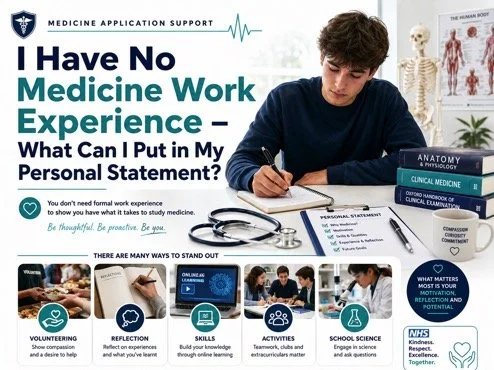
I Have No Medicine Work Experience – What Can I Put in My Personal Statement?
Couldn't get a hospital placement? You're not out of the running. UCAS and the Medical Schools Council say what matters is insight, not shadowing. Here's how to build a brilliant medicine personal statement using free virtual work experience, volunteering and smart reflection – starting today.
Do Medical Schools Read Your Personal Statement? UK Medical Schools Compared for 2027 Entry
UCAS admits that many medical schools no longer score personal statements — so does yours actually get read? We've gone through the published admissions guidance for UK medical schools to find out exactly how your statement is used for 2027 entry, from formally scored to barely glanced at.
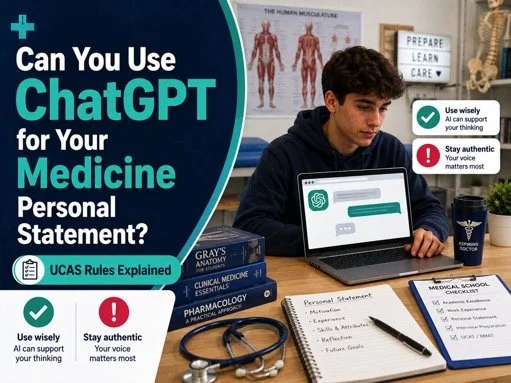
Can You Use ChatGPT for Your Medicine Personal Statement? UCAS Rules Explained
Thinking of using ChatGPT for your medicine personal statement? The answer isn't a simple no. UCAS allows AI for brainstorming, clarity checks and proofreading — but generating your actual submission can be flagged as fraud and cost you every offer. This guide explains exactly where the line sits, why medicine applicants face extra scrutiny at interview, and a safe step-by-step way to use AI without risking your place at medical school.
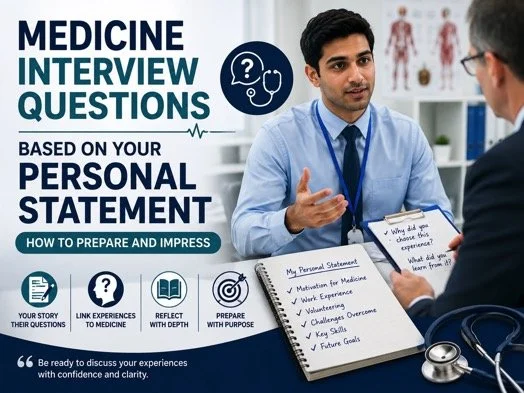
Medicine Interview Questions Based on Your Personal Statement: How to Prepare and Impress
Your personal statement doesn't stop working after you submit it—most UK medical schools will use it in interviews. Here are the questions to expect, from care home volunteering to health inequalities, plus a proven five-step method to prepare answers that impress.
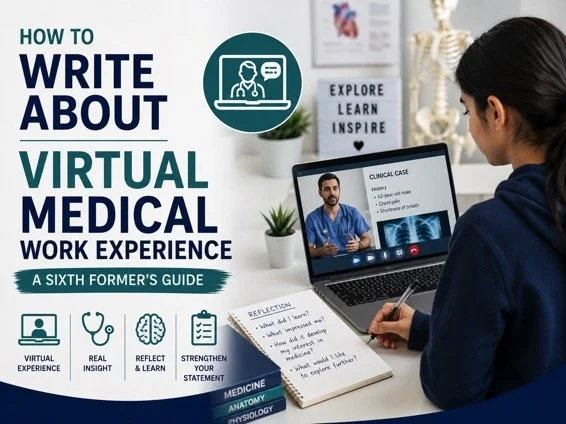
How to Write About Virtual Medical Work Experience: A Sixth Former's Guide
Completed Observe GP or the BSMS virtual work experience but not sure how to write about it? This step-by-step guide shows sixth formers how to turn online placements into powerful personal statement and interview material.
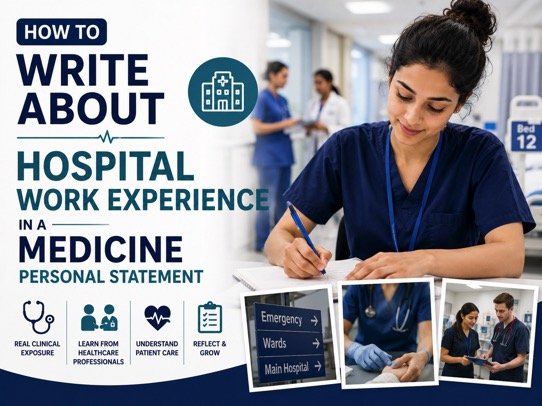
How to Write About Hospital Work Experience in a Medicine Personal Statement
Shadowed a doctor and not sure what to write? Here's how to turn your hospital work experience into the strongest section of your medicine personal statement — with reflection frameworks, worked examples and the mistakes admissions tutors see every year.
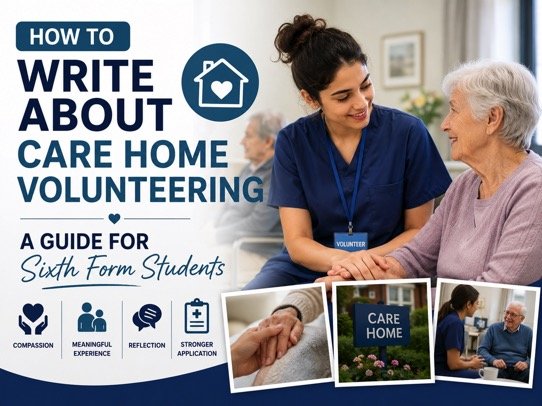
How to Write About Care Home Volunteering: A Guide for Sixth Form Students
Spent your weekends volunteering in a care home? Here's how to turn that experience into a compelling UCAS application and interview answers — with real examples of reflective writing, common pitfalls to avoid, and a checklist before you submit.
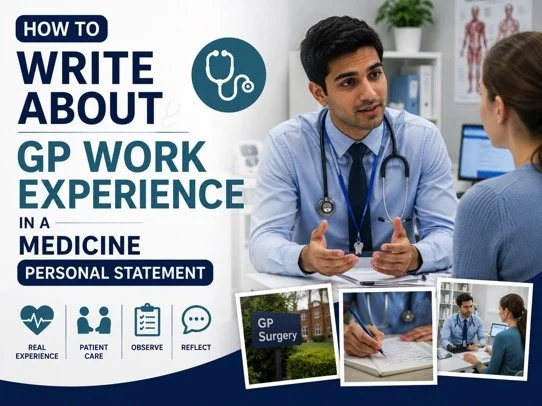
How to Write About GP Work Experience in a Medicine Personal Statement
Shadowed a GP — or wish you had? Here's how to turn general practice work experience into a reflective, memorable medicine personal statement, with real before-and-after examples, the new UCAS three-question format explained, and what to do if you couldn't get a placement.
How to Write About Volunteering in a Medicine Personal Statement
No hospital shadowing? No problem. Discover how to turn care home shifts, befriending and community volunteering into a standout medicine personal statement — with worked examples, the new three-question UCAS format explained, and a reflection framework admissions tutors love.
What Should You NOT Put in a Medicine Personal Statement?
Thousands of medicine applicants make the same avoidable mistakes every year. From tired clichés to accidental confidentiality breaches, here's exactly what to leave out of your medicine personal statement — and what admissions tutors want to see instead.
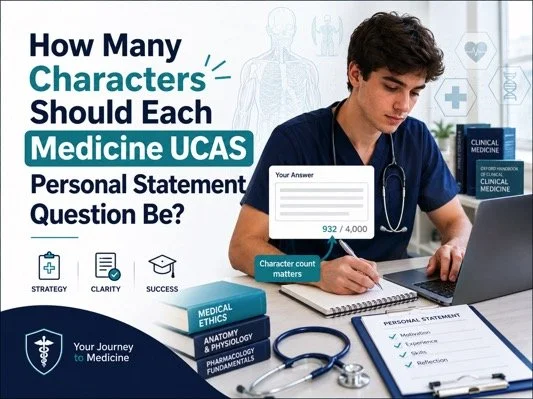
How Many Characters Should Each Medicine UCAS Personal Statement Question Be?
UCAS gives you 4,000 characters across three personal statement questions — but no rule on how to divide them. Here's the split we recommend for medicine applicants, and when to break from it.
Medicine Personal Statement Conclusion Examples: How to End Your Statement in the New UCAS Format
Do you still need a conclusion in the new UCAS medicine personal statement? We break down how to end each of the three questions, share example endings that work, and show you the clichés to avoid.
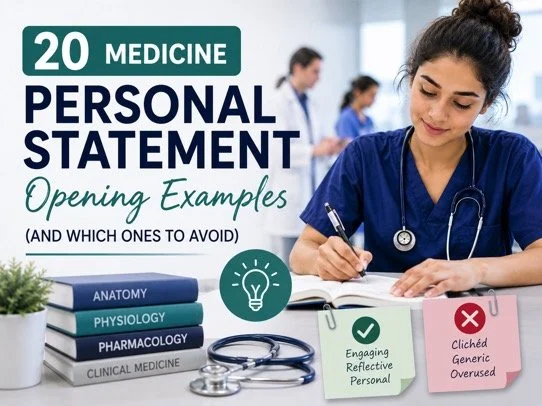
20 Medicine Personal Statement Opening Examples for 2027 Entry (And Which Ones to Avoid)
"From a young age…" — stop right there. We break down 20 medicine personal statement openings for 2027 entry: the ten clichés that make admissions tutors sigh, and ten stronger approaches that actually work with the new three-question UCAS format.
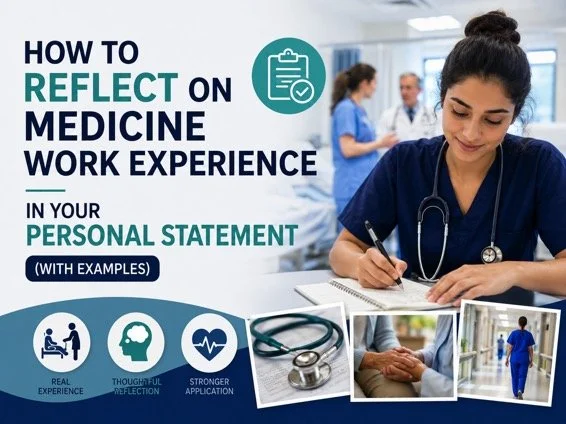
How to Reflect on Medicine Work Experience in Your Personal Statement (With Examples)
"I shadowed a GP" tells admissions tutors nothing. What you learned about communication, uncertainty and teamwork tells them everything. Here's how to turn your work experience into genuine reflection — with worked examples you can learn from.
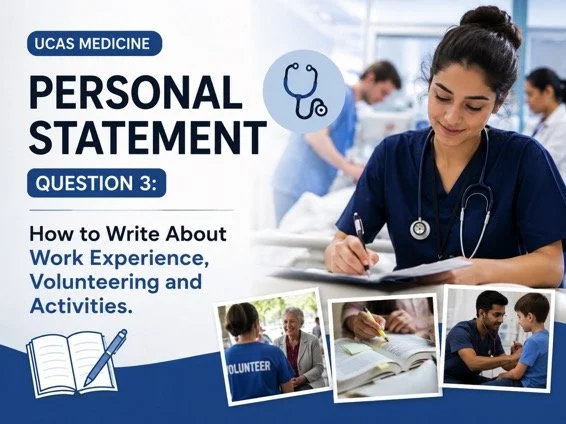
UCAS Medicine Personal Statement Question 3: How to Write About Work Experience, Volunteering and Activities
Question 3 is where medicine applications are won and lost. UCAS says medical schools place particular weight on this question — yet most applicants waste it on lists of placements and empty buzzwords. This guide gives you a five-step reflection structure and nine worked examples, from GP shadowing to a Saturday supermarket job, so your work experience actually works for you.
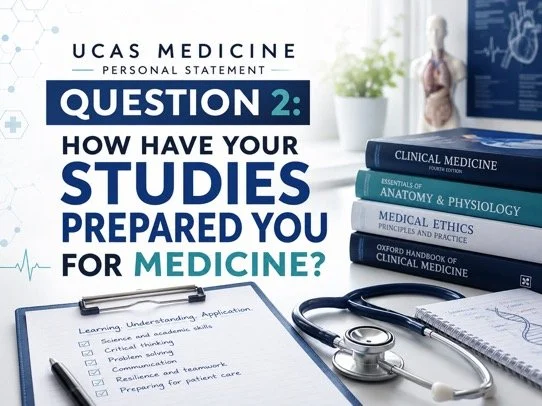
UCAS Medicine Personal Statement Question 2: How Have Your Studies Prepared You for Medicine?
"Biology has taught me about the human body" won't get you an interview. Here's how to turn your A Levels, EPQ and super-curricular activities into an answer to UCAS Question 2 that admissions tutors actually want to read.
UCAS Medicine Personal Statement Question 1: Why Do You Want to Study Medicine?
"Why do you want to study this course or subject?" is the first — and hardest — question on your UCAS medicine application. This guide reveals what admissions tutors are really looking for, which reasons impress and which backfire, and how to write an answer only you could have written.
Medicine Personal Statement Examples for 2027 Entry: What Works, What Doesn't, and Why
Applying to medical school for entry in 2027? See annotated medicine personal statement examples for all three UCAS questions — with weak and strong versions compared, so you can see exactly what admissions tutors want and write a statement that's genuinely yours.